
Let's cut straight to it: yes, herbal cigarettes are bad for you. It’s easy to get drawn in by labels like "natural" or "nicotine-free" and think you've found a safe alternative. But the real danger isn't about what's in the cigarette, it's about the simple act of setting it on fire.
When you burn any kind of plant matter and inhale the smoke, you’re putting your health at risk.
The Myth of a Safe Smoke
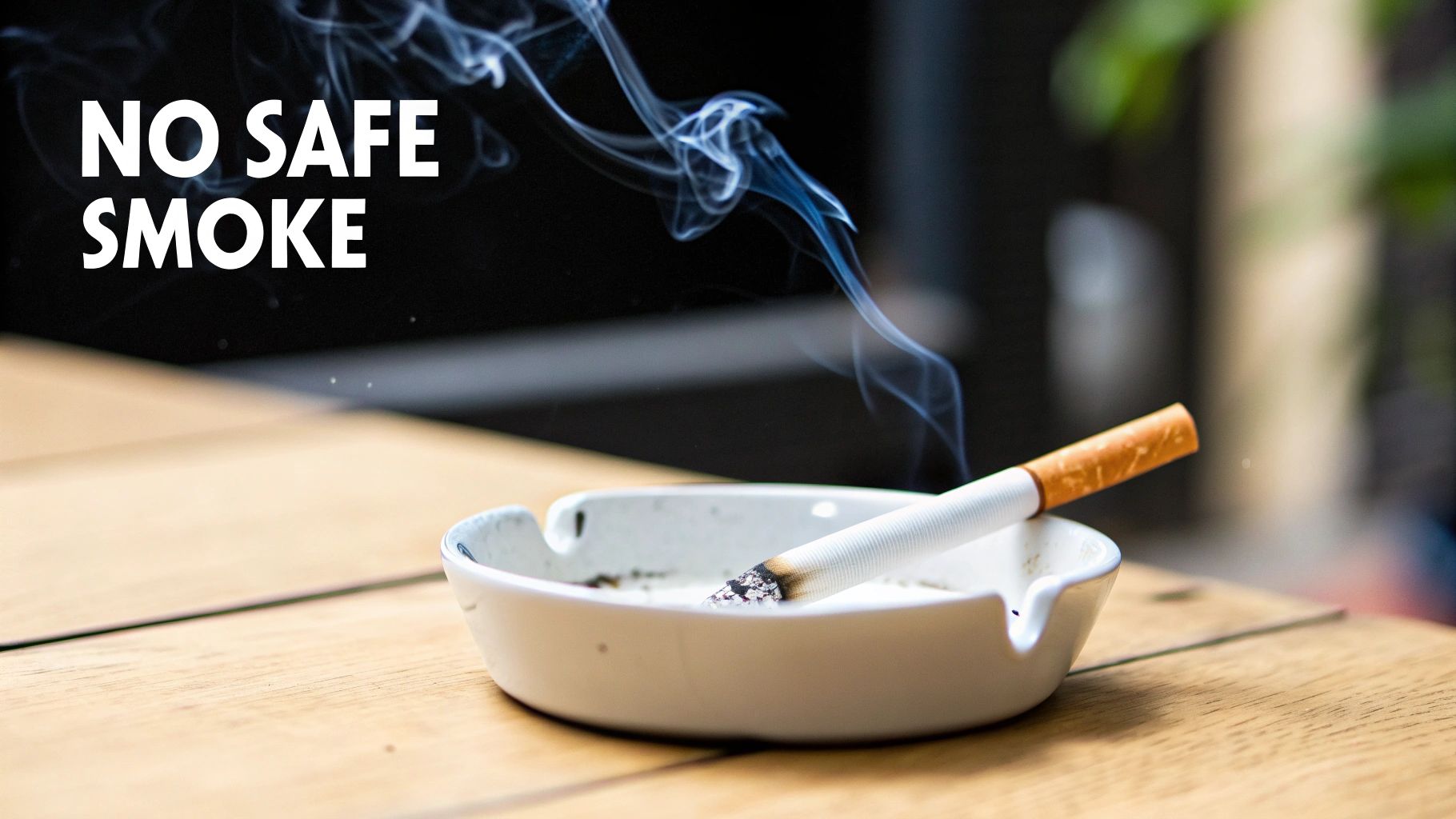
The idea of a "healthy" cigarette is a dangerous fantasy. Many people assume that because herbal cigarettes don't contain tobacco or nicotine, they must be a harmless way to manage the hand-to-mouth habit of smoking. This is a huge misunderstanding that overlooks the fundamental science of what happens when you burn something.
Think of it like a bonfire. Wood is completely natural, but nobody would suggest you lean over the flames and take deep breaths of the thick, billowing smoke. The exact same logic applies here.
The moment you light up a herbal cigarette—whether it's filled with marshmallow leaf, rose petals, or clover—you kick off a chemical reaction. And that reaction creates a cocktail of toxic chemicals that go straight into your lungs.
What Combustion Actually Creates
The real enemy here isn’t one specific ingredient; it's the smoke itself. The process of burning plant material, no matter what kind, produces seriously harmful by-products.
These include:
- Tar: A thick, sticky black substance that coats your lungs, making it harder to breathe. It’s also packed with cancer-causing chemicals.
- Carbon Monoxide: A poisonous gas that gets into your bloodstream and reduces the amount of oxygen it can carry. This starves your organs and forces your heart to work overtime.
- Carcinogens: A whole range of other nasty chemicals that are known to cause cancer.
To put this in perspective, let's compare the smoke you're inhaling with clean air.
Quick Look: Herbal Cigarette Smoke vs Clean Air
The table below breaks down the key difference between what's in herbal smoke and what's in the air we're meant to breathe. It shows that just because an ingredient starts as "natural," it doesn't stay that way after it's been burnt.
| Component | Found in Herbal Cigarette Smoke? | Primary Health Risk |
|---|---|---|
| Tar | Yes | Lung damage, cancer |
| Carbon Monoxide | Yes | Reduces oxygen in blood, heart strain |
| Particulate Matter | Yes | Respiratory irritation, lung inflammation |
| Carcinogens (e.g., Benzene) | Yes | Cancer |
| Nitrogen & Oxygen | No (but present in clean air) | Essential for life |
As you can see, the combustion process transforms harmless-sounding herbs into a vehicle for toxins. The "natural" label becomes dangerously misleading.
The core danger of any smokable product is combustion. Burning turns otherwise harmless herbs into a delivery system for tar and toxins, making the 'natural' label dangerously misleading.
And this isn't just theory; the research backs it up. Studies have shown that herbal cigarettes produce alarming levels of these dangerous compounds. Some brands, for instance, contain tar levels of 5.5 mg per cigarette and carbon monoxide concentrations around 12.3 mg per cigarette.
Those figures are uncomfortably close to what you’d find in traditional tobacco products, completely shattering the myth of a safer alternative. If you want to dig deeper, you can explore the evidence on herbal cigarette constituents for yourself.
What's Really Inside a Herbal Cigarette?
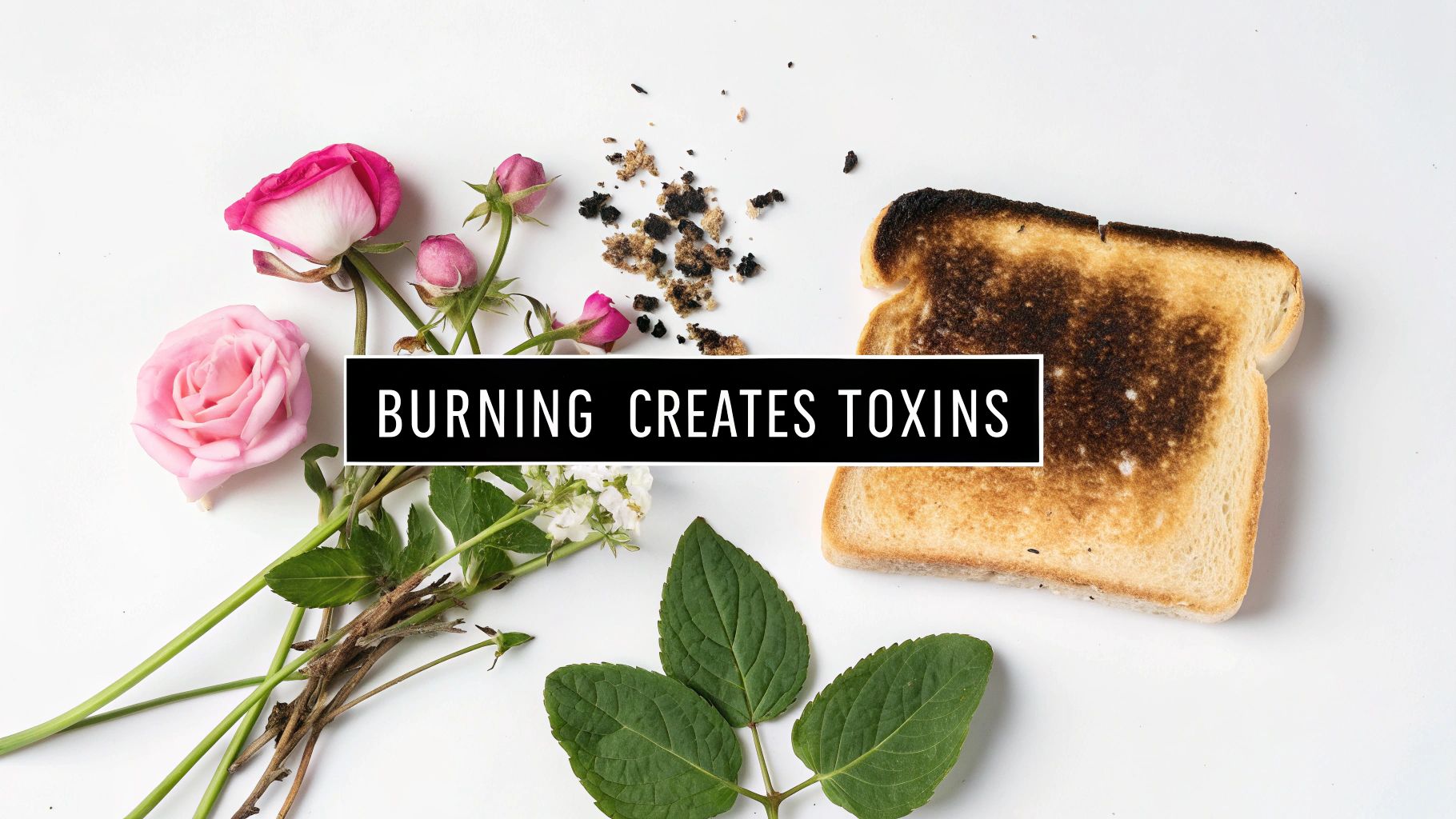
To really get to grips with the problem with herbal cigarettes, we have to look past the appealing "natural" label and see what’s actually going on. The ingredient list often reads like something from a botanical garden or health food shop—and that’s precisely what makes them so misleading.
You’ll see things like marshmallow leaf, rose petals, mullein, and red raspberry leaf. On their own, these plants are perfectly harmless. The real issue isn't the herb itself, but what happens the moment you light it up. The problem is combustion.
The Burnt Toast Analogy
Think about a simple slice of bread. It's a basic, harmless food. But if you leave it in the toaster too long, it turns black, fills the kitchen with acrid smoke, and becomes burnt toast. That burning process creates carcinogens—cancer-causing chemicals that weren't in the original bread at all.
Herbal cigarettes work in exactly the same way. An innocent rose petal or a harmless leaf, when set on fire, undergoes a chemical change. Combustion turns those pleasant-sounding botanicals into a delivery system for a cocktail of dangerous toxins.
The moment you light an herbal cigarette, you are no longer inhaling the essence of a plant. You are inhaling the toxic by-products of burning that plant—namely, tar and carbon monoxide.
This is where the "natural" argument completely falls apart. Burning anything organic, whether it's an oak log, a piece of toast, or a blend of dried herbs, produces smoke filled with harmful chemicals. The US Federal Trade Commission (FTC) even forced herbal cigarette companies to add warnings to their packaging, stating: “Herbal cigarettes are dangerous to your health. They produce tar and carbon monoxide.”
The Shift from Herb to Harm
The smoke from these cigarettes contains a nasty mix of compounds that pose a serious threat to your health. The marketing loves to focus on what’s not in them (nicotine and tobacco), but it conveniently ignores what’s created by the act of smoking.
Here’s a simple breakdown of that transformation:
- From Plant to Particulate Matter: Those harmless herbs are turned into fine particles that can lodge deep in your lung tissue, causing inflammation and damage.
- From Flavour to Toxin: The burning process releases carbon monoxide, a poisonous gas that stops your blood from carrying oxygen effectively. This puts a huge strain on your heart and other vital organs.
The core problem doesn't change, no matter the specific blend of flowers or leaves. Many people reach for these products to move away from traditional cigarettes, and while the intention is good, it's vital to understand the real risks. Exploring different herbal tobacco alternatives that don't involve combustion can offer a much safer path. Ultimately, inhaling smoke of any kind is a step in the wrong direction for your health.
The Real Health Impact of Herbal Smoke
Let's cut through the "natural" marketing claims and talk about what really happens when you light up an herbal cigarette. Once you set fire to any plant material, the ingredients list becomes almost irrelevant. What matters is the smoke, and that smoke is far from harmless. The damage it causes can be broken down into three key areas: your lungs, your heart, and your long-term cancer risk.
Lungs Clogged with Tar
Every time you inhale herbal smoke, you're coating the delicate lining of your lungs with a thick, sticky substance called tar. Imagine pouring treacle over a fine silk scarf – over time, it clogs every tiny opening, making it heavy and useless. That's exactly what tar does to your airways.
This sticky residue irritates your lungs, triggering that persistent "smoker's cough" and paving the way for chronic bronchitis. In short, your lungs are forced to work overtime just to do their basic job of helping you breathe.
Your Heart Under Pressure
The damage doesn't stop with your lungs. Burning herbs also creates carbon monoxide, a toxic gas that you absorb directly into your bloodstream. Once there, it hijacks your red blood cells, which are meant to be carrying life-giving oxygen all around your body.
Think of your red blood cells as a fleet of delivery drivers. Carbon monoxide barges in and kicks the oxygen out, forcing your heart to pump much faster and harder just to get enough oxygen to your organs. This puts your entire cardiovascular system under constant, unnecessary strain.
When you smoke even one herbal cigarette, you inhale enough carbon monoxide to immediately impair your blood's oxygen-carrying capacity. This is a critical reason why all forms of smoking, regardless of the plant source, are linked to serious heart conditions.
The Undeniable Cancer Connection
Finally, we need to address the most serious risk of all: cancer. The tar produced from burning any plant matter is loaded with carcinogens – substances scientifically known to cause cancer. Inhaling this smoke exposes the sensitive cells in your mouth, throat, and lungs to these dangerous chemicals, dramatically increasing your risk of developing cancerous growths.
Scientific research shows that the chemical dangers of herbal cigarettes are right on par with tobacco. One analysis found the tar content of a single herbal cigarette was 7.45 mg, with carbon monoxide levels hitting 12.3 mg. These studies confirm that herbal smoke can have equal or even greater cell-damaging effects than tobacco smoke—a critical fact for anyone in the UK considering them as a "safe" alternative.
This is why it's so important to understand the full spectrum of health risks of smoking cigarettes, as the fundamental danger comes from the smoke itself.
To make this crystal clear, let's compare them side-by-side.
Health Impact Comparison: Tobacco vs Herbal Cigarettes
This table shows that while the source material is different, the end result of combustion—inhaling toxic chemicals—is dangerously similar.
| Harmful Component | Present in Tobacco Cigarettes? | Present in Herbal Cigarettes? | Associated Health Risk |
|---|---|---|---|
| Nicotine | Yes | No | Addiction, increased heart rate, high blood pressure |
| Tar | Yes | Yes | Lung cancer, bronchitis, emphysema, stained teeth |
| Carbon Monoxide | Yes | Yes | Heart disease, reduced oxygen supply, cardiovascular strain |
| Carcinogens | Yes (e.g., Benzene) | Yes (e.g., Benzopyrene) | Various cancers (lung, throat, mouth), DNA damage |
The key takeaway? Removing nicotine doesn't remove the tar, carbon monoxide, or carcinogens created by burning plant matter.
It’s also worth remembering that the smoke from herbal cigarettes pollutes your home, affecting the health of everyone you live with. If you're concerned about secondhand smoke and indoor air quality, you may want to explore air purification systems to help reduce airborne particles.
Comparing Herbal Cigarettes, Tobacco, and Vaping
To really get why herbal cigarettes aren't the safe alternative they seem, it helps to look at where they sit next to tobacco and vaping. People often lump all three together, but they come with hugely different risks. The most important thing to grasp is the hierarchy of harm—and anything that involves fire and smoke sits right at the very top.
When you burn any plant matter, whether it’s tobacco leaf or a blend of "natural" herbs, you create smoke. That smoke is a toxic soup of thousands of chemicals, including tar and carbon monoxide. As we've seen, these are the real villains responsible for wrecking your lungs, damaging your heart, and causing cancer.
This graphic shows exactly how inhaling any kind of smoke creates a direct path for damage to your most vital organs.
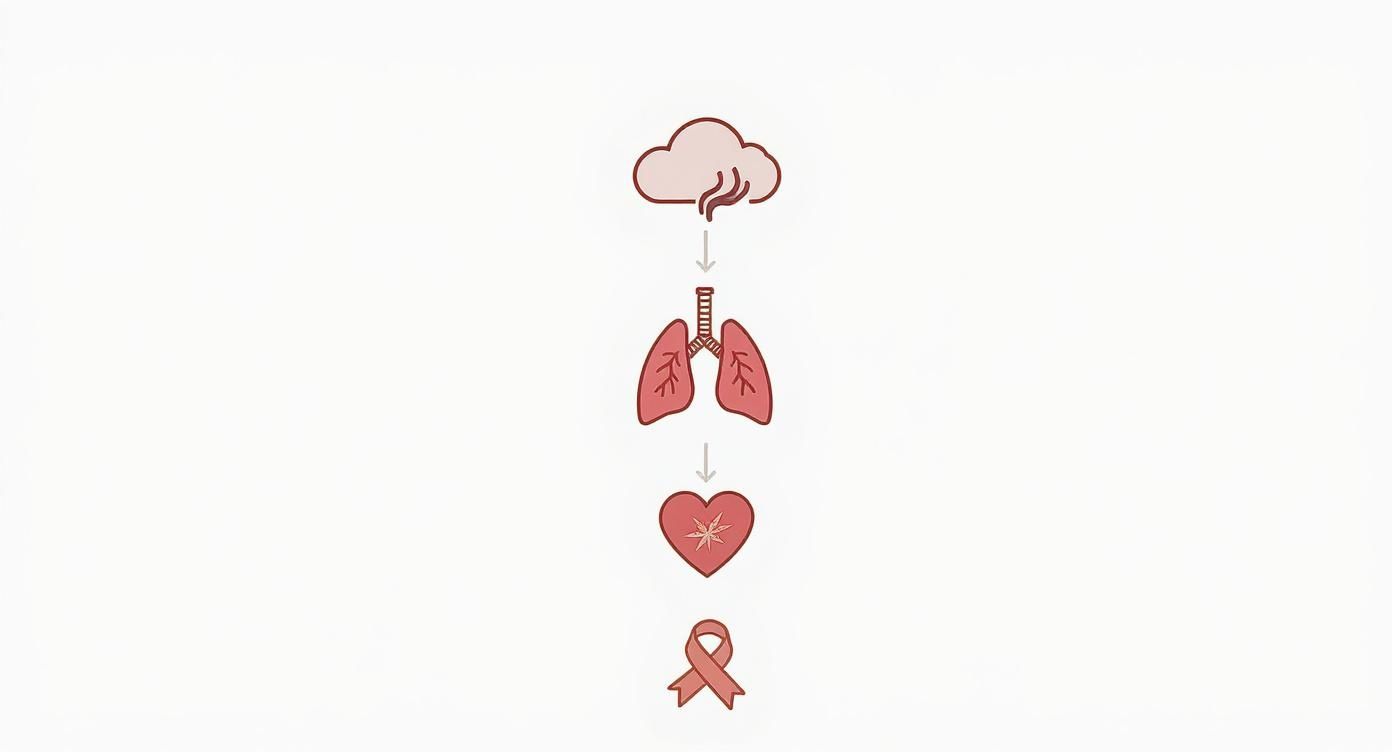
It’s a simple but powerful visual: smoke is the starting point for a chain reaction that hits the lungs, strains the heart, and dramatically increases your cancer risk.
Establishing a Hierarchy of Harm
Thinking clearly about risk is essential when you're making decisions about your health. If we were to line these three products up from most to least harmful, the picture couldn't be clearer.
-
Combustion-Based Products (Tobacco and Herbal Cigarettes): These are, without a doubt, the most dangerous. They share the exact same fundamental flaw: you have to set them on fire. Swapping a tobacco cigarette for a herbal one is like trading one known danger for another that is almost identical in its most damaging effects.
-
Vaping (E-Cigarettes): Vaping sits much lower on the harm scale because it gets rid of the smoke. Vapes work by gently heating a liquid to create an aerosol, not by burning anything. While not risk-free, this aerosol doesn’t contain the tar or carbon monoxide that makes smoking so deadly. It does, however, raise different concerns about inhaling heated chemicals and flavourings, and the long-term effects are still being studied.
This comparison brings us to a crucial point.
Choosing herbal cigarettes over tobacco isn't a step towards safety. It's a sideways move, keeping you locked in the same cycle of inhaling toxic smoke. The only real way to reduce harm is to get rid of combustion completely.
The Key Differences at a Glance
Let's break down the core distinctions. This simple table makes it obvious why, even though they can look similar, their impact on your body is worlds apart depending on one thing: smoke versus aerosol.
| Feature | Herbal Cigarettes | Tobacco Cigarettes | Vaping (E-Cigarettes) |
|---|---|---|---|
| Primary Process | Combustion (Burning) | Combustion (Burning) | Vaporisation (Heating) |
| Produces Tar? | Yes | Yes | No |
| Produces Carbon Monoxide? | Yes | Yes | No |
| Contains Nicotine? | No | Yes | Often, but not always |
| Primary Danger | Smoke inhalation | Smoke inhalation & nicotine | Aerosol inhalation |
At the end of the day, while vaping has its own set of health questions, it is widely recognised by health bodies like the NHS to be significantly less harmful than smoking. For anyone trying to quit, understanding this hierarchy is vital. Moving from tobacco to herbal cigarettes gives you no real health benefit, because you’re still exposed to the number one source of harm: smoke.
Truly Safer Ways to Quit Smoking
Realising that herbal cigarettes aren't the safe alternative you thought they were can be a real blow, especially if you were using them to get away from tobacco. Many people reach for them for that exact reason—to tackle the physical, hand-to-mouth habit of smoking while believing they're making a healthier choice.
But don't lose heart. The good news is there are genuinely safer, science-backed ways to quit that actually work.
The first step is to break down the two biggest hurdles in quitting: the chemical addiction to nicotine and the behavioural habit of the smoking ritual. The most effective strategies tackle both, but they do it by avoiding harmful smoke altogether. Instead, they rely on proven, smoke-free solutions that healthcare professionals stand behind.
Tackling Nicotine Addiction Safely
For anyone wrestling with nicotine cravings, Nicotine Replacement Therapy (NRT) is the gold standard for a reason. These NHS-approved methods give you a controlled dose of nicotine to take the edge off withdrawal symptoms, but without the thousands of toxic chemicals that come from burning anything.
Common NRT options include:
- Patches: These are brilliant for a slow, steady release of nicotine throughout the day, helping to keep those background cravings quiet.
- Gum and Lozenges: Perfect for when a sudden, intense urge to smoke hits. They deliver a quick nicotine boost to help you ride out the craving.
- Inhalators: This form of NRT cleverly mimics the hand-to-mouth action of smoking, which can be a massive help in breaking that behavioural link.
These methods are all designed to help you gradually reduce your nicotine intake, giving your body a chance to adjust without the shock of going cold turkey. The end goal is to be completely free from nicotine dependence.
Quitting smoking is the single most important step a smoker can take to improve their health. Using evidence-based support like NRT can double your chances of successfully quitting compared to willpower alone.
Breaking the Behavioural Habit Without Smoke
For so many people, the physical ritual of smoking is just as powerful as the chemical addiction. This is where modern, non-combustible alternatives can make all the difference. These tools are designed to satisfy that hand-to-mouth habit without involving any smoke or vapour.
For example, innovative nicotine-free options can provide the sensory experience of inhalation using only natural flavours. They offer a real, tangible replacement for a cigarette, giving you something to do with your hands and satisfying that psychological need for a moment of ritual and calm. This approach is a core part of a comprehensive stop smoking aid plan because it directly addresses the behavioural triggers that so often lead to relapse.
Finding safe alternatives is non-negotiable. In the UK, smoking remains a leading cause of preventable death, with tobacco linked to around 64,000 deaths annually in England alone. While herbal cigarettes are a smaller part of the market, the toxins in their smoke contribute to the same public health concerns, reminding us that setting anything on fire and inhaling it is a risk. You can discover more insights about UK smoking statistics from Action on Smoking and Health.
By choosing proven, smoke-free methods, you’re not just swapping one habit for another—you’re taking a genuine step towards a healthier future.
Your Action Plan for a Smoke-Free Future
Okay, let's get practical. Understanding that herbal cigarettes aren't a safe alternative is a huge first step. Now, it’s time to turn that knowledge into a real plan for a healthier, smoke-free you.
The most important thing to grasp is this: the only truly safe smoke is no smoke at all.
This isn’t about swapping one habit for a "less bad" one; it's about choosing genuine health. Before you do anything else, take a quiet moment to think about what you really want. Are you trying to break the physical hand-to-mouth action, manage nicotine cravings, or both? Getting clear on your goals makes everything that follows far more effective.
The real choice isn't which product to smoke, but how to stop inhaling smoke altogether. Your plan should be built around proven, smoke-free methods that actually support your long-term health, not another harmful substitute.
Questions to Ask Your GP
Booking an appointment with your GP or a local NHS stop-smoking service is the single most powerful action you can take. These people are experts who help people quit every single day, and they can offer personalised advice that’s right for you.
To get the most out of that appointment, it pays to be prepared. Walking in with a few questions helps you and your clinician build a quit plan that fits your life and gives you the best odds of success.
Think about asking things like:
- Which Nicotine Replacement Therapy (NRT) would work best for my routine? (For example, patches give steady support, but gum can help with sudden urges.)
- What kind of professional support is out there to help me handle my triggers and change my daily habits?
- Are there prescription medications that could help me quit, and would I be a good candidate for them?
- How can I find local support groups or one-to-one counselling?
When you're armed with this kind of information, you can finally step away from the false promises of herbal cigarettes and move towards a genuinely healthier choice—one backed by medical science and real, human support.
Got Questions? Let's Clear the Air
Trying to figure out the world of smoking alternatives can feel confusing, and it's easy to get mixed messages. Let's break down the most common questions about herbal cigarettes with some clear, honest answers to help you separate fact from fiction.
Are Herbal Cigarettes Addictive?
This is a really important question, and the answer has two parts.
First, no, herbal cigarettes aren't chemically addictive because they don't contain nicotine. You won't get the physical withdrawal symptoms you'd experience when quitting tobacco.
But here's the catch: you can still develop a powerful psychological or behavioural addiction to the ritual of smoking. The hand-to-mouth movement, the deep inhale, the social habit—these things become deeply ingrained. This behavioural loop can be just as tough to break as a chemical dependency, which is why so many people struggle with the "what do I do with my hands?" feeling long after the nicotine is gone.
Are Herbal Cigarettes Legal in the UK?
Yes, herbal cigarettes are legal to buy and sell in the UK. Since they don't contain tobacco, they fall outside the strict regulations that apply to traditional cigarettes, meaning they often don't have the same age restrictions.
But just because something is legal doesn't mean it's safe. UK health experts are very clear: inhaling smoke from any burning plant material, whether it's tobacco or herbs, is harmful. You're still breathing in dangerous levels of tar and carbon monoxide.
Do Herbal Cigarettes Help You Quit Smoking?
Using herbal cigarettes to quit smoking is a bit like swapping one problem for a nearly identical one. It might feel like a step in the right direction because you're ditching nicotine, but you're still practicing the physical act of smoking and breathing in toxic smoke.
This reinforces the very behavioural addiction you need to break and continues to damage your lungs. Truly effective quitting strategies are about eliminating smoke inhalation entirely. The focus should be on proven, NHS-backed methods like Nicotine Replacement Therapy (NRT) or modern, non-combustible alternatives that satisfy that hand-to-mouth habit without the fire, tar, and carbon monoxide.
Ready to break the habit without the harm? AuraFlow offers a nicotine-free, smoke-free way to satisfy the ritual of smoking using only natural flavours. Find your path to a healthier future and explore the starter kit.