
Ever wonder why you reach for a snack without feeling hungry, or find yourself scrolling through your phone when you only meant to check the time? It’s not a lack of willpower. It’s your brain being incredibly efficient.
Habits, good or bad, are just the brain's way of creating shortcuts for things we do over and over. They’re automated behaviours that run on a simple loop, freeing up your mental energy for more important decisions. Getting a handle on this basic science is the first real step to consciously changing them for the better.
Understanding the Brain Science Behind Your Habits

At the heart of every single habit you have is a simple, three-part pattern called the habit loop. Popularised by author Charles Duhigg, this concept breaks down our automated behaviours into a predictable cycle. Understanding this is key to figuring out your own bad and good habits.
The Three Parts of The Habit Loop
This process is exactly the same whether you’re lacing up your trainers for a run or reaching for a cigarette.
- The Cue: This is the trigger. It’s what tells your brain to slip into autopilot and which habit to fire up. Cues can be anything – a time of day, a place, an emotion, or even the people you're with.
- The Routine: This is the action you take, whether it's physical or mental. It's the behaviour itself – grabbing a biscuit, opening a social media app, or stepping outside for a smoke.
- The Reward: This is the bit that tells your brain, "Hey, that worked! Let's do it again." The reward satisfies whatever craving the cue started, cementing the link between the two.
By understanding the mechanics of the habit loop, you can move from being a passive participant in your own routines to an active designer of your behaviour. It's not about fighting your brain, but working with its natural processes.
Seeing the Habit Loop in Action
Let’s take a classic modern habit: constantly checking your phone. The cue might be a flicker of boredom or social anxiety. The routine is picking up your phone and scrolling. The reward? A little dopamine hit from a notification or an interesting post, which temporarily eases the boredom.
It's the same with smoking, which often runs deeper than just nicotine. The routine of stepping outside is triggered by cues like finishing a meal or feeling stressed. The reward isn't just the nicotine; it’s the mental break and the physical ritual. For many, this ritual is the secret challenge when trying to quit. If you want to dive deeper into this, you can explore the secret challenges of quitting smoking that many people don't talk about.
To really make a change, you need to get to grips with the brain science involved. For some practical ways to apply this, it's worth exploring insights into rewiring habits through neuroscience and hypnosis. The key takeaway here is simple: your habits aren't a reflection of your character. They're the product of a system. And once you can see the system, you can start to change it.
How to Pinpoint the Habits That Really Matter
Before you can change a habit, you have to become a detective of your own behaviour. It's not about changing everything at once. The real secret is finding that one domino that, once it falls, knocks over all the others.
This isn't a time for self-judgement. Think of yourself as a scientist, simply observing and taking notes without criticism. You’re just gathering intel on your own routines to figure out what makes you tick. This clear-headed approach is crucial for spotting the patterns that hold you back.
Focus on Your "Keystone" Habits
Some habits have a massive, disproportionate impact on your life. They’re called keystone habits. Nail one of these, and you'll find it sets off a positive chain reaction, making it almost effortless to improve other areas.
For example, someone who starts exercising regularly often finds they naturally begin to eat better and sleep more soundly. Exercise becomes the keystone that holds other healthy behaviours in place. Your mission is to find your personal keystone habit—that one small tweak that will deliver the biggest bang for your buck.
"Success is the product of daily habits—not once-in-a-lifetime transformations."
Trying to overhaul your entire life overnight is a recipe for burnout. Zeroing in on a single, powerful keystone habit builds momentum and makes the whole process feel achievable, not overwhelming.
Start a Habit Journal
The best way to find your keystone habits and figure out what triggers them is with a simple journal. For just one week, track a specific habit you want to change. Every time you find yourself reaching for a cigarette or getting lost in your phone, just make a quick note.
It's not just about what you did, but why you did it. The moment you feel the urge, ask yourself a few quick questions:
- Where am I? (e.g., At my desk, in the car)
- What time is it? (e.g., 3:15 PM, right after lunch)
- How am I feeling? (e.g., Bored, stressed, tired, lonely)
- Who’s with me? (e.g., Alone, with colleagues)
- What just happened? (e.g., Finished a tough task, got a frustrating email)
After a couple of days, you'll be amazed at the patterns that jump out. You might realise you only crave a cigarette when you're feeling stressed after a big meeting, or that your mindless snacking only kicks in when you're bored in the evening. This data is gold. It’s the blueprint for your plan of attack.
Break Down Your Habit Loop
Once you've got a bead on a habit and its triggers, it's time to map out the entire loop. This framework pulls back the curtain on how a habit actually works, showing you exactly where you can step in and make a change.
This simple table will help you deconstruct any habit you want to tackle. It forces you to get specific about each part of the process, from the initial trigger to the reward your brain is actually chasing.
Your Habit Deconstruction Framework
| Habit Component | Guiding Question | Example Smoking Habit |
|---|---|---|
| Cue | What triggers the habit? | Finishing a big work report (stress) |
| Routine | What is the actual behaviour? | Stepping outside for a cigarette |
| Reward | What benefit do you get? | A mental break and a feeling of relief |
By laying it all out like this, you discover what you're really after. In the example, the reward isn't the nicotine itself—it's the mental break and the feeling of relief. This is the crucial piece of the puzzle. It tells you that any replacement habit has to deliver a similar reward to be successful. You're not just fighting a bad habit; you're finding a better, healthier way to get the same satisfying result.
Redesigning Your Routines for Success
This is where all that self-reflection on your habit loops really starts to pay off. Now that you’ve pinpointed the cue that kicks things off and the reward your brain is chasing, you can start to consciously engineer a better response. The real secret to ditching bad habits isn't about brute force; it's about cleverly replacing them with something better that still scratches the original itch.
You don't need to blow up your entire life overnight. The smartest approach is to keep the cue and the reward exactly the same but simply swap out the routine in the middle. This is a far more effective strategy than trying to fight off an urge with pure willpower, which, let's be honest, is a losing battle when you're tired, stressed, or just having an off day.
Think of it like rerouting a river. Instead of trying to build a massive dam to stop the flow, you just carve out a new, more positive channel for the water to follow.
The flowchart below breaks down this simple but powerful process of deconstructing a habit to see what makes it tick.
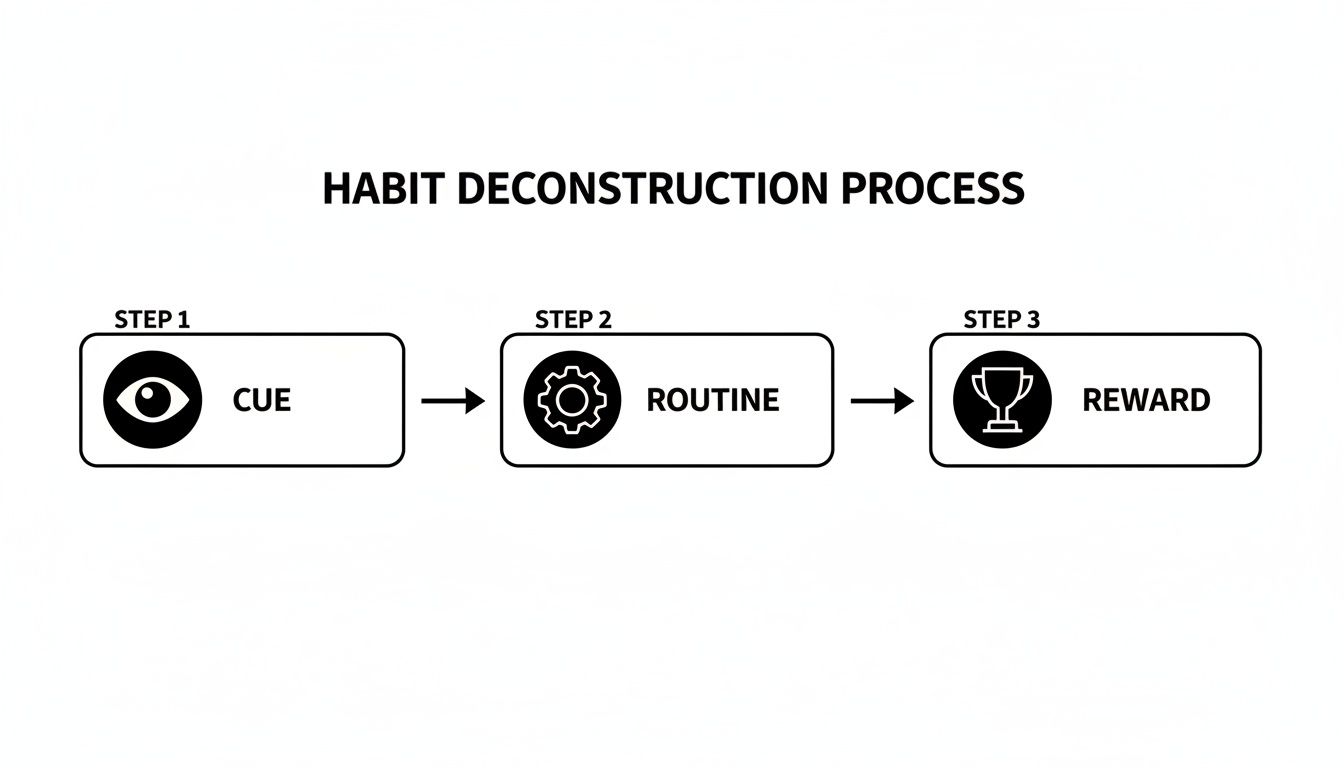
This visual makes it clear: by isolating the routine, you can redesign your response without having to get rid of the trigger or the satisfying reward that follows.
Swapping a Bad Habit with a Good One
Let's get practical. Say your unwanted habit is that 3 p.m. cigarette break at work. You've realised the cue is finishing a tough task, and the reward is a mental reset and a few minutes away from your screen.
Instead of fighting the craving for a break, you can introduce a new routine that delivers the exact same reward. When you finish that task (the cue), you could:
- Take a brisk five-minute walk outside. This gets you away from your desk and gives you a much-needed change of scenery.
- Do two minutes of deep breathing exercises. This is a fantastic way to calm your mind and create a powerful sense of relief.
- Use a nicotine-free alternative like AuraFlow. This satisfies the hand-to-mouth ritual, providing a flavourful, calming moment without any of the harmful chemicals.
In every scenario, the cue (finishing the task) stays the same, and the reward (a mental break) is still achieved. You've just replaced a destructive routine with a constructive one. For a deeper dive on this, check out our guide on how to break bad habits effectively.
The key is to experiment and find a replacement that genuinely satisfies you. If the new routine feels like a chore or doesn't deliver the reward you're after, it will never stick. The best habits are the ones you actually enjoy.
The Power of Habit Stacking
Another incredibly effective technique is something called habit stacking. Instead of trying to pull a new habit out of thin air, you anchor it to a behaviour you already perform on autopilot.
The formula couldn't be simpler: "After [current habit], I will [new habit]."
This method uses the momentum of an established routine to seamlessly carry you into the new one. It feels almost effortless because you're not relying on fleeting motivation; you're using a pre-existing trigger that's already wired into your brain.
Putting Habit Stacking into Practice
Here’s what this looks like in the real world. You can easily stack new, positive actions onto your existing schedule:
- Morning Coffee: After I pour my first cup of coffee, I will stretch for two minutes.
- Brushing Teeth: After I brush my teeth at night, I will read one page of a book.
- Dinner Time: After I finish eating dinner, I will immediately put my plate in the dishwasher.
- Getting Home: As soon as I walk in the door from work, I will change into my gym clothes.
This strategy is so effective because your current habit is already a deep groove in your brain. By piggybacking a new action onto it, you're giving it an immediate and obvious cue. The trick is to start small. Ridiculously small. "Read one page" is far less daunting than "read for 30 minutes," which makes you infinitely more likely to do it consistently. For more on making new behaviours permanent, there are some great insights on forming habits that stick.
Ultimately, redesigning your routines is about making good habits the path of least resistance. By swapping out old routines and stacking new behaviours, you stop being a victim of your impulses and become the architect of your own day.
The Real Costs and Benefits of Your Daily Choices
Getting to grips with the mechanics of your habits is a massive step, but what really lights the fire under you? It’s seeing the bigger picture. Vague goals like “get healthier” or “save money” are easy to shove to the back of the mind. True, lasting motivation comes from understanding the real, tangible impact your daily choices have on your life.
The difference between a good habit and a bad one is rarely felt in a single day. It’s the slow, creeping effect over months and years that truly shapes your health, your bank balance, and your overall well-being. Thinking about these long-term outcomes gives you a powerful "why" to hold onto when a short-term craving tries to pull you off track.
The Financial Drain of Bad Habits
Let's start with your wallet, because this is where the numbers don't lie. Small, seemingly insignificant daily expenses add up to staggering amounts over time. That daily gourmet coffee, a takeaway lunch, or a pack of cigarettes might not feel like a big deal in the moment, but the annual cost can be genuinely shocking.
Take a common habit like smoking. In the UK, while this habit has declined substantially, it still caused 64,000 deaths and cost the NHS an estimated £2 billion in 2019 alone. That shows both the progress we've made and the heavy burden that remains. You can read more about the impact of this habit in Public Health England's findings.
When you look at the personal cost, the numbers are just as stark:
- Daily Cost: A pack of 20 cigarettes costs around £15.
- Weekly Cost: That’s a hefty £105 spent every single week.
- Annual Cost: Over a year, this one habit drains over £5,400 from your bank account.
What could you do with an extra £5,400 a year? That’s enough for a luxury holiday, a serious chunk towards a house deposit, or simply the peace of mind that comes with a healthy emergency fund.
This same maths applies to countless other habits, from daily takeaways to subscription services you’ve forgotten you even have. By calculating the true annual cost of a habit, you turn a fuzzy desire to "save more" into a concrete, motivating financial goal.
The Health Investment of Good Habits
On the flip side, the benefits of good habits are just as powerful, acting like compound interest for your health. You won't get fit from one workout or feel transformed after one healthy meal, but the consistency pays incredible dividends down the line.
A sedentary lifestyle is directly linked to a higher risk of numerous chronic conditions. In stark contrast, just adding 30 minutes of moderate exercise—like a brisk walk—five days a week can dramatically improve your health outlook.
Here’s how those small, positive habits pay off big time:
- Consistent Exercise: It reduces the risk of heart disease, type 2 diabetes, and certain cancers. It also lifts your mood, improves your sleep, and gives you a noticeable energy boost.
- Healthy Eating: Swapping processed foods for whole foods can lead to better weight management, clearer skin, and sharper mental clarity. You’re not just dodging negatives; you're actively investing in your future vitality.
- Mindful Moments: Taking just five minutes a day for deep breathing or using a calming tool like AuraFlow can lower stress levels. This has a direct, positive impact on everything from your blood pressure to your immune system.
When you start seeing your habits through this lens—as direct investments in your future self—each positive choice feels more meaningful. It stops being about restriction and becomes about choosing long-term happiness over fleeting, short-term gratification. Once you properly quantify the costs and benefits, the best path forward becomes crystal clear.
Building a System That Prevents Relapse
Starting a new habit is one thing. Making it stick through life's inevitable ups and downs? That’s the real game. Long-term success isn’t about having bulletproof willpower. It's about building a smart system around yourself—one that makes it easier to stick to your new routine than to slide back into old patterns.
Think of this system as your personal support crew. It's there to guide you, catch you when you stumble, and make the right choices feel like the most natural ones. This involves tweaking your environment, keeping an eye on your journey, and, crucially, knowing how to handle setbacks without throwing in the towel.
Design an Environment That Supports You
Your surroundings have a huge say in your actions, often more than you realise. If you want to make a good habit stick and a bad one fade away, you need to become the architect of your own space. The goal is to make positive choices the path of least resistance.
Let's get practical.
- Want to eat healthier? Don't just rely on willpower. Put a bowl of fresh fruit on the kitchen counter and hide the crisps and biscuits on a high shelf where you can't see them.
- Trying to exercise more? Lay out your gym gear the night before. This tiny action removes a barrier and acts as a brilliant visual nudge when you wake up.
- Need to reduce stress? Create a small, dedicated calm corner in your home. A comfy chair and maybe your AuraFlow device are all you need. Having that space ready and waiting makes it effortless to take a mindful moment when life gets hectic.
By curating your environment, you're essentially giving your future self a helping hand. You’re setting yourself up to win.
Track Your Progress and Find an Ally
What gets measured gets managed. Honestly, tracking your progress is one of the best ways to stay motivated because it gives you cold, hard proof that your efforts are making a difference. It turns a vague goal into a tangible record of your success.
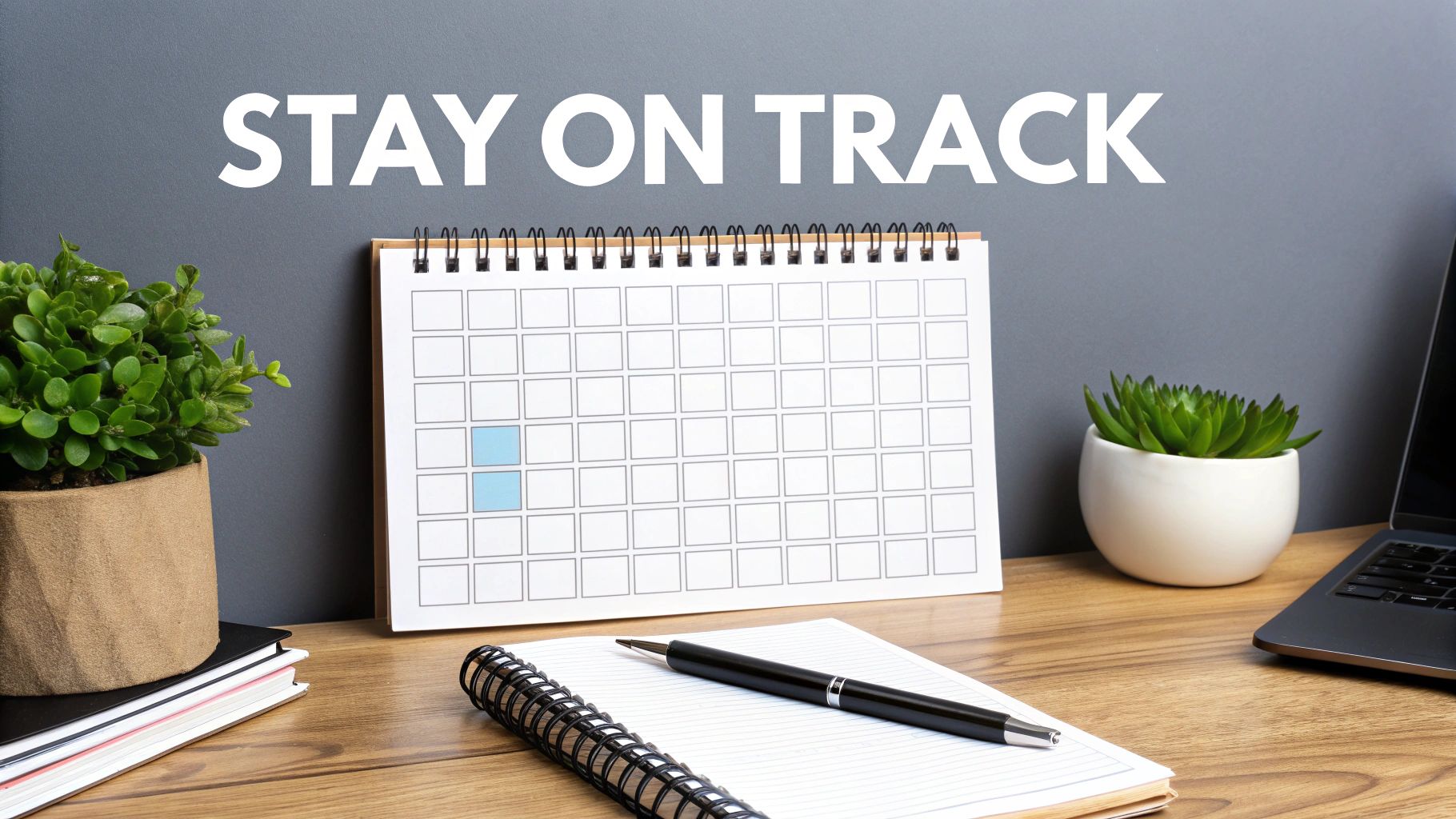
You could use a simple wall calendar, a dedicated app, or a notebook. The tool doesn't matter nearly as much as the consistency. There’s something deeply satisfying about marking a big 'X' on the calendar each day you nail your new habit. You build a chain you won't want to break.
A slip-up isn't a failure; it's just a data point. It shines a light on a trigger or a weak spot in your system that you can now strengthen. The trick is to meet it with self-compassion and analysis, not judgment.
And don't go it alone. The power of human connection is immense. Find an accountability partner—a friend, family member, or even a colleague who is also working on a goal. A quick weekly check-in can make a world of difference, offering encouragement and that little bit of social pressure to keep you on track.
Learn to Handle Setbacks Gracefully
Everyone slips up. Everyone. The difference between people who succeed long-term and those who quit is how they react to that slip-up. An all-or-nothing mindset is your worst enemy. Missing the gym for one day doesn't erase all your progress.
When you stumble, treat it as a learning moment, not a catastrophe. Ask yourself: what happened? Were you completely stressed out? Did an unexpected event derail your routine? Analyse the cue that triggered the old habit. This isn't about blaming yourself; it’s about gathering intel to make your plan stronger.
The golden rule is simple: never miss twice. Get straight back on it the very next day. This resilience is the true secret to lasting change, turning small lapses into lessons that build lifelong strength. Learning some simple mindful breathing techniques can also be a powerful tool to help you recentre and get back on course.
Still Have Questions About Changing Habits?
Even with a solid plan, the road to changing your habits can have its confusing moments. Questions pop up. Doubts creep in. That’s a completely normal part of the process.
Let's tackle some of the most common sticking points I see, so you have clear answers to keep you moving forward. This isn't about finding a single magic bullet, but about understanding the principles so you can make them work for you.
How Long Does It Really Take to Form a New Habit?
You’ve probably heard the old "21-day" myth. It’s time to forget it.
Real research from University College London paints a much more realistic picture. The timeline can be anywhere from 18 days to a whopping 254 days. The actual time it takes depends on you, how complex the new habit is, and what’s going on in your life.
The real secret isn’t hitting some magic number on a calendar; it’s consistency. Your only job is to show up every day. Focus on that, not on a deadline. It's the slow, steady repetition that builds a behaviour until it becomes second nature.
Don't get discouraged if a habit doesn't feel automatic after a few weeks. Every time you perform your new routine, you are strengthening the neural pathways in your brain. Trust the process and celebrate the act of being consistent.
What Should I Do If I Miss a Day?
Missing one day won't undo all your hard work. But letting an "all-or-nothing" mindset take over definitely will. A single slip-up isn’t a catastrophe; it’s just a piece of data. It’s a chance to learn something about your triggers or your system.
The most powerful rule to live by is simple: never miss twice.
If you skipped your morning walk today, your only mission is to get back to it tomorrow. This simple rule does two brilliant things:
- It stops one small mistake from snowballing into giving up completely.
- It builds resilience, teaching you the crucial skill of getting back on track quickly.
Acknowledge what happened without beating yourself up, figure out what might have led to the slip, and then get right back to your routine. The ability to recover gracefully is far more important for long-term success than chasing a perfect, unbroken streak.
Should I Change One Habit at a Time or Many?
When motivation is high, it's tempting to try and overhaul your entire life at once. This is almost always a recipe for burnout. Your willpower is a finite resource, and if you spread it too thin, it's tough to make any single change stick.
The most effective strategy? Focus on one single keystone habit at a time.
A keystone habit is a small, critical change that creates a positive ripple effect through other areas of your life. For instance, committing to a 15-minute walk every day might naturally lead you to make better food choices or sleep more soundly, without you even trying to change those things.
By channelling all your energy into locking in one significant routine, you build momentum. Once that first habit feels automatic, you can use that success as a springboard for the next one. Start small, get a win, and then build from there.
Why Do I Keep Falling Back Into Old Habits?
It’s crucial to remember that old habits are deeply carved neural pathways in your brain. They're the well-worn roads your mind has travelled countless times, especially when they're linked to powerful rewards like comfort, pleasure, or stress relief.
When you're tired, stressed, or face a powerful trigger, your brain will naturally default to the easiest path. This isn't a sign of weakness; it's just how our brains are wired for efficiency. The old habit is simply the path of least resistance.
The solution isn't to fight this with sheer willpower, but to be smarter about it.
- Know your triggers: Get familiar with the situations, feelings, or times of day that make you vulnerable.
- Have a plan: If stress is your cue to reach for junk food, have a new, pre-planned response ready. This could be putting on a specific song, stepping outside for a minute, or taking a few calm breaths with your AuraFlow.
By having a clear, simple alternative ready to go, you give your brain a new, positive path to follow when that old urge strikes.
Ready to create a new, positive ritual that supports your journey away from smoking and vaping? AuraFlow offers a simple, nicotine-free way to find calm and satisfy the hand-to-mouth habit with natural, pleasant flavours.
Discover your starter kit and begin building a healthier routine today.