
Let's get straight to it: fake cigarettes are nicotine-free tools designed to help you break the habit part of smoking. Think of them as a stand-in for the real thing, satisfying that familiar hand-to-mouth ritual, but completely cutting out the addictive drug.
What Are Fake Cigarettes and How Do They Work?
When you decide to quit smoking, you’re fighting a war on two fronts. There’s the chemical addiction to nicotine, which triggers those intense physical cravings. But then there’s the other, often more stubborn, enemy: the psychological habit. It’s all the deeply ingrained rituals you’ve built around the simple act of lighting up.
This is precisely where fake cigarettes come into play. They are designed specifically to help you win that psychological battle. They give you something to hold, something to bring to your lips, and something to do with your hands during those critical moments—the morning coffee, the work break, the after-dinner routine.
The Two Main Types of Fake Cigarettes
In the UK, these alternatives generally fall into two camps. They both serve the same core purpose but get there in different ways. Understanding the distinction is the first step in figuring out what might actually work for you.
- Combustible Herbal Cigarettes: These look and feel almost identical to traditional cigarettes, but they contain a blend of smokable herbs instead of tobacco. They are 100% nicotine-free. When you light one up, you get the familiar sensation of smoking, but without feeding your nicotine addiction.
- Non-Combustible Devices: This is the more modern category, which includes things like nicotine-free vapes and mindful inhalers like AuraFlow. They give you that hand-to-mouth action and inhalation experience without any burning whatsoever. Instead of smoke, you’re inhaling a flavoured vapour or just air, satisfying that oral fixation in a much cleaner way.
Think of it like this: A fake cigarette is to a smoker what decaf coffee is to a coffee lover. It lets you enjoy the comforting ritual—the warmth, the routine, the familiar action—without the powerful stimulant that keeps you hooked.
To make it even clearer, here’s a quick look at how they stack up.
Comparing Nicotine-Free Smoking Alternatives
A quick look at the main types of fake cigarettes to help you understand your options at a glance.
| Alternative Type | How It Works | Primary Purpose |
|---|---|---|
| Herbal Cigarettes | Involves burning a blend of tobacco-free herbs. | Mimics the traditional smoking experience and sensation. |
| Nicotine-Free Vapes | Heats a liquid to create an inhalable vapour. | Replicates the hand-to-mouth action with flavourful vapour. |
| Mindful Inhalers | Uses pressurised air or natural flavours, with no combustion or vapour. | Satisfies oral fixation and encourages mindful breathing. |
Each option offers a different way to tackle the behavioural side of quitting, allowing you to choose the one that feels right for your journey.
Uncoupling the Habit From the Addiction
The real power of these tools is their ability to help you disconnect the physical action of smoking from the chemical reward of nicotine.
Every time you light a cigarette, your brain reinforces a powerful connection: hand-to-mouth action equals a dopamine hit from nicotine. It's a cycle that becomes almost automatic, a reflex you don't even think about.
By using a fake cigarette, you go through the same motions, but the expected nicotine rush never comes. Over time, this simple repetition helps to weaken and eventually break that mental association. You are essentially retraining your brain, teaching it that the habit no longer comes with a chemical payoff.
This process is absolutely crucial. It isolates the nicotine addiction, allowing other tools like Nicotine Replacement Therapy (NRT) to handle the physical cravings while you focus on dismantling the behavioural scaffolding that supports your smoking habit. This dual approach can make the journey to becoming smoke-free feel far less overwhelming and a whole lot more achievable.
How Fake Cigarettes Help Rewire Your Brain
Anyone who's tried to quit smoking knows it’s as much a mental game as a physical one. Over the years, your brain builds powerful, lightning-fast connections between certain moments and the chemical rush of nicotine. It's why your morning coffee, a break at work, or the end of a meal can feel incomplete without a cigarette.
These aren't just lazy habits; they're deeply carved neural pathways. Every time you follow the script—light up, inhale, get the hit—that pathway gets stronger, faster, and more automatic. Using a fake cigarette is a clever way to start pulling that wiring apart, piece by piece.
Breaking the Ritual-Reward Cycle
Think of your smoking habit like a simple, powerful loop: Trigger (coffee) → Action (smoking) → Reward (nicotine). This cycle gets repeated hundreds, if not thousands, of times until it becomes second nature. Your brain starts expecting the reward the second the trigger appears.
A fake cigarette throws a spanner in the works. The trigger hits, you still go through the familiar hand-to-mouth motion, but the crucial chemical reward never arrives.
By swapping a real cigarette for a nicotine-free alternative, you satisfy the physical ritual without delivering the chemical payoff the brain expects. This simple act of substitution is the first step in teaching your brain that the old rules don't apply anymore.
This process is called pattern interruption, and it's a game-changer. It creates just enough space between the urge and your response for you to make a conscious choice. It acts as a psychological crutch, supporting you while your body gets on with the job of dealing with nicotine withdrawal. You can find out more by exploring our detailed guide on what an oral fixation is and how to manage it.
Neuroplasticity and Creating New Habits
Your brain has an incredible ability to reorganise itself by forming new connections—a process called neuroplasticity. This is the very same mechanism that lets you break old, unwanted habits and build new, healthier ones in their place. A fake cigarette is a practical tool that helps you harness this power.
Every time you reach for a nicotine-free device instead of a cigarette, you weaken the old "smoking" pathway and start building a new "smoke-free" one. At first, it feels unnatural and difficult. The old path is a well-worn motorway, and the new one is just a faint trail in the grass.
But with repetition, that new trail gets stronger. The act of reaching for your fake cigarette during a trigger moment starts to feel more normal and less like a battle. You are actively taking part in rewiring your own brain.
While fake cigarettes are a fantastic tool, understanding the bigger picture of neuroplasticity can make your journey even more powerful. Discover other daily proven practices to rewire your brain to help solidify your new, healthier routines. When you combine the right behavioural tools with a supportive mindset, the whole process becomes far more manageable.
Choosing a Safer Path to a Smoke-Free Life
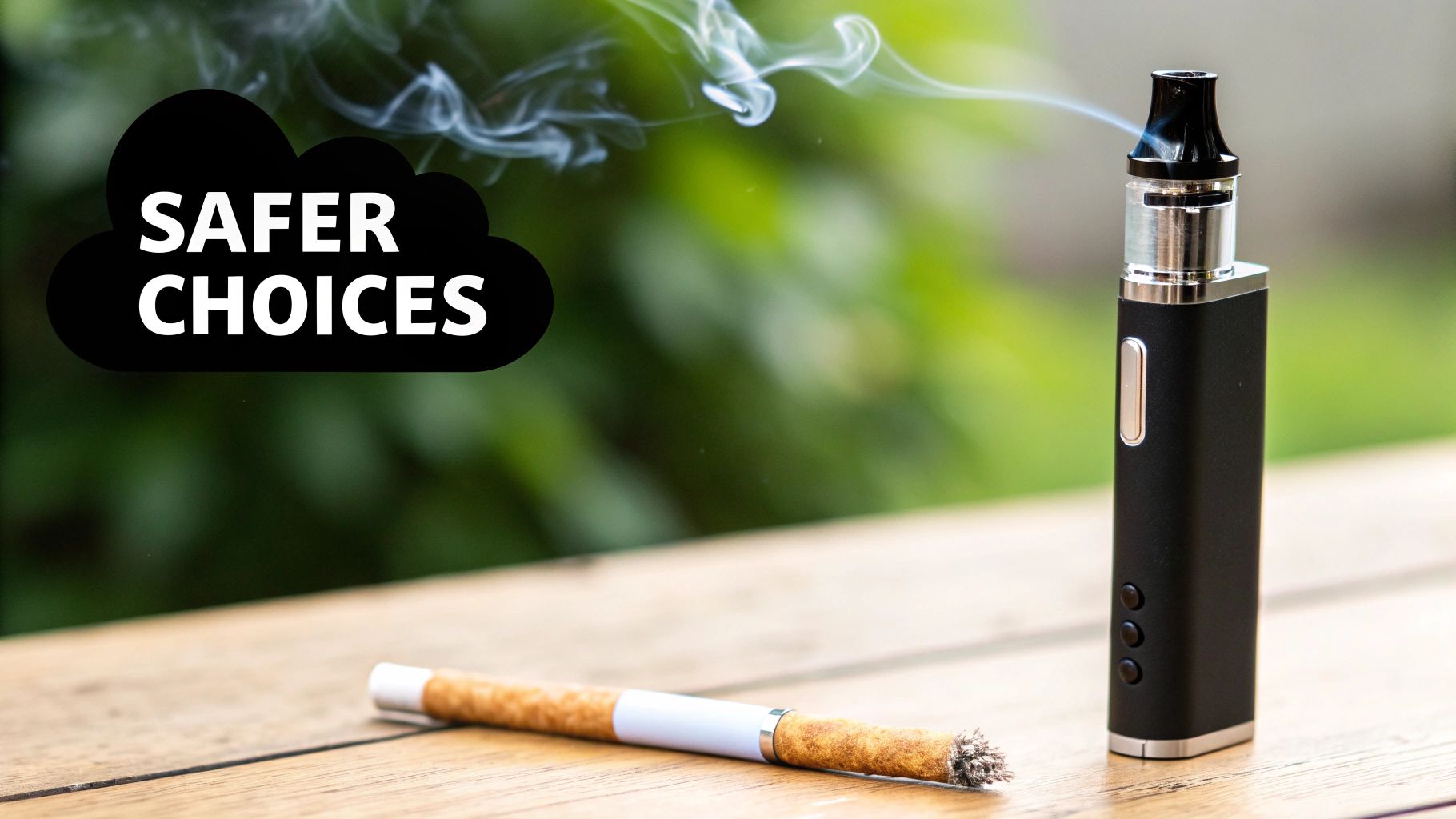
When you’re looking for a tool to help you quit, it’s vital to understand that not all fake cigarettes are created equal—especially when it comes to your health. The journey to a smoke-free life is all about reducing harm, so making an informed choice is your first major win.
The biggest difference comes down to one simple action: combustion. This is the bright, clear line between older methods and more modern approaches, and it’s a line that massively impacts your wellbeing.
The Hidden Risks of Combustible Herbal Cigarettes
There's a common and dangerous myth that because herbal cigarettes have no tobacco or nicotine, they must be safe. This couldn't be further from the truth. While they are indeed nicotine-free, the real problem is the act of burning itself.
Inhaling smoke from any burning plant matter—whether it’s tobacco or a blend of herbs—sends harmful tar and carbon monoxide straight into your lungs. Your lungs are designed for clean air, and any kind of smoke is an irritant that causes damage.
While they might help you manage the hand-to-mouth habit, they still expose you to many of the same toxins found in regular cigarettes. If you’re searching for a genuinely safer alternative, it's wise to look at other options. To get a deeper understanding, you can learn more about the complexities of using an herbal tobacco substitute in your quit journey.
The Safer Choice: Non-Combustible Alternatives
This is where options like nicotine-free vapes and mindful inhalers like AuraFlow really shine. Their main advantage is simple: they completely cut out combustion. By getting rid of the burning, you get rid of the primary source of tar and carbon monoxide.
These non-combustible devices are widely seen as a much safer choice for harm reduction compared to any form of smoking. They let you tackle the behavioural habit without the damaging side effects of smoke.
- Nicotine-Free Vapes: These devices gently heat a liquid to create a vapour, satisfying the ritual of inhalation without any burning.
- Mindful Inhalers: Devices like AuraFlow go a step further. They use pressurised air and natural flavours without producing any vapour at all, offering a clean and simple way to manage cravings.
This focus on harm reduction fits perfectly with public health strategies in the UK. The government has made incredible progress in cutting smoking rates, dropping from 26% of adults in 2000 down to just 12.9% in 2022, partly by encouraging the use of safer cessation aids. While the long-term effects of vaping are still being studied, one thing is clear: avoiding combustion is a huge step in the right direction.
Building Your Personalised Quit Smoking Plan
Alright, let's turn talk into action. This is where the real work begins, and having a solid plan is what separates a wish from a reality. Using fake cigarettes to quit smoking isn’t about swapping one habit for another forever; it's about using a temporary, clever tool to get you through the toughest parts of the journey.
The first step? Make a real decision. Pick a quit date. This isn't just a random day you circle on the calendar—it's your starting line. Choose a date in the next couple of weeks, preferably one that isn't packed with stressful events. Tell a few friends or family members to hold yourself accountable, and get your head in the game for this massive positive change.
Structuring Your First Few Weeks
Think of your fake cigarette as a temporary bridge, not a permanent home. Its entire job is to help you cross the choppy waters of the first two to four weeks, which is when the physical cravings and mental triggers are screaming the loudest. Your plan needs to treat it like the short-term tool it is.
Map out a simple timeline. For instance, you might decide to lean on the device for the first three weeks, then consciously start using it less. This simple step is crucial for preventing it from becoming a new crutch you can't get rid of.
Your quit plan doesn't have to be perfect, but it does need to be yours. It’s about creating a roadmap that works for your unique triggers, lifestyle, and goals, giving you control over the process.
As you start to map this out, it can be helpful to think about the concepts behind personalised health in general. Understanding what personalized medicine is can give you some powerful insights into tailoring a quit strategy that’s built just for you. This mindset empowers you to make choices that truly fit your individual needs, which can make all the difference for long-term success.
Identifying and Managing Your Triggers
The real magic happens when you use your fake cigarette with intention, not just mindlessly. Before your quit date, spend a few days being a detective. Notice your biggest smoking triggers. Is it that first coffee in the morning? Finishing a meal? The drive home from a long day at work?
Once you know your high-risk moments, you can plan your defence. Keep your nicotine-free alternative right where you need it for those specific situations.
- Morning Coffee: Instead of reaching for a cigarette, take a few slow, mindful breaths with your device. Feel the ritual, but skip the nicotine.
- After a Meal: Do what you normally do—step outside, take a break—but use your fake cigarette to satisfy that hand-to-mouth muscle memory.
- Stressful Moments: Use the device to ground yourself with deep breathing. You’re actively breaking the brain’s connection between feeling stressed and needing a nicotine hit.
Combining Tools for Maximum Impact
Going it alone with just one tool is a tough road. The strongest quit plans layer different support systems on top of each other, creating a safety net so you have something to fall back on.
Think about pairing your behavioural tool with professional support. The NHS Stop Smoking Services are a fantastic, free resource offering expert advice and access to Nicotine Replacement Therapy (NRT). Imagine this: a nicotine patch managing the baseline physical cravings in the background, while your fake cigarette is there to tackle the sharp, in-the-moment behavioural urges. That’s a powerful one-two punch.
You can also bring in modern mindfulness apps to help manage stress and keep your eyes on the prize. By building a plan with multiple layers, you’re not just hoping to quit—you're strategically setting yourself up for lasting success.
Understanding All Your UK Cessation Options
Using fake cigarettes to quit smoking is a brilliant way to tackle the behavioural side of addiction, but let's be honest, it's just one piece of the puzzle. To really build a quit plan that sticks, you need to know the full landscape of support available across the UK. It's especially important to see how these nicotine-free tools stack up against methods designed to fight the chemical addiction head-on.
The goal isn't to find a single "best" method. Think of it like putting together a team: each player has a unique strength. Fake cigarettes are your defensive specialists—they help you block the psychological triggers and break those automatic habits. Meanwhile, other options are your attackers, going straight for the nicotine cravings.
Nicotine Replacement vs Behavioural Support
The biggest difference between quitting aids comes down to what they target: are they fighting the physical craving or the mental habit?
- Traditional Nicotine Replacement Therapy (NRT): This is your classic lineup of patches, gums, and lozenges. They work by giving your body a controlled, steady dose of nicotine, which helps to ease withdrawal symptoms and take the physical edge off.
- Nicotine-Containing E-Cigarettes (Vapes): These have become the most popular quitting tool in England for a reason. They tackle both the chemical addiction (by delivering nicotine) and the hand-to-mouth ritual, making them a powerful dual-action tool for many people.
- Fake Cigarettes (Nicotine-Free): This group, which includes everything from herbal cigarettes to mindful inhalers like AuraFlow, contains zero nicotine. Their one and only job is to help you manage the behavioural side of things without feeding the chemical addiction.
This simple three-step process shows how the best quit plans come together.
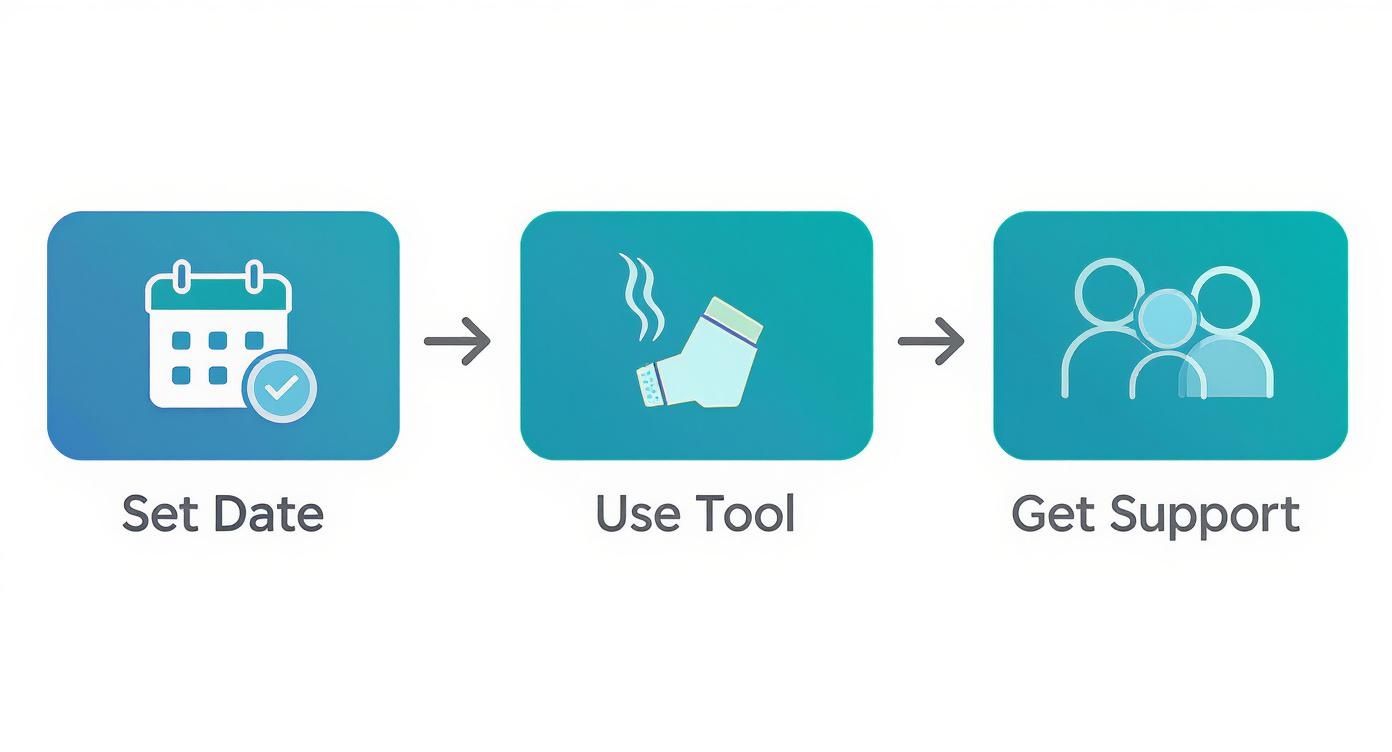
It’s about combining a firm decision with the right tool for the job and a strong support system to see you through.
The Rise of Vaping in the UK
It's impossible to ignore the impact of vaping. In England, e-cigarettes have become the go-to tool for smokers trying to quit, used in an incredible 40.2% of quit attempts from 2023 to 2024. For comparison, traditional over-the-counter NRT was used in only 17.3% of attempts. With a success rate of 23.9%, roughly one in four smokers who switched to e-cigarettes managed to quit for good. You can read more about recent smoking cessation trends in the UK here.
This data highlights a crucial point: many people find success by addressing the nicotine addiction directly. But it also proves there’s no single solution that works for everyone.
This is exactly why combining different approaches can be so effective. You might use a nicotine vape to manage the intense physical cravings, but reach for a fake cigarette or an AuraFlow during those moments when you just miss the ritual—like on your coffee break or while driving.
By understanding all your options, you can mix and match to create a truly personal strategy. Our complete guide on finding the best quit smoking aids dives even deeper into building a plan that fits you perfectly.
Got Questions? We’ve Got Answers
Let's clear up some of the common questions people have about using fake cigarettes on their quit journey. Think of this as your straightforward guide to help you move forward with confidence.
Are Herbal Cigarettes Actually Safe?
It’s a great question, and the answer isn't a simple yes or no. While herbal cigarettes are completely free from tobacco and nicotine, they aren't without risk.
The reality is, burning any plant material—whether it's tobacco or herbs—creates tar, carbon monoxide, and other nasty toxins. UK health bodies are very clear: inhaling any kind of smoke is damaging to your lungs. So, while they might help you tackle the hand-to-mouth habit, a much safer choice for harm reduction would be non-combustible alternatives like nicotine-free vapes or mindful inhalers.
Can I Use Fake Cigarettes with Nicotine Patches?
Absolutely. In fact, combining these tools is a really smart and popular strategy. It's like tackling the problem from two different angles.
The nicotine patch or gum gives your body a steady, low-level dose of nicotine to keep the physical withdrawal cravings at bay. Meanwhile, the fake cigarette gives you something to do with your hands and helps you manage all those behavioural triggers—the morning coffee, the after-dinner-smoke. It’s a powerful two-pronged attack on both the physical and psychological sides of the addiction.
It's always a good idea to chat with a healthcare professional or an NHS Stop Smoking advisor. They can help you create a plan that's tailored specifically to you, ensuring it’s both safe and effective.
How Long Should I Use a Fake Cigarette For?
Think of a fake cigarette as a temporary support tool, a bit like a crutch when you have a sprained ankle. It's there to get you through the toughest part of the journey.
The goal is to use it to break the old habits during that initial, most challenging phase of quitting—usually the first two to four weeks. After that, the focus should shift to gradually using it less and less. The ultimate aim isn't to replace one habit with another, but to become completely free from any smoking or vaping ritual, leaving you with nothing but fresh air.
Are E-Cigarettes a Type of Fake Cigarette?
This is where a lot of people get confused. While some e-cigarettes can be nicotine-free, most are specifically designed to deliver nicotine. Because of this, they're generally seen as a form of nicotine replacement therapy, not a true ‘fake cigarette’.
The landscape has changed dramatically. Recent stats from Great Britain in 2024 show that the number of adults using e-cigarettes has actually overtaken those smoking traditional ones. Around 5.4 million adults (10.0%) now vape, compared to the 4.9 million (9.1%) who smoke. It’s a huge shift in habits. You can learn more about these recent UK smoking and vaping trends.
Ready to find a mindful, nicotine-free way to manage your quitting journey? AuraFlow offers a simple and satisfying alternative that tackles the ritual without the harmful chemicals.
Discover the AuraFlow Starter Kit and begin your smoke-free life today