
If you're looking for healthy cigarette alternatives, you've already taken the biggest and most important step: deciding you want a better path. It can feel like a maze out there, but this guide is here to walk you through the most effective options available in the UK, from vaping to medically approved therapies, so you can make a choice that feels right for you.
Understanding Your Journey Away From Smoking

Starting the journey to quit smoking is a massive decision, one that deserves real support and clarity. Let's be honest, the idea of going "cold turkey" is daunting for most people, which is why exploring alternatives is such a sensible and practical approach. The whole idea behind this is harm reduction—a strategy that's all about making positive changes that seriously lower health risks, even if they aren't "perfect" from day one.
Think of it like swapping sugary fizzy drinks for flavoured sparkling water. You still get the fizz and a nice taste you enjoy, but you’ve cut out all the harmful sugar. In exactly the same way, healthy cigarette alternatives are designed to help you manage nicotine cravings and the behavioural habits of smoking, but without the thousands of toxic chemicals that come from burning tobacco.
Setting The Stage For Success
The road away from smoking isn't a one-size-fits-all map. What works brilliantly for one person might not be the right fit for you at all. Success often comes down to finding an alternative that clicks with your personal habits, your lifestyle, and what you want to achieve. The main avenues we'll explore in this guide include:
- Vaping (E-cigarettes): Mimics the familiar hand-to-mouth action of smoking while delivering nicotine without the smoke.
- Nicotine Replacement Therapy (NRT): Medically approved options like patches and gum that help manage nicotine withdrawal symptoms.
- Lifestyle Adjustments: Building new, healthier habits to replace the rituals that were once built around smoking.
The most crucial element in quitting is not just removing the cigarette, but understanding and replacing the role it played in your life. This involves both managing the chemical dependence and reshaping the daily routines built around smoking.
Building a New Mindset
Changing a long-standing habit is as much a mental game as it is a physical one. To really succeed on a smoke-free journey, you need to understand how to reshape your habits and patterns of thinking. Learning how to retrain your brain for a smoke-free life with expert techniques can be a powerful tool to have in your corner.
This guide will give you a detailed, non-judgmental look at the options out there, so you can feel confident in your choice. By understanding how each alternative works, you can pick the method that feels the most sustainable for you. For more insights on making this fresh start, explore our guide on embracing a smoke-free lifestyle.
Vaping: A Popular Alternative to Smoking

When you look at the landscape of healthier cigarette alternatives, one option stands out for its sheer popularity in the UK: vaping. Its rise isn't just a trend; it's a direct response to the core challenges people face when trying to quit smoking, tackling both the physical and habitual sides of the addiction.
So, how does it work? Think of it like a kettle. Instead of burning tobacco, a vape device gently heats a liquid—often called e-liquid or vape juice—until it becomes a vapour you can inhale. This simple change is crucial. By avoiding combustion, you sidestep the tar and carbon monoxide that make traditional cigarettes so damaging.
This move away from burning is the entire basis of its harm reduction potential. While it’s not completely risk-free, vaping is widely acknowledged to be significantly less harmful than smoking because it cuts out the most toxic elements created by fire.
Finding the Right Vaping Device
Diving into the world of vaping can feel a bit overwhelming at first with all the different gadgets on display. But really, most devices fall into a few simple categories, each built for a different kind of user.
If you’re just starting out, picking the right device can make all the difference. To help clear things up, here’s a quick look at the most common types you’ll find in the UK.
Comparing Vaping Devices for Beginners
This table breaks down the main options to help you figure out where to begin.
| Device Type | Best For | Ease of Use | Cost |
|---|---|---|---|
| Disposable Vapes | Absolute beginners looking for simplicity and convenience. | Extremely easy – use straight out of the box. | Low initial cost, but can be expensive long-term. |
| Pod Systems | Users wanting more flavour options and control over nicotine. | Very easy – just swap or refill pods. | Moderate initial cost, cheaper over time. |
| Vape Pens | Those seeking better battery life and more vapour. | Fairly easy – requires some basic maintenance. | Moderate initial cost with good long-term value. |
Ultimately, the best choice is the one that fits your lifestyle and makes the switch from smoking feel as seamless as possible.
The sheer accessibility of these devices has powered their growth. The UK e-cigarette market is set to grow by an impressive USD 1.47 billion between 2024 and 2029. This boom is a clear sign of a major shift in habits, with over 2,000 vape shops now open across the UK, all driven by convenience and the view of vaping as a safer choice.
Why Vaping Can Be an Effective Switch
Vaping's success as a tool to quit smoking really boils down to two things: it’s highly customisable, and it mimics the physical act of smoking. These two elements work together to address both the chemical addiction and the psychological habit.
First, the level of customisation is a game-changer. You can find e-liquids in countless flavours and, more importantly, in various nicotine strengths. This means you can start at a level that satisfies your cravings and then gradually step down, weaning yourself off nicotine at a pace that feels comfortable for you.
The physical hand-to-mouth action of vaping is a powerful tool for habit replacement. It satisfies the ingrained ritual of smoking, addressing the behavioural triggers that often cause people to relapse.
Second, the act of vaping feels remarkably similar to smoking. That hand-to-mouth motion, the inhale and exhale—these are deeply ingrained rituals. Vaping lets you keep that familiar routine but without the harmful smoke, making the transition feel much less jarring.
When weighing up your options, looking into a comparison of nicotine pouches versus vaping can provide even more clarity. But for many, the dual benefit of satisfying nicotine cravings while replicating the physical act makes vaping a powerful and effective first step away from cigarettes.
Exploring Medically Approved Nicotine Replacement Therapy
If you're looking for a clinically tested and medically backed way to quit, Nicotine Replacement Therapy (NRT) offers a structured path away from smoking. These are the tools you'll find in almost any pharmacy, and they're designed with one goal in mind: helping you manage withdrawal symptoms safely and effectively. NRTs are some of the most trusted healthy cigarette alternatives because they tackle the chemical addiction head-on.
They work by giving your system a clean, controlled dose of nicotine. This clever approach separates the nicotine you crave from the thousands of nasty chemicals—like tar and carbon monoxide—that come from burning tobacco. By doing this, NRTs soothe the physical withdrawal pangs that can make quitting feel like an impossible mountain to climb.
Think of NRT as a ‘nicotine parachute’. Instead of a sudden, jarring stop, it lets you glide down gently from your dependence. This gradual descent buys you the mental and physical space you need to break the powerful psychological grip of the smoking habit itself.
Understanding the Different Types of NRT
Not all NRTs are created equal. They're designed to suit different lifestyles and cravings, giving you the flexibility to find what actually works for your own journey.
The most common options you'll see are:
- Nicotine Patches: These are your "set it and forget it" solution. You stick one on your skin once a day, and it releases a slow, steady stream of nicotine to keep those background cravings quiet.
- Nicotine Gum: Perfect for ambushing those sudden, sharp cravings. Chewing the gum releases a quick hit of nicotine that’s absorbed through the lining of your mouth, offering fast relief when you need it most.
- Nicotine Lozenges: Much like the gum, these dissolve in your mouth to deliver a fast-acting dose of nicotine, helping you push through an unexpected urge to smoke.
- Nicotine Inhalators: This option is great because it mimics the hand-to-mouth action of smoking. You draw on the device to release a puff of nicotine vapour, which helps satisfy both the chemical and behavioural itches.
Choosing the right tool often comes down to your smoking patterns. A heavy smoker might find a patch offers great all-day support, combined with gum or an inhalator for those surprise cravings. For a deeper dive into what might be the best fit for you, you can read more about finding the right stop smoking aid.
NRT vs Vaping: A Critical Distinction
When weighing up healthy cigarette alternatives, it’s crucial to understand the difference between NRT and vaping. While both are considered far safer than lighting up, they play slightly different roles in the quitting game.
NRTs are masterfully engineered to deal with the chemical craving. They are brilliant at delivering nicotine cleanly and in a measured way to ease you through withdrawal. What they don't do, however, is fully replicate the behavioural rituals of smoking—the hand-to-mouth movement, the feeling of inhaling, or the routine of taking a break.
The core strength of NRT is its clinical focus on breaking the chemical addiction. Vaping, on the other hand, excels at replacing the physical and social rituals of smoking, which can be just as difficult to overcome.
This distinction is everything. For some people, just managing the nicotine withdrawal is enough to get them across the finish line. For others, the loss of the physical habit is the biggest hurdle. This is precisely why some find vaping a more natural transition—it replaces the entire smoking experience. There's no single "best" answer here; the right choice depends entirely on which part of the addiction—the chemical or the behavioural—is the bigger challenge for you.
How to Choose the Right Alternative for You
Deciding to move on from smoking is a huge win. But the next step—picking the right path forward—is just as important. With so many healthier cigarette alternatives out there, the best one is always the one that slots into your life and tackles your unique smoking habits head-on. There's no magic bullet; success comes from finding a solution that feels sustainable and, well, right for you.
To figure that out, let's go deeper than a simple pros-and-cons list. We'll take a look inwards and help you analyse what really drives your smoking habit. Answering these questions honestly will give you the clarity you need to choose between something like vaping, which mimics the physical ritual, and Nicotine Replacement Therapy (NRT), which zeroes in on the chemical craving.
Analysing Your Smoking Triggers
Let's start by pinpointing the "why" behind your habit. Your answers will steer you toward an alternative that addresses your biggest challenges from the get-go.
1. Is the hand-to-mouth ritual a big part of your smoking habit?
If you find real comfort in the simple physical act of bringing a cigarette to your lips and inhaling, then that behavioural loop is a massive trigger for you. Alternatives that echo this action, like vaping or nicotine inhalators, will probably feel a lot more natural and satisfying than a passive option like a patch.
2. Are your cravings sudden and intense or more of a constant background hum?
Think about how your cravings actually show up. If they hit you like a truck—sharp, unexpected urges—you’ll need something that acts fast. Think nicotine gum, a lozenge, or a few puffs from a vape. But if you deal with a more consistent, low-level need for nicotine all day, a nicotine patch that delivers a steady dose could be the perfect ‘set it and forget it’ solution.
3. Do you smoke more when you're stressed or bored?
So many people smoke not just for the nicotine hit, but as a way to cope with life. If that sounds familiar, you need an alternative that can also step in as a replacement ritual. The act of vaping can create that moment's pause, much like a cigarette break, while an inhalator can keep your hands and mouth busy when you're feeling on edge.
The most effective quitting strategy is one that addresses both your chemical dependence on nicotine and the psychological habits you've built around smoking. A successful switch requires replacing the entire ritual, not just the substance.
Matching Your Needs to the Right Solution
Okay, now that you've got a clearer picture of your habits, let's connect them to the options available. Each type of alternative has its own strengths, making it a better fit for certain types of smokers.
This chart shows how different NRT products are designed to tackle specific kinds of cravings.
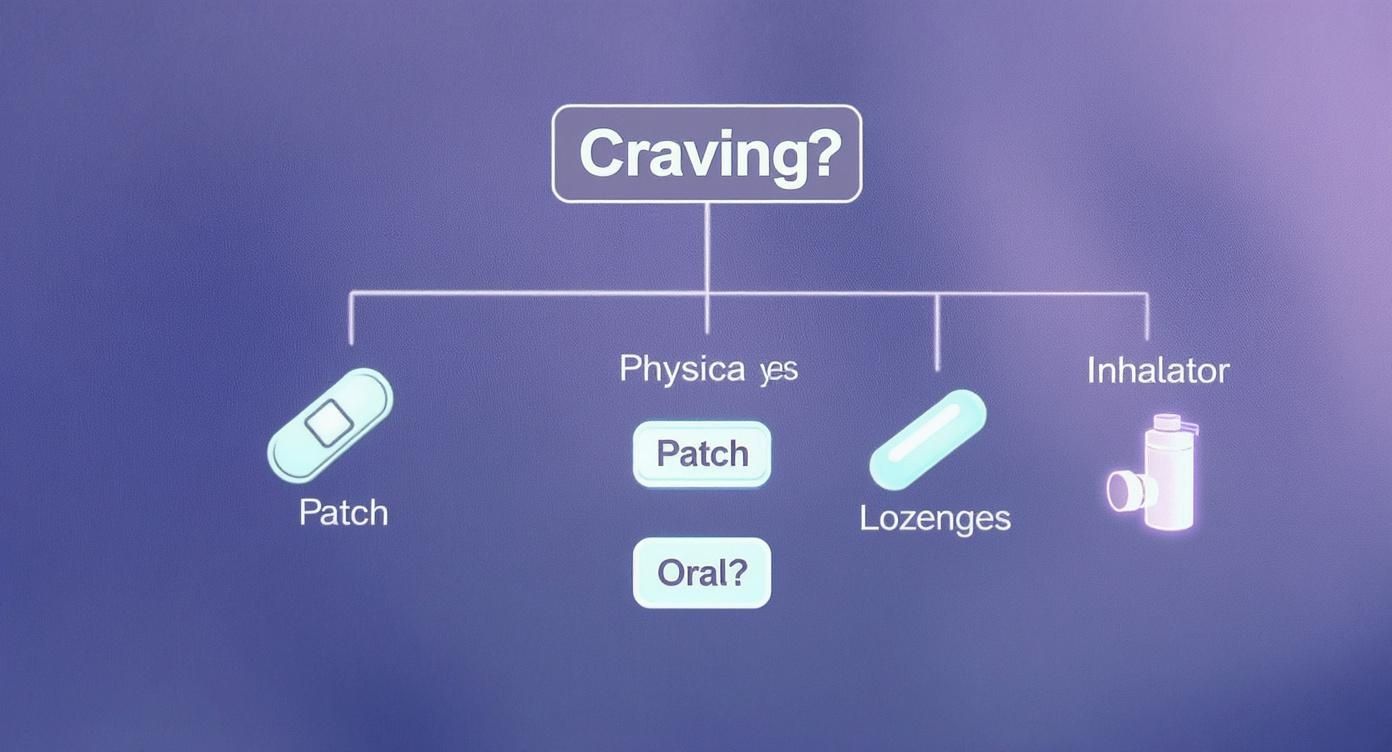
As you can see, if your main battle is with constant physical cravings, a patch offers steady, long-term support. On the other hand, options like gum or inhalators are built for immediate, on-demand relief when a sudden urge strikes.
Vaping vs NRT A Quick Comparison
To help you weigh your options, here’s a quick side-by-side look at how vaping and traditional NRT stack up. This can help you decide which approach aligns best with your personal quitting style.
| Feature | Vaping (E-Cigarettes) | Nicotine Replacement Therapy (NRT) |
|---|---|---|
| Primary Function | Mimics the hand-to-mouth ritual and sensory feel of smoking. | Delivers a controlled dose of nicotine to manage chemical cravings. |
| Delivery Speed | Fast-acting, providing immediate relief similar to a cigarette. | Varies: Gum/sprays are fast; patches offer slow, steady release. |
| Behavioural Support | High. Directly replaces the physical habit. | Low (except inhalators). Focuses mainly on the chemical addiction. |
| Flavour Variety | Wide range of non-tobacco flavours to help break taste association. | Typically limited to mint or unflavoured options. |
| Best For | Smokers who are highly dependent on the physical ritual. | Those who want to tackle nicotine dependence first and foremost. |
| Ease of Use | Requires some learning (devices, liquids). | Very simple and discreet (e.g., applying a patch, chewing gum). |
Ultimately, both paths can lead to success. Vaping is often the choice for those who need to replace the entire smoking experience, while NRT is a more direct, clinical approach to breaking the chemical dependency.
The Role of Vaping as a Behavioural Substitute
For a lot of people, vaping just works because it so closely replaces the physical and sensory experience of smoking. Its growing popularity in the UK really speaks to how well it fills that gap. Current data shows that around 12.6% of adults in Great Britain are now vape users, with many finding that the variety of non-tobacco flavours helps them finally break away from the taste of traditional cigarettes. You can dive deeper into the latest vaping trends in Great Britain and their impact.
At the end of the day, choosing the right healthy cigarette alternative is a personal journey. By really understanding your own triggers and needs, you can pick a method that not only helps you quit but also feels like a natural part of your new, smoke-free life. This personalised approach gives you a much better shot at long-term success, empowering you to leave smoking behind for good.
Lifestyle Changes That Support a Smoke-Free Life
Finding a healthier alternative to cigarettes is a massive first step. But to make that change stick, the real magic happens when you start building a new lifestyle that doesn't revolve around smoking. This goes way beyond just fighting off nicotine cravings. It’s about consciously rewiring those deep-rooted habits and triggers that have kept you tethered to cigarettes for so long.
Think of it this way: your old smoking habit was a well-worn path in your brain, one you walked down automatically. Now, the goal is to forge new, healthier paths. The first step is to get curious and act like a detective, figuring out what your personal smoking triggers really are.
Identifying and Replacing Your Triggers
A trigger can be anything. It could be that first sip of morning coffee, the feeling of finishing a good meal, or the anxiety of a looming deadline at work. These moments were your brain's cue to light up. Once you know what they are, you can craft a plan to swap that old, destructive action for a new, positive one.
Here are a few common triggers and some simple swaps to get you started:
- Morning Coffee: If your coffee and cigarette were a morning ritual, it's time to break them up. Try drinking your coffee in a different room or even switch to a flavourful herbal tea for a week just to reset that mental connection.
- Driving: The car is a classic trigger spot. Before you even turn the key, have a healthy snack, a bottle of water, or a great playlist ready to go. The idea is to engage your senses with something else entirely.
- Stressful Moments: When that familiar wave of stress hits, don't reach for a smoke. Instead, step outside for a brisk five-minute walk. The fresh air and movement can do wonders to clear your head and shift your perspective.
The secret is having a replacement plan ready to go before the trigger ever hits. This proactive approach puts you back in the driver's seat, turning an old cue for smoking into a new prompt for a healthier choice.
Every time you consciously choose a new action, you weaken the old neural pathway and strengthen a new one. This simple process of identifying and replacing is the bedrock of lasting change.
The Power of Sensory Substitutes
Quitting isn't just a chemical battle; it's a sensory one, too. The whole ritual of smoking engages your hands, your mouth, even your sense of smell. Finding healthy ways to satisfy these senses can make the entire journey feel so much smoother. Calming aromas, for instance, can work wonders in managing those cravings by fulfilling that ritualistic need.
This is where building a personal toolkit of sensory substitutes becomes so valuable. You might find that chewing sugar-free gum, sipping ice-cold water through a straw, or even just taking a few mindful breaths can make all the difference. For many people, learning how to handle stress without the crutch of a cigarette is the biggest hurdle. That's why exploring a range of healthy coping mechanisms for stress is one of the most powerful things you can do.
Ultimately, these small adjustments are about building a new identity—the identity of a non-smoker who has better, healthier ways to navigate life's ups and downs. Each time you choose a walk over a cigarette, you're casting a vote for that new identity and paving the way for a truly smoke-free future.
AuraFlow: A Sensory Tool for Habit Change
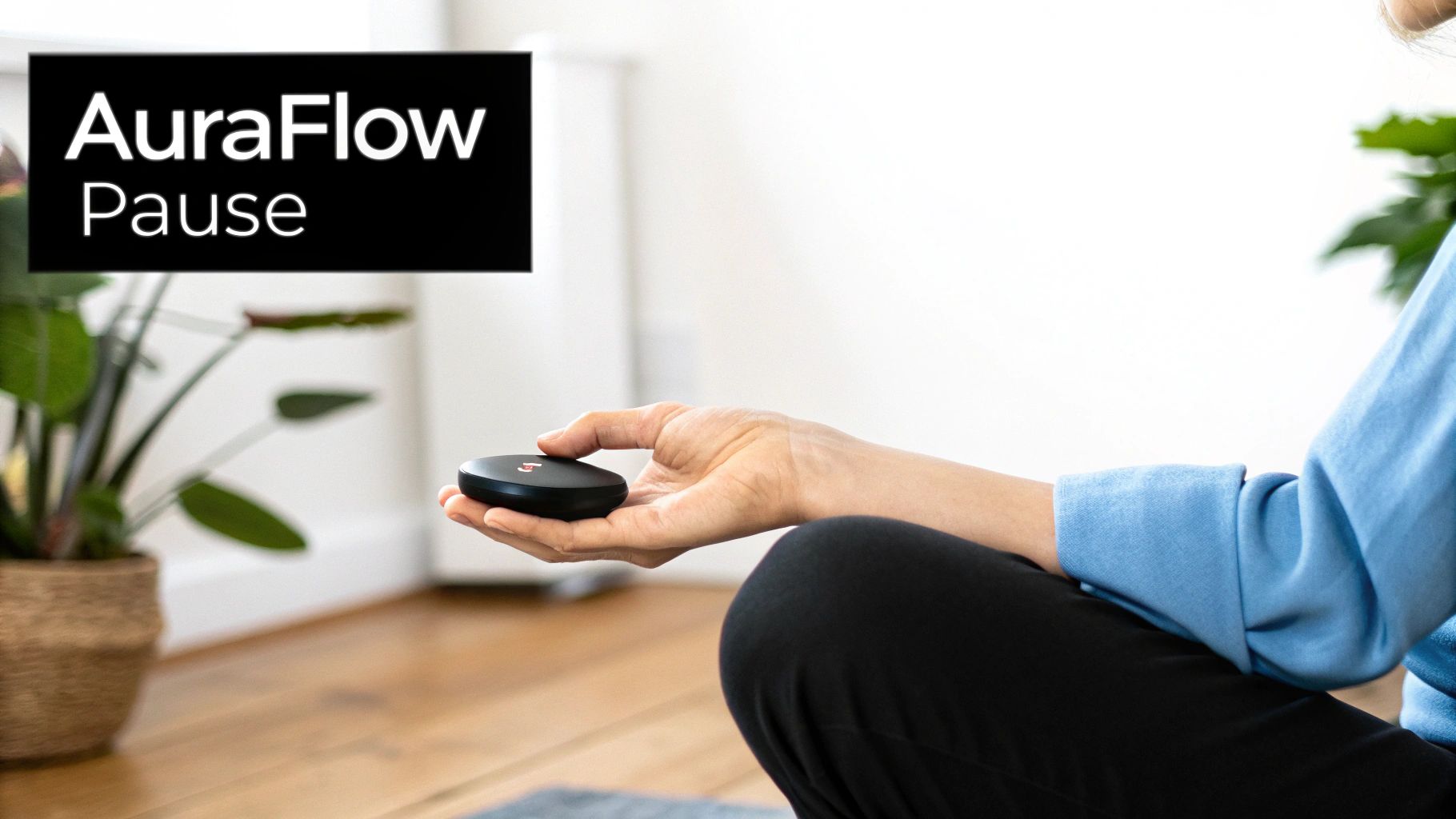
So many alternatives out there focus purely on replacing nicotine, but they often miss a massive piece of the puzzle: the ingrained sensory habits. It's the physical act, the hand-to-mouth ritual, that can be just as hard to shake.
This is where AuraFlow steps in. It’s not another nicotine product. Think of it as a complementary tool, designed to tackle the behavioural side of smoking head-on. It’s a beautifully simple device created to support your journey by satisfying that familiar hand-to-mouth action with something pleasant and entirely guilt-free.
Picture it as a way to reclaim your break time. Instead of ducking outside for a cigarette, you can use AuraFlow for a mindful pause. Its completely nicotine-free, plant-based formula delivers a subtle sensory experience that helps you navigate cravings in those trigger moments—without derailing all your hard work.
Integrating AuraFlow Into Your Quitting Plan
AuraFlow was designed with flexibility in mind, so it can slot right into whatever strategy you're already using. It's about integration, not replacement.
For example, it can be a powerful partner for someone using a nicotine patch. While the patch quietly handles the background chemical cravings, AuraFlow satisfies that immediate, physical urge to hold and puff on something. This dual approach addresses both sides of the addiction at the same time.
It can also be the final step on your journey, helping you transition away from nicotine-based alternatives altogether by providing a gentle, non-addictive ritual to fall back on.
The goal is to transform what was once a smoking break into a moment of mindful calm. AuraFlow provides the physical action you’re used to, but with a new, positive association that supports your long-term wellbeing.
The market for smoking alternatives is booming. In the UK, the e-cigarette market alone is projected to hit a value of around £1.65 billion by 2025, a clear sign that people are actively seeking safer options. As this market grows, so does the demand for non-nicotine tools that support behavioural change. You can find more insights into the UK e-cigarette market on Market Report Analytics.
AuraFlow carves out its own unique space here. It’s not about finding yet another way to consume nicotine; it’s about finally building a new, healthier habit that breaks the cycle for good. By focusing on the sensory and behavioural aspects, it offers a supportive and different path toward a truly smoke-free lifestyle.
Got Questions About Smoking Alternatives?
Dipping your toes into the world of healthy cigarette alternatives can feel a bit confusing. It's totally normal to have questions or feel a bit unsure when you’re making such a big change in your life. To help clear the air, we’ve put together answers to some of the most common things people ask, so you can feel confident on your journey.
Are They Really Safer Than Smoking?
This is the big one, and the short answer is a resounding yes. While no nicotine product is completely harmless, the real danger in cigarettes comes from the thousands of toxic chemicals created when you burn tobacco. It’s the smoke that does the damage.
Alternatives like vaping and Nicotine Replacement Therapy (NRT) get rid of the fire. By taking combustion out of the equation, you sidestep the most harmful part of smoking. This is the very heart of what harm reduction is all about.
What About the Nicotine Itself? Is It Dangerous?
Another common worry is about nicotine. Lots of people think it's the chemical that causes cancer, but that's a myth. Nicotine is addictive, and that addiction is what keeps people trapped in a cycle of inhaling toxic smoke.
NRT products are actually medically approved because they deliver nicotine cleanly. They help you break free from the incredibly harmful delivery system of a cigarette, without forcing you to go cold turkey on the substance your body has become used to.
Are These Alternatives Still Addictive?
That’s a fair and important question. Yes, nicotine in any form is addictive. The idea behind using alternatives like vaping or NRT is to first switch to a much less harmful source of nicotine. From there, you can choose to gradually reduce your intake over time, if that’s your goal.
With vaping, for example, you have complete control over the nicotine strength in your e-liquid, which lets you step down the dosage at your own pace. NRT is designed in the same way, offering a structured plan to slowly wean yourself off.
"The aim is to move down the continuum of risk. Switching from combustible cigarettes to a less harmful alternative is a major public health victory, even if the final step of quitting nicotine comes later."
It's also telling that recent studies have explored making cigarettes themselves less addictive to help millions quit. There’s even been a proposed standard to cut the nicotine in cigarettes by 95%, which shows the focus is shifting towards breaking the cycle of addiction right at the source.
Can I Actually Afford to Switch?
Many people get put off by the potential cost, but in the long run, using healthy cigarette alternatives is almost always far cheaper than keeping up a smoking habit.
Sure, the initial cost of a vape kit might feel like a bit of an investment. But the ongoing expense of e-liquid or replacement pods is just a fraction of what you'd spend on a daily pack of cigarettes. Those savings really add up, making the switch to a smoke-free life a win for your health and your wallet.
Ready to take the next step with a sensory tool designed for habit change? Discover how AuraFlow can support your smoke-free journey with its nicotine-free, plant-based formula. Find your moment of calm at https://aura-flow.co.uk.