
Kicking a smoking habit is a huge undertaking, but having the right tools in your corner can make all the difference. Quit smoking inhalers are designed to tackle the two-headed beast of quitting: the physical nicotine cravings and that powerful hand-to-mouth habit that's so deeply ingrained.
Think of them as a supportive bridge, helping you cross over to a smoke-free life. They generally fall into two camps: the traditional nicotine replacement therapy (NRT) route and more modern, nicotine-free alternatives.
Starting Your Smoke-Free Journey with Inhalers
Deciding to quit is easily one of the best things you can do for your health. For so many people, the driving force is the desire to feel better, live longer, and be there for their loved ones. Looking at the bigger picture, like understanding longevity statistics, can really cement that commitment. Inhalers give you a practical, hands-on way to make that goal a reality by addressing the core challenges head-on.
Their real magic lies in how they mimic the physical act of smoking. That ritual can be just as tough to break as the chemical addiction itself. This makes them a pretty unique tool compared to other devices to quit smoking like patches, which don’t do anything to satisfy that hand-to-mouth action.
The Two Paths to Quitting with Inhalers
When it comes to choosing an inhaler, you've got two main options, and each one is built for a different kind of journey.
A quick look at your choices can help you figure out what makes the most sense for you.
Quick Guide to Quit Smoking Inhalers
| Inhaler Type | Primary Mechanism | Best For |
|---|---|---|
| Nicotine Replacement (NRT) | Delivers a small, controlled dose of nicotine to manage physical withdrawal. | Someone who needs to gradually reduce their nicotine dependence while still mimicking the act of smoking. |
| Nicotine-Free | Addresses the behavioural habit and oral fixation with flavoured air or essential oils. | Someone who wants to break the physical ritual and hand-to-mouth habit without any nicotine at all. |
This side-by-side shows there’s likely an inhaler that fits your specific needs, whether you need to wean off nicotine slowly or just need a stand-in for the physical habit itself.
A Closer Look at Your Options
-
Nicotine Replacement Therapy (NRT) Inhalers: These are medically approved devices that give you a small, controlled dose of nicotine. The whole point is to ease those tough withdrawal symptoms and physical cravings without exposing you to the tar and carbon monoxide in cigarette smoke.
-
Nicotine-Free Inhalers: These are a more modern approach. They contain zero nicotine. Instead, their entire focus is on satisfying the behavioural side of things—that oral fixation and the need to do something with your hands. They often use pleasant flavours to create a calming, sensory experience that replaces the old habit.
In England, nicotine replacement therapy (NRT) is a well-established and effective tool. In fact, research shows that when you combine it with support from a counsellor, it can double your chances of quitting compared to going it alone. There's even evidence suggesting inhalers can give you better odds of quitting successfully than other NRT forms like patches or gum.
This dual approach means you can find an inhaler that truly fits your quitting style.
How Nicotine Inhalers Help You Take on Cravings
When you’re trying to quit smoking, you’re fighting a battle on two fronts: the physical craving for nicotine and the deep-seated psychological habit of lighting up. Nicotine inhalers are clever tools because they tackle both at once.
Think of nicotine addiction like a nagging hunger. A cigarette is like a huge, unhealthy meal that hits you all at once, while a nicotine inhaler is more like a small, steady snack. It’s just enough to keep those intense hunger pangs away, but without all the harmful stuff that comes with smoking.
When you puff on an inhaler, a measured dose of nicotine vapour is absorbed through the lining of your mouth and throat. This satisfies the brain receptors that are screaming out for a fix. But here’s the key difference: the delivery is much slower and the dose is lower than a cigarette. This helps to gently break the intense reward cycle that keeps you hooked.
By taking the edge off withdrawal symptoms like irritability, anxiety, and restlessness, it frees you up to focus on the bigger picture: dismantling the actual habit of smoking.
Breaking the Hand-to-Mouth Habit
So much of smoking is pure muscle memory. The feel of the cigarette, the familiar motion of bringing it to your lips, the sensation of the draw—it’s a powerful ritual. A nicotine inhaler mimics this hand-to-mouth action perfectly, giving your hands and mind something familiar to do.
By swapping the cigarette for an inhaler, you're essentially retraining your brain. You get to keep the comforting motion but ditch the toxic delivery system. For many people, this makes the psychological side of quitting feel a whole lot less daunting.
This double-action approach—addressing the chemical need and the behavioural urge at the same time—is what makes inhalers to quit smoking such a practical choice for so many.
Following a Gradual Tapering Plan
The goal here isn't to swap one habit for another forever. A nicotine inhaler is a stepping stone. It’s designed to be used as part of a plan to gradually reduce your nicotine intake until you don’t need it at all.
A typical journey looks something like this:
- Weeks 1-8 (The Reset Phase): Use the inhaler whenever a strong craving hits. This is all about establishing a new, healthier response to your smoking triggers.
- Weeks 9-12 (The Tapering Phase): Start to consciously cut back on how many times you use the inhaler each day. This gives your body time to adjust to lower levels of nicotine without a sudden shock.
- The Final Phase: Soon, you'll only be reaching for it in really tough moments, until one day, you realise you don't need it anymore.
This structured, gradual reduction is what sets you up for long-term success. It helps you avoid the jarring experience of going "cold turkey" while you methodically build your independence from nicotine.
In fact, nicotine inhalers have become a trusted part of the UK's strategy to help people quit. National survey data shows that quit attempts using prescription NRTs like inhalers are associated with a nearly doubled chance of success compared to quitting without any help. If you're curious about the science, you can explore the research behind smoking cessation aids to see how these tools fit into public health frameworks.
Comparing Inhalers with Other Quitting Aids
When you decide to quit smoking, the sheer number of options can feel a bit much. Patches, gums, vapes, inhalers… where do you even start? The trick is to look past the marketing and think about how each one fits into your life and tackles your specific triggers.
For so many of us, the real struggle isn’t just the nicotine craving. It's breaking that deep-seated, hand-to-mouth habit that’s become second nature. This is where inhalers to quit smoking really come into their own. A patch works silently in the background, but an inhaler gives you a physical action—something to do when a craving hits. It directly replaces the ritual of smoking in a way other aids just can't.
Choosing Your Quit Aid Inhalers vs Vapes vs Patches
Let's break down the most common options to see how they stack up. Each one has its place, but the best choice depends entirely on what part of the habit you find hardest to break. Are you fighting background cravings, sudden urges, or the physical ritual itself?
| Feature | Nicotine Inhaler | E-Cigarette (Vape) | Nicotine Patch |
|---|---|---|---|
| Primary Use | Tackles sudden cravings and the hand-to-mouth habit. | Mimics the smoking ritual with nicotine delivery. | Provides a steady, slow release of nicotine all day. |
| How It Works | Puff on the inhaler to release nicotine vapour into the mouth. | Heats a liquid to create an inhalable aerosol. | Worn on the skin, delivers a constant dose of nicotine. |
| Craving Relief | Fast-acting. Good for sudden, intense urges. | Fast-acting. Delivers nicotine quickly to the lungs. | Slow-acting. Prevents baseline cravings but not sudden ones. |
| Habit Replacement | Excellent. Directly replaces the physical hand-to-mouth action. | Excellent. Closely mimics the entire smoking experience. | Poor. Doesn't address the behavioural side of smoking. |
| Discretion | Good. Can be used discreetly without producing large clouds. | Poor. Vapour clouds can be obvious and are often restricted. | Excellent. Completely hidden under clothing. |
| Ease of Use | Very simple. No batteries, charging, or liquids to manage. | Complex. Requires charging, refilling, and coil changes. | Very simple. Just apply it and forget about it for the day. |
Ultimately, this isn't about finding the 'best' quit aid, but the best one for you. If the physical act of smoking is your biggest hurdle, an inhaler offers a unique and effective solution that patches and gum simply can't match.
Inhalers vs Patches and Gum
Nicotine patches are fantastic for managing that low-level, background hum of withdrawal. By releasing a slow, steady stream of nicotine all day, they keep the worst of the cravings at bay. The problem? They do nothing for those sudden, sharp urges that blindside you when you're stressed or catch a whiff of cigarette smoke.
Gum offers a faster hit, but it misses the point for anyone who feels lost without the familiar motion of smoking. It just doesn't satisfy that deep psychological need. An inhaler is the perfect middle ground, giving you fast-acting relief combined with that comforting, physical ritual.
This simple journey map shows how an NRT inhaler can slot directly into your quit plan, making the transition feel more manageable.
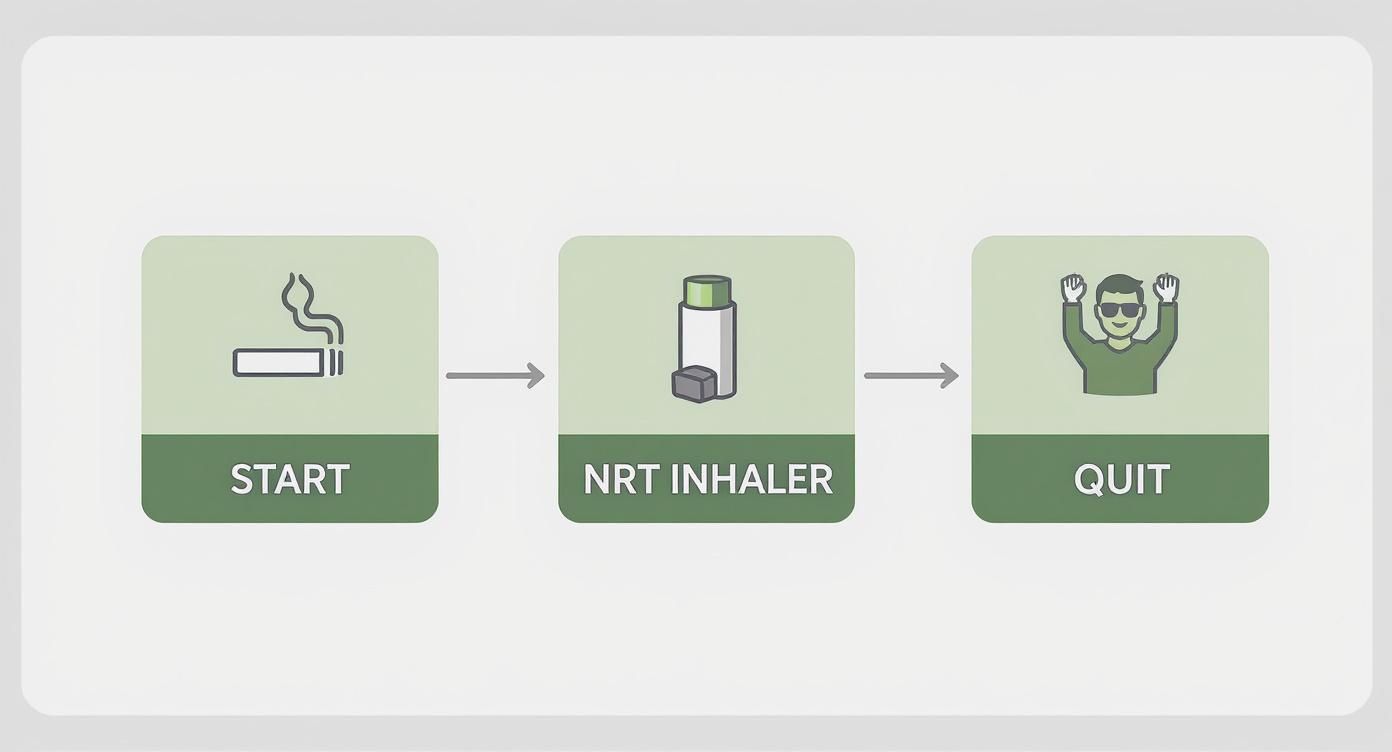
It frames the inhaler as a key tool to get you from day one to being smoke-free, helping you navigate those moments of weakness.
What About Vapes and E-Cigarettes?
There’s no denying that vaping has become a hugely popular way to quit smoking in the UK, and for good reason. They are very effective at mimicking the hand-to-mouth action and delivering a quick nicotine hit. In fact, they’ve been the most common quitting tool since 2013. A government-commissioned review even found that quit attempts using a vape had an impressive success rate of 64.9% in stop smoking services between 2020 and 2021.
But vaping isn’t for everyone. Some people are keen to move away from nicotine altogether, while others just don't want the fuss of charging devices, buying e-liquids, and dealing with technical bits and pieces. This is where both NRT and nicotine-free inhalers shine. They give you the ritual without the electronics, the vapour clouds, or the complex chemical flavourings found in many vapes. You can learn more about finding the right stop smoking aid for your journey in our detailed guide.
The best quitting tool is the one you will actually use consistently. An inhaler’s strength lies in its ability to satisfy the behavioural urges that other aids, like patches, simply cannot address.
At the end of the day, the choice is yours. If the physical act of smoking is your biggest demon, an inhaler provides a focused and effective solution that other aids just can't replicate.
Taking a Look at Nicotine-Free Inhaler Alternatives
What if the biggest thing holding you back isn't the nicotine, but the simple comfort of the habit itself? For so many people, that familiar hand-to-mouth motion is the hardest part to let go of. This is where nicotine-free inhalers to quit smoking come in, offering a modern, common-sense solution. They shift the focus away from managing nicotine withdrawal and onto dismantling the psychological habit.
These clever devices contain zero nicotine, tobacco, or any other addictive stuff. Their goal is completely different from NRT. Instead of feeding a chemical craving, they provide a clean, satisfying sensory experience designed to replace the physical and mental patterns of smoking.
This approach is so effective for a couple of key reasons. It directly tackles that oral fixation and the need to do something with your hands. It gives you an immediate, healthy replacement for those trigger moments—like with your morning coffee or after a meal—helping you reclaim the ritual without any of the harm.
Reclaim the Ritual with Flavour and Scent
Nicotine-free inhalers work by tapping into your senses. Instead of breathing in harsh smoke, you draw in pleasant, plant-based aromas. This starts to build a new, positive association in your mind, replacing the memory of a cigarette with a calming, flavourful experience.
At its heart, this method is all about mindful breathing. When a craving hits, instead of instinctively reaching for a cigarette, you take a slow, deliberate puff from the inhaler. This small act encourages you to pause, breathe deeply, and manage stress in a much more constructive way. You're essentially retraining your brain’s response to old triggers.
The core idea is simple but powerful: you satisfy the physical urge of the hand-to-mouth action while introducing a new, positive sensory ritual. This helps break the psychological loop of addiction without relying on any addictive chemicals.
For anyone who has already managed to wean off nicotine but still feels the ghost of that old habit, these inhalers are a perfect tool. They act as a safety net, helping you navigate cravings without reintroducing the very substance you’ve worked so hard to leave behind.
The Power of Aromatherapy in Your Quit Journey
Many of these nicotine-free alternatives use the principles of aromatherapy to help you manage cravings and stress. We know certain scents can have calming or uplifting effects, which can be an incredible help during the often-anxious process of quitting.
For example, inhaling a minty flavour can feel refreshing and cleansing, while a fruity aroma might offer a welcome distraction. It’s about creating a moment of mindfulness instead of giving in to an old, automatic habit. An aromatherapy inhaler pen can be a subtle yet powerful ally on your journey.
This makes them a fantastic option for anyone who wants to quit smoking without using NRT from day one. They empower you to tackle the behavioural side of the addiction head-on, building a sustainable, smoke-free lifestyle based on new, healthier rituals. By focusing on replacing the habit, these inhalers offer a gentle yet effective path to freedom.
Building Your Personal Quit Plan with an Inhaler

Having an inhaler is a fantastic first step, but like any good tool, it’s only as effective as the person using it. Simply having one isn't the magic bullet; success comes from weaving inhalers to quit smoking into a proper, structured strategy. It’s about turning good intentions into real, lasting change by being prepared for those tough moments before they hit.
Think of it like planning a road trip. You wouldn’t just jump in the car and hope for the best. You’d map your route, know where you’re stopping, and have a plan for any detours. Your quit journey deserves that same thoughtful preparation.
Setting the Stage for Success
A little groundwork before you even start can make all the difference. The goal is to create a clear, actionable plan that feels both motivating and manageable, not overwhelming.
First, lock in a quit date. Write it down. This simple act makes your goal feel real and gives you a concrete target to aim for. Next, it’s time to play detective and get honest about your smoking triggers.
- Your Morning Coffee: Does that first sip feel incomplete without a cigarette?
- Work Breaks: Is it just automatic to join the smokers outside?
- After a Meal: Is lighting up your non-negotiable post-dinner ritual?
- Stressful Moments: Do you reach for a cigarette the second pressure mounts?
Once you know your triggers, you can plan to meet them head-on with your inhaler instead of a cigarette. This isn't about willpower alone; it's about having a smarter response ready to go.
Your quit plan is your personal roadmap. It anticipates the challenges and gives you a new, healthier action to take in those critical moments, turning potential setbacks into opportunities for success.
Putting Your Inhaler into Practice
With your plan ready, let’s talk about using your inhaler effectively. When a craving strikes, the technique is simple: take a slow, deliberate puff. For a nicotine inhaler, this delivers a dose of nicotine to silence the urge. For a nicotine-free option like AuraFlow, it provides a powerful sensory replacement that satisfies the ritual.
The secret ingredient here is consistency. For the first few weeks, make the inhaler your go-to response for every single craving. You’re doing something incredibly important here: building new neural pathways and retraining your brain to seek a healthier comfort.
Over time, you'll naturally start to taper off. You'll find yourself reaching for it less and less, maybe only during a particularly stressful meeting or a long drive. This gradual reduction is what makes your smoke-free life a sustainable, permanent change. And remember, combining your inhaler with support from NHS services or quit-smoking apps can give you a massive boost, creating a solid support system for the entire journey.
Understanding Safety and Potential Side Effects
Making an informed choice about inhalers to quit smoking means looking at the full picture, including what to expect in terms of safety. Knowing the potential side effects helps you feel confident and prepared as you start your journey to becoming smoke-free.
When it comes to nicotine replacement therapy (NRT) inhalers, most side effects are mild and don't last long. It’s pretty common to feel a bit of irritation in your throat or mouth, and maybe even have a slight cough at first. Think of it as your body adjusting to something new; these feelings usually fade within the first week as you get used to it.
Still, it’s always sensible to be aware of how NRT might affect you, especially if you have certain health conditions.
When to Consult Your Doctor
While NRT inhalers are considered safe for most adults, it's always a good idea to have a quick chat with your doctor or pharmacist before starting, especially if you:
- Are pregnant or breastfeeding.
- Have a heart condition, like a recent heart attack or an irregular heartbeat.
- Are taking prescription medication for depression or asthma.
- Have severe throat problems or uncontrolled high blood pressure.
A quick conversation can give you peace of mind and ensure an NRT inhaler is the right and safest choice for you. They’ll offer personalised advice to help you quit in the best way possible.
The whole point of a quitting aid is to be safer than smoking. NRT inhalers nail this by delivering nicotine without the thousands of toxic chemicals, like tar and carbon monoxide, that you get from cigarette smoke.
The Safety of Nicotine-Free Alternatives
On the other hand, nicotine-free inhalers like AuraFlow take a completely different approach and come with a very strong safety profile. Because they contain no nicotine or other addictive chemicals, the side effects linked to NRT simply aren't a factor.
These devices use natural, plant-based flavours to create a pleasant and satisfying experience. This makes them a fantastic option for almost anyone looking to tackle the behavioural side of smoking without introducing any new substances into their body. Their sole focus is on helping you break that hand-to-mouth habit in a gentle, mindful way.
Got Questions About Quit Smoking Inhalers?
Dipping your toes into a new way of quitting always brings up a few questions. When it comes to inhalers to quit smoking, you need clear, straightforward answers to feel good about the path you’re choosing. Let's walk through some of the most common queries and clear up any of that lingering uncertainty.
Knowing what to expect helps you start this journey feeling informed, confident, and ready to succeed.
How Long Should I Use a Nicotine Inhaler For?
A typical run with a nicotine inhaler is usually about 12 weeks. The standard advice is to use it consistently for the first eight weeks to really get a handle on your cravings. From there, you’ll spend the next four weeks slowly tapering down your use, which lets your body adjust without a sudden shock.
But remember, everyone’s journey is different. It’s always best to follow the personalised advice you get from your GP or a dedicated stop smoking advisor to get the best outcome for you.
Can I Mix an Inhaler with Other NRT Products?
Yes, you can—and it’s often a very smart move known as combination therapy. Think of it as a tag-team approach. Pairing a fast-acting tool like an inhaler with a long-lasting one, like a patch, can give you round-the-clock support.
The patch works quietly in the background, delivering a steady, low level of nicotine to keep the worst of the withdrawal symptoms away. The inhaler is your go-to for tackling those sudden, intense cravings that pop up out of nowhere. Just be sure to have a chat with a healthcare professional before you start mixing therapies.
Are Nicotine-Free Inhalers Actually Any Good?
Absolutely. They’re fantastic for dealing with the psychological and behavioural side of the addiction, which is often the toughest part to crack. These inhalers are designed specifically to satisfy that powerful hand-to-mouth habit and give you a sensory ritual to fall back on during stressful moments.
They are a brilliant tool for anyone who has already weaned themselves off nicotine or for those who want to quit without using any nicotine from the get-go.
Will I Just Get Addicted to the Nicotine Inhaler Instead?
The risk of getting hooked on an NRT inhaler is incredibly low. These products deliver nicotine much more slowly and in smaller doses than cigarettes, which makes them far less addictive.
Their whole purpose is to take the edge off withdrawal so you can focus your energy on breaking the actual habits and rituals of smoking. When you use them as directed, they're just a temporary stepping stone on your path to becoming completely nicotine-free.
Ready to reclaim your ritual without nicotine? AuraFlow offers a flavour-forward, mindful way to quit. Discover the starter kit and begin your smoke-free journey with a calming breath. Find your flavour at https://aura-flow.co.uk.