
So, you've heard about licorice wood sticks. What exactly are they?
Simply put, licorice wood sticks are the dried roots of the Glycyrrhiza glabra plant. They’re known for their distinct natural sweetness and tough, chewy texture. Some people call them a 'natural pacifier for adults', and for good reason. They offer a straightforward, non-addictive way to deal with that hand-to-mouth habit that so many smokers struggle to break, and they’re completely free from nicotine and other chemicals.
Discovering Licorice Wood Sticks
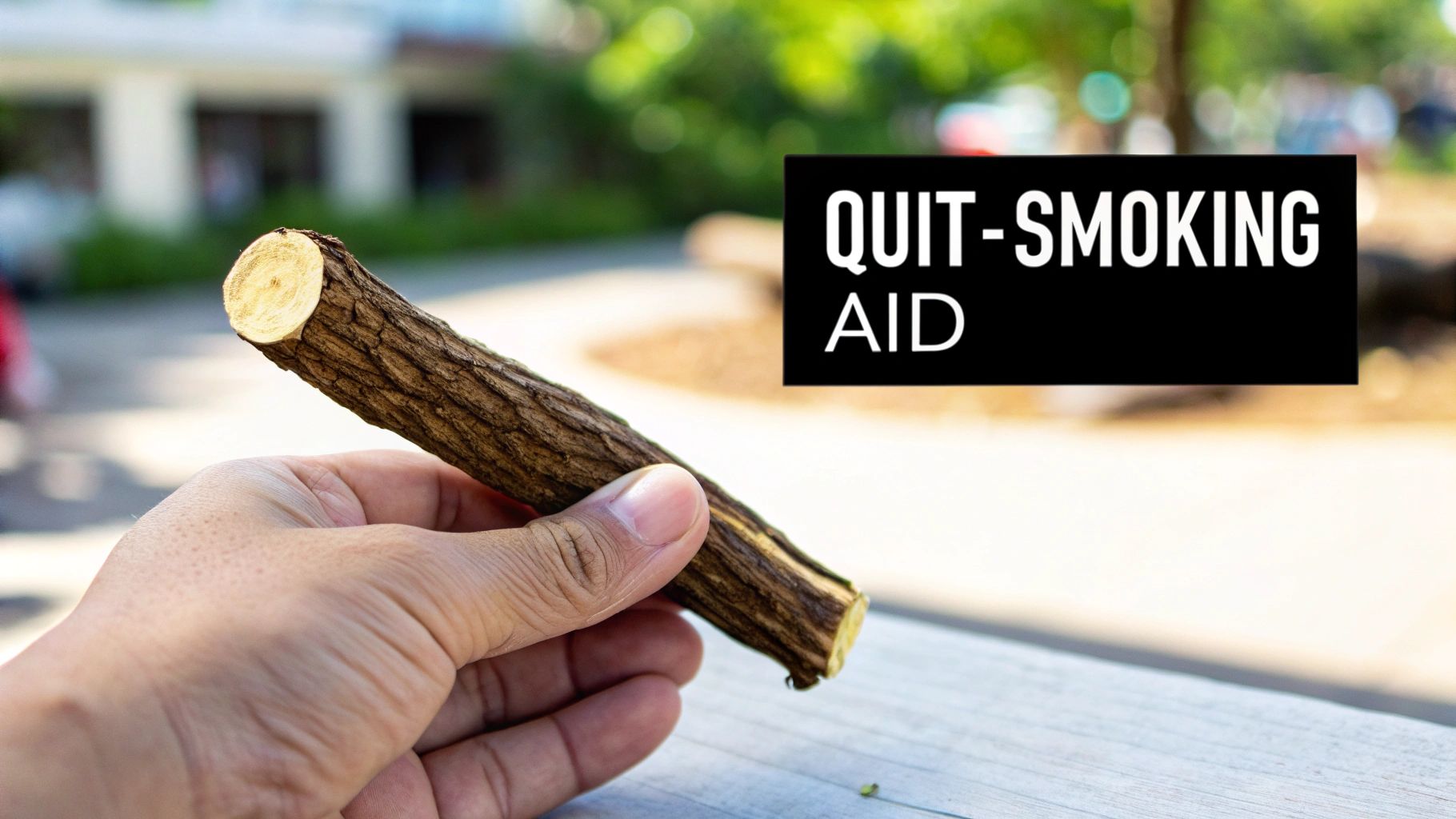
When you're trying to stop smoking, you quickly realise the fight isn’t just with nicotine. Often, the real battle is with the deeply ingrained physical habits you've built up over years. This is where something like a licorice wood stick can be a game-changer. It tackles the behavioural side of the addiction head-on by giving you a satisfying sensory substitute.
Just the simple act of holding, chewing, or sucking on a stick mimics the smoking ritual, giving your hands and mouth something to do when a craving hits. This physical distraction can be an incredibly powerful tool for getting through those trigger moments, like your morning coffee or that first break from work.
More Than Just a Quitting Aid
Licorice sticks aren’t just a modern trick for quitting smoking; they have a rich history in traditional wellness practices that goes back thousands of years. The root has been used across cultures to soothe sore throats, help with digestion, and just provide a bit of comfort.
This dual purpose makes them a really appealing choice, especially if you're looking for more natural solutions in your life. Their growing popularity is part of a bigger shift we're seeing towards plant-based wellness.
The UK Licorice Root market hit a value of USD 102.7 million in 2025 and is expected to climb to USD 134 million by 2035. That steady growth tells us that more and more people are turning to natural ingredients for their health. You can dig into more market data on the rise of licorice root on futuremarketinsights.com.
At its core, a licorice stick is a simple, plant-based tool that engages your senses and helps you build a new, healthier ritual. Its subtle, sweet flavour provides a pleasant distraction without you having to reach for something sugary or artificial.
A Natural Approach to Oral Fixation
Understanding how licorice wood sticks work is easy. They’re not a complicated medical product. They're a simple, natural alternative that helps you manage that oral fixation – the constant need to have something in your mouth – which for many is a huge part of the quitting journey. If you're looking into different plant-based aids, you can learn more about finding the right herbal tobacco substitute in our detailed guide.
By giving you a tactile and flavourful experience, these sticks help you retrain your brain. Instead of reaching for a cigarette, you can reach for something that actually supports your goal of becoming smoke-free. It’s a simple swap, but it’s one that empowers you to take back control of your cravings in a natural and sustainable way.
The Journey from Harvested Root to Chewing Stick
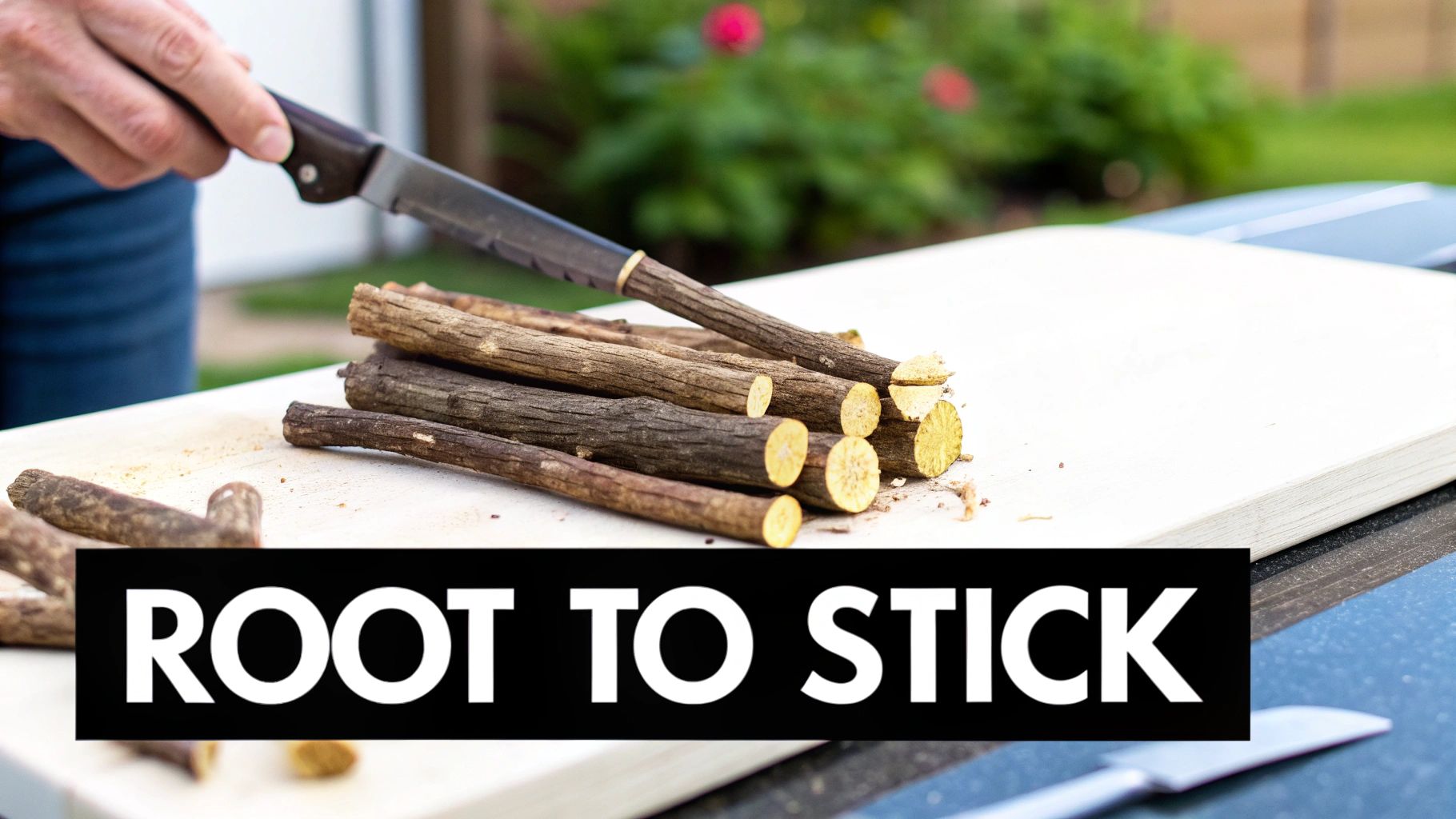
Ever wondered how a tough, rugged plant root becomes the smooth, sweet licorice wood stick you can buy? It’s a refreshingly simple and natural journey. Think less of a factory production line and more like carefully preparing vegetables straight from the garden.
The process starts with the Glycyrrhiza glabra plant. Farmers have to be patient, waiting three to five years for the root system to mature and fill with all its unique compounds. Once ready, the long, sprawling roots are carefully unearthed to avoid any damage.
Fresh out of the ground, the roots are earthy and tangled—a world away from the finished product. This is where the real craft begins.
From Earth to Stick: A Step-by-Step Process
Turning a muddy root into a clean, ready-to-use stick is a game of patience. Each step is designed to clean, shape, and, most importantly, concentrate that one-of-a-kind flavour.
- Thorough Cleaning: First things first, the roots are meticulously washed to get rid of every last bit of soil, stone, and debris. This is a non-negotiable step to make sure the final product is pure and safe.
- Precise Cutting: Once clean, the long roots are chopped into manageable, stick-like pieces, usually around 10-15 cm long. This makes them the perfect size for handling and chewing.
- Slow and Steady Drying: This is where the magic happens. The cut sticks are laid out to dry naturally in a controlled environment, often in the open air but away from harsh, direct sunlight.
This slow-drying process can take several weeks. It’s never rushed, because gradually removing the moisture is what concentrates the glycyrrhizin—the compound that gives licorice its signature sweetness, which is said to be up to 50 times sweeter than sugar.
Think of it like drying herbs from your garden. If you blast them with high heat, you'd destroy their delicate oils and flavour. Slow, natural drying is what keeps their essence intact, making them far more potent and aromatic.
The exact same principle applies here. This patient, minimalist approach ensures the licorice wood sticks keep their robust, earthy flavour and satisfyingly tough texture. When you understand the natural journey behind each stick, you can appreciate the quality and simplicity that makes it such a wholesome choice for anyone looking for a natural oral substitute. The final product is just pure, unadulterated root, ready to go.
Using Licorice Sticks to Break the Smoking Habit
Breaking free from smoking is about so much more than just beating the nicotine addiction. It’s about rewiring years of muscle memory and deep-seated physical habits. This is exactly where licorice wood sticks can be a game-changer, offering a natural and satisfying way to tackle the behavioural side of quitting.
One of the biggest hurdles for anyone trying to quit is the hand-to-mouth ritual. The simple act of holding a cigarette and bringing it to your lips is almost automatic, a comfort blanket you've reached for thousands of times. Licorice sticks give your hands a similar object to hold and fiddle with, short-circuiting that old habit loop without any of the harm.
This physical stand-in is a huge help for managing the psychological side of cravings, often called oral fixation. Chewing on the firm, woody texture gives your mouth something to do, providing a powerful sensory distraction that helps you ride out those intense urges to light up.
Weaving Licorice Sticks into Your Daily Routine
To really make licorice sticks work for you, you need a bit of a strategy. Think about your biggest trigger moments—those times when you’d instinctively reach for a cigarette—and have a stick ready to go.
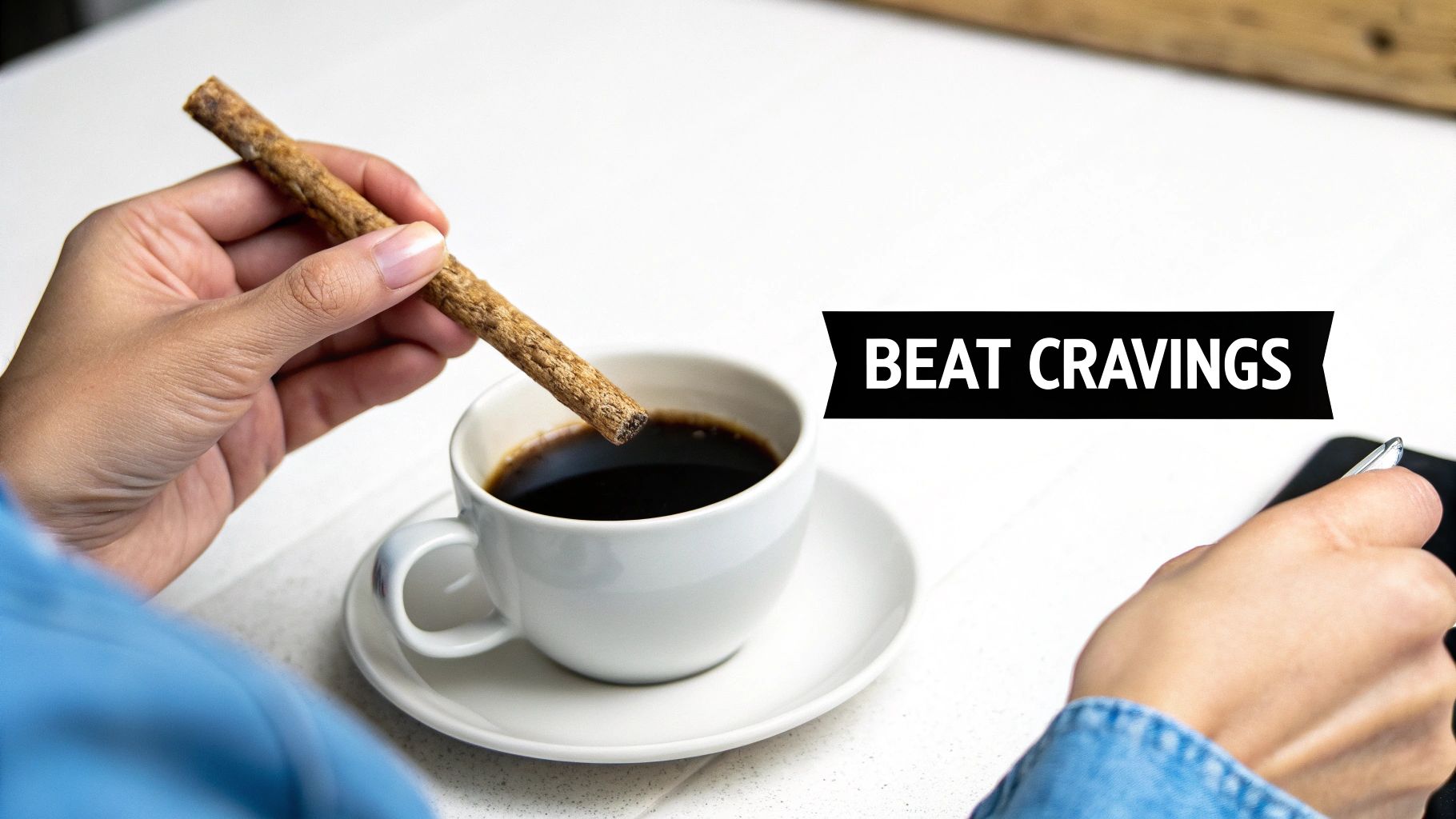
- Your Morning Coffee: For many, coffee and a cigarette are an inseparable pair. This can be a tough one to crack. Try stirring your coffee with a licorice stick and then chewing on it. The subtle sweetness works beautifully with the coffee, keeping that hand-to-mouth ritual alive in a much healthier form.
- After a Meal: That post-dinner urge to smoke is another classic trigger. Having a licorice stick ready to chew on right after you finish eating can satisfy that need for a familiar, concluding ritual.
- Work Breaks or Driving: Swap your smoke break for a 'stick break'. Step outside for a few minutes, take some deep breaths, and chew on your licorice stick. It helps you de-stress without nicotine and gives your hands a focal point.
This isn't about raw willpower; it's about smart substitution. You’re not just stopping an old habit—you’re actively building a new, more positive one to take its place.
By directly replacing the physical act of smoking, you’re engaging in what’s known as behavioural substitution. It’s a way to address the habit's psychological roots, making the move away from nicotine feel less like a sudden, jarring void and more like a manageable transition.
Comparing Natural Nicotine-Free Oral Alternatives
Licorice sticks are a fantastic option, but they're not the only natural tool available to help you manage that oral fixation. If you want to explore this further, our guide on choosing a stop smoking stick offers a deeper dive into the different choices out there. Knowing what’s available helps you find what truly clicks with you.
Every alternative offers a different sensory experience, and understanding the nuances can help you tailor your quitting strategy to fit your own needs and preferences.
Comparing Natural Nicotine-Free Oral Alternatives
| Alternative | Key Benefit | Primary Sensation | Considerations |
|---|---|---|---|
| Licorice Wood Sticks | Natural flavour & firmness | Chewing, subtle sweetness | Requires moderation due to glycyrrhizin |
| Cinnamon Sticks | Aromatic & spicy | Strong flavour, firm texture | Can be brittle; strong taste isn't for everyone |
| Herbal Chew Sticks | Variety of flavours | Chewing, herbal notes | Quality and ingredients can vary widely |
| Sunflower Seeds | Repetitive action | Salty, cracking sensation | High in calories and sodium; can be messy |
Ultimately, choosing to use licorice wood sticks is a supportive strategy that puts you back in control. It gives you a tangible, natural way to dismantle the behavioural scaffolding of smoking, making your journey to a smoke-free life feel more achievable, one craving at a time.
Understanding the Health Benefits and Safety Risks
Licorice wood sticks can be a fantastic tool for managing cravings, but it’s important to have a clear, balanced view. The root of the Glycyrrhiza glabra plant has a long and respected history in traditional wellness, but like anything powerful, moderation is the key.
For centuries, people have turned to licorice root to soothe sore throats and ease digestive discomfort. It’s packed with natural compounds believed to have anti-inflammatory and antibacterial properties, which is why you’ll often find it in herbal teas and lozenges. Some evidence even points towards its role in oral health, though there are many natural strategies to prevent cavities to explore.
This growing interest in natural wellness isn't just a niche trend. The UK licorice candy market alone was valued at USD 306.4 million in 2025 and is projected to climb to USD 455.2 million by 2035. This shows a real consumer shift towards natural flavours and products that do more than just taste good.
The Glycyrrhizin Factor: What You Need to Know
The magic ingredient in licorice is a compound called glycyrrhizin. It’s what gives the sticks their signature, intense sweetness, but it's also the very thing that calls for caution. When you have too much of it over a long period, it can start to cause problems.
Simply put, excessive glycyrrhizin can throw your body's electrolyte balance out of whack. It can cause your potassium levels to drop while your sodium levels rise, leading to a few potential health issues:
- Increased blood pressure (hypertension)
- Irregular heart rhythms
- Muscle weakness
Because of this, it's best to see licorice wood sticks as a helpful tool for occasional use, not a constant, all-day habit.
Safe Consumption and Who Should Be Cautious
So, what does “moderation” actually look like? There isn’t one hard-and-fast rule, but for most healthy adults, chewing on one or two sticks a day is unlikely to cause any trouble. The most important thing is to listen to your body and avoid making them a permanent fixture in your mouth.
Think of it like coffee. A cup or two can be a wonderful, even beneficial, part of your routine. But downing multiple pots every day can lead to jitters and high blood pressure. The same common-sense approach applies to licorice sticks.
Some people need to be extra careful or avoid licorice root altogether. If any of the following apply to you, it’s really important to chat with your doctor before trying licorice wood sticks:
- Pregnancy: High amounts might affect hormone levels.
- High Blood Pressure: Glycyrrhizin can make this condition worse.
- Heart or Kidney Conditions: These conditions make you more sensitive to electrolyte shifts.
- Taking Certain Medications: Licorice can interfere with things like diuretics, blood thinners, and some blood pressure meds.
Knowing the risks isn’t about scaring you off; it's about empowering you. It’s about being informed so you can use these natural aids responsibly. For those exploring different herbal avenues, it's also worth asking if herbal cigarettes are a safe option. By respecting the plant's potency, you can safely enjoy what licorice wood sticks have to offer on your journey to a smoke-free life.
How to Pick and Use a Good Licorice Stick
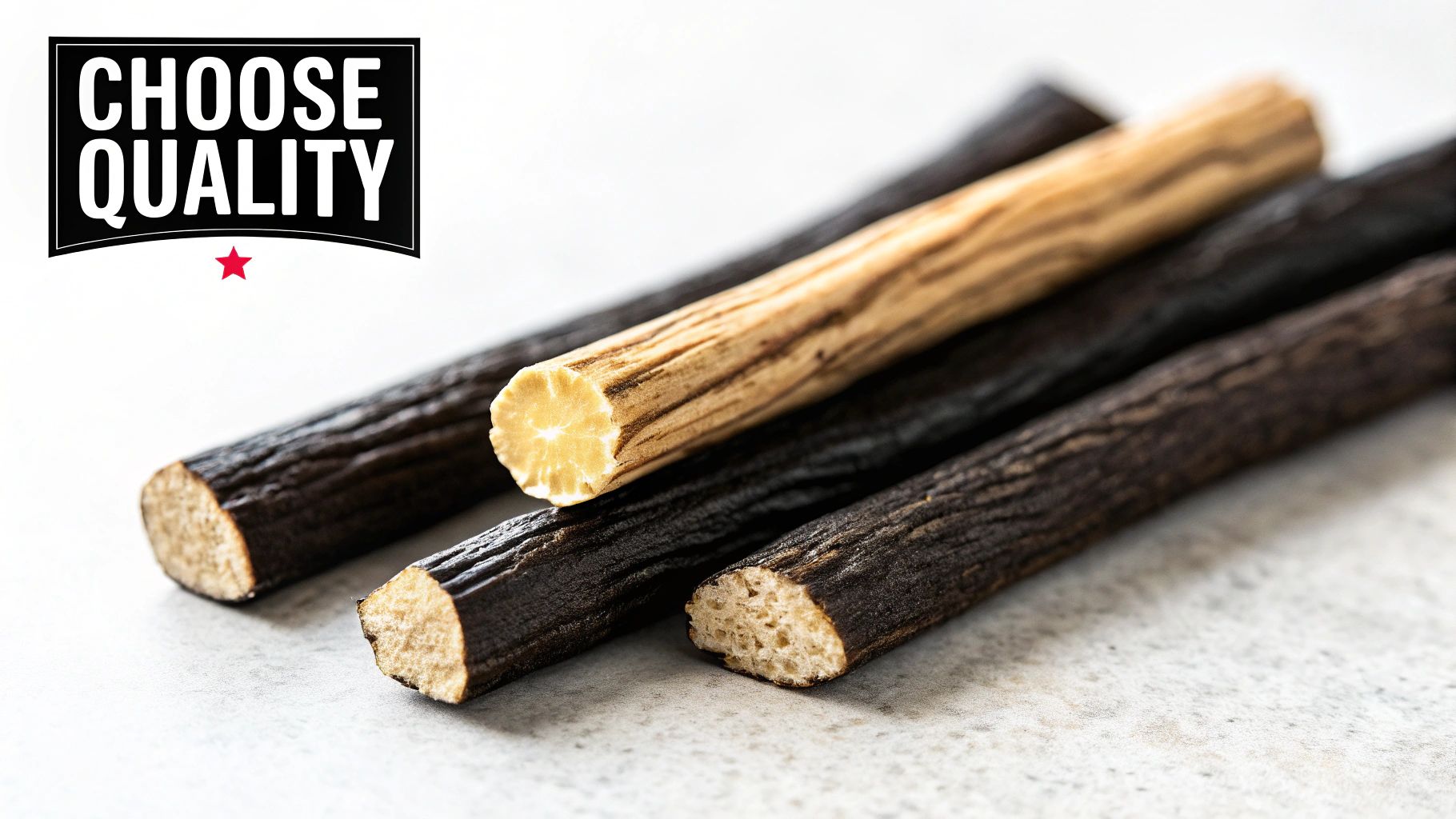
Grabbing just any old licorice stick won't cut it. Like picking out fresh fruit, you want to look for signs of quality to make sure you're getting something that's both enjoyable and safe. A little know-how can make all the difference.
So, what should you look for? A top-notch stick will feel firm and solid in your hand, not flimsy, brittle, or bone-dry. Give it a sniff – it should have a clean, earthy scent with that unmistakable sweet undertone. If it smells musty or, worse, shows any signs of mould, steer clear. The colour should be a natural, consistent brown, which tells you it’s been dried and stored properly.
Spotting a Quality Stick
The single most important step is buying your licorice wood sticks from a reputable supplier. Good sellers are transparent about where their roots come from and take pride in how they’re harvested, cleaned, and stored. This dramatically cuts down the risk of contaminants.
Here’s a quick checklist to keep in mind:
- Solid Feel: It should be tough and dense, built for a good, long chew.
- Pleasant Smell: Look for that fresh, earthy, and subtly sweet aroma.
- Clean Look: The sticks should be free from weird discolourations, blemishes, or mould.
- Clear Origins: Trustworthy vendors will tell you where their roots are sourced.
Paying attention to quality really matters. The market for licorice is booming—the UK Licorice Extract market was valued at USD 28.1 million in 2025 and is expected to grow by 7.6% annually. This growth means more products are hitting the shelves, making it even more vital to choose your raw root carefully. You can get a better sense of this growing market over at futuremarketinsights.com.
Getting Your Sticks Ready
Once you’ve got your hands on some good sticks, a tiny bit of prep can go a long way. You can chew them straight out of the bag, but some people find them a bit tough at first.
Here’s a simple trick: just dip or soak the tip in a bit of warm water for a few minutes. This softens up the fibres, making it easier to start chewing and helping to release that lovely natural sweetness much faster.
And don't just stop at chewing. Licorice sticks are surprisingly versatile. Try using one as a stirrer for your tea or coffee. As you stir, it'll infuse your drink with a subtle, warm sweetness, adding a completely new layer to your daily ritual.
How to Keep Your Sticks Fresh
To make sure your licorice sticks stay potent and flavourful, you need to store them right. An airtight container, like a glass jar or a sealed bag, is perfect. Just pop them in a cool, dark place away from sunlight and moisture. This will keep them from drying out and losing their flavour, ensuring they're ready to go whenever a craving hits.
Still Have Questions About Licorice Wood Sticks?
It's completely normal to have a few questions before trying something new. Even with all the benefits laid out, you might still be wondering about the specifics. Let's tackle some of the most common questions we hear, so you can feel confident and ready.
What Do They Actually Taste Like?
If you're picturing the sugary, jet-black sweets from the corner shop, you're in for a very pleasant surprise. A natural licorice wood stick is a whole different experience.
The first taste is quite earthy and woody, much like other raw roots. But as you start to chew, the fibres soften and release glycyrrhizin – the compound that gives licorice its famous sweetness. This isn't a sugary, overpowering flavour. It's a gentle, natural sweetness that lingers, perfectly balanced by those earthy, slightly bitter undertones. Think subtle and satisfying, not a blast of candy.
How Long Does One Stick Last?
This really comes down to how you use it. If you're an aggressive chewer, you might find you work your way through a stick in a day as the fibres break down.
But for most people, one stick goes a long way. If you use it more gently – maybe just sucking on it or chewing lightly when a craving hits – a single stick can easily last for two to three days, sometimes even longer. Many people find a quick 10-15 minute chew is all they need to get past an urge. After that, they just set it aside to dry and pick it up again later. Its tough, fibrous nature is what makes it so resilient.
Think of it like a piece of premium chewing gum that never really loses its core flavour. The initial burst of sweetness might fade a little, but that satisfying texture and subtle taste are always there when you need them.
Are They Safe to Use Every Day?
This is a really important question. While licorice sticks are a brilliant natural tool, they're definitely meant to be used in moderation. As we've mentioned, that sweet compound, glycyrrhizin, can mess with your body's electrolyte balance if you consume too much of it over a long period.
For most healthy adults, chewing on one stick throughout the day is generally fine. The trick is to see it as a support tool for getting through those intense cravings, not something to have in your mouth constantly. It's always a good idea to listen to your body and take breaks. And if you have any existing health conditions like high blood pressure, or if you're pregnant, it's absolutely essential to chat with your doctor before you start using them.
Is There Any Sugar in Them?
Nope. High-quality licorice wood sticks contain no added sugar at all. That lovely sweetness you taste comes entirely from the naturally-occurring glycyrrhizin in the root. This is a huge win if you're trying to quit smoking and avoid the sugary snacks that often creep in as a replacement. You get all the satisfaction of a sweet treat without the sugar crash or the empty calories.
Ready to experience a natural, flavourful way to manage cravings and support your journey to a smoke-free life? AuraFlow offers a simple, nicotine-free alternative designed to replace habit with a mindful ritual. Discover our starter kits and find your calm at https://aura-flow.co.uk.