
Ever felt that intense, sharp chill from a mint product and wondered where it comes from? That powerful cooling sensation is the work of menthol. It's the pure, crystalline heart of the mint plant, and understanding what it really is—and how it’s different from regular peppermint oil—is the first step to appreciating its unique power.
Where Does Menthol Come From?
When you smell peppermint oil, you’re getting a whole symphony of different compounds from the plant. It's a rich, full-bodied aroma. Menthol, on the other hand, isn't the whole orchestra; it's the lead soloist. It's a specific organic compound that can be isolated from the plant, delivering that signature chill in its most potent form.
From a Humble Plant to a Pure Crystal
The journey to create pure menthol is a fascinating one, turning a simple mint leaf into a powerhouse crystal. It all starts with plants from the mint family, usually cornmint (Mentha arvensis), which is naturally packed with menthol.
- Harvesting: First, the leaves and stems of the mint plant are gathered right when they’re at their peak.
- Steam Distillation: Next, the plant material is steam-distilled to gently pull out its essential oil. This initial oil is rich in menthol, but it still has other components mixed in.
- Crystallisation: The real magic happens when this oil is chilled to a very low temperature. The cold causes the menthol to separate and solidify into clear, waxy crystals—almost 100% pure menthol.
- Final Product: These potent crystals can be used on their own or dissolved in a carrier oil to create what we know as menthol essential oil.
The result of this process is an incredibly concentrated product. Just one drop carries a cooling power far greater than the original mint leaf, delivering its effect in a direct and unmistakable way.
Menthol’s Place in the UK Wellness Scene
It’s no surprise that menthol is a major player in the wellness world. Driven by a growing love for natural and aromatherapy-based products, the UK's essential oils market is thriving. And menthol, derived mainly from cornmint and peppermint, is right at the centre of it.
In 2023, the market showed a healthy, competitive landscape with a Herfindahl-Hirschman Index (HHI) of 790, meaning plenty of brands are in the space. You can find more insights into the UK's essential oils market on 6wresearch.com.
This journey—from a whole plant oil to a purified crystal—is what gives menthol essential oil its specific, targeted uses, which we’ll dive into throughout this guide. Think of it as the pure essence of "cool," captured and bottled.
How Menthol Creates Its Powerful Cooling Sensation
Have you ever wondered how menthol creates that intense, icy feeling on your skin without actually making it colder? It’s not magic, but a fascinating trick of our own biology. Menthol doesn’t lower your skin's temperature; instead, it cleverly persuades your nervous system to think it’s cold.
It all comes down to a special protein in our nerve cells called TRPM8 (pronounced "trip-em-eight"). You can think of these proteins as tiny, temperature-sensitive gatekeepers scattered across your skin. Their main job is to detect the cold and fire off a "chilly!" signal to your brain.
When the air temperature drops, these gates open up, letting calcium ions rush into the nerve cell. This sudden influx of ions is the signal that zips up to your brain, which then interprets it as the feeling of cold. It's the reason you shiver when you step out into a frosty morning.
The Lock and Key Analogy
So, where does menthol fit into all this? Menthol molecules have a unique shape that lets them act like a master key for these TRPM8 gates.
- The Lock: Your TRPM8 receptor is the lock.
- The Keys: Both a genuine drop in temperature and a menthol molecule can act as keys.
When you apply diluted menthol oil to your skin, the molecules bind directly to these receptors. They fit perfectly into the ‘lock’ and force the gate open, even if you’re sitting in a warm room. This triggers the exact same rush of calcium ions and sends the identical "chilly!" signal to your brain. Your brain can’t tell the difference between the cold from a winter breeze and the 'cold' from menthol—it just knows the gate has been opened.
In essence, menthol doesn't create cold; it hijacks the body's existing cold-sensing pathways. It’s a brilliant biological illusion that convinces your brain you’re experiencing a temperature drop, leading to that distinct and powerful cooling sensation.
This is a great way to visualise how menthol essential oil is derived, from its humble plant source all the way to its final crystalline essence.
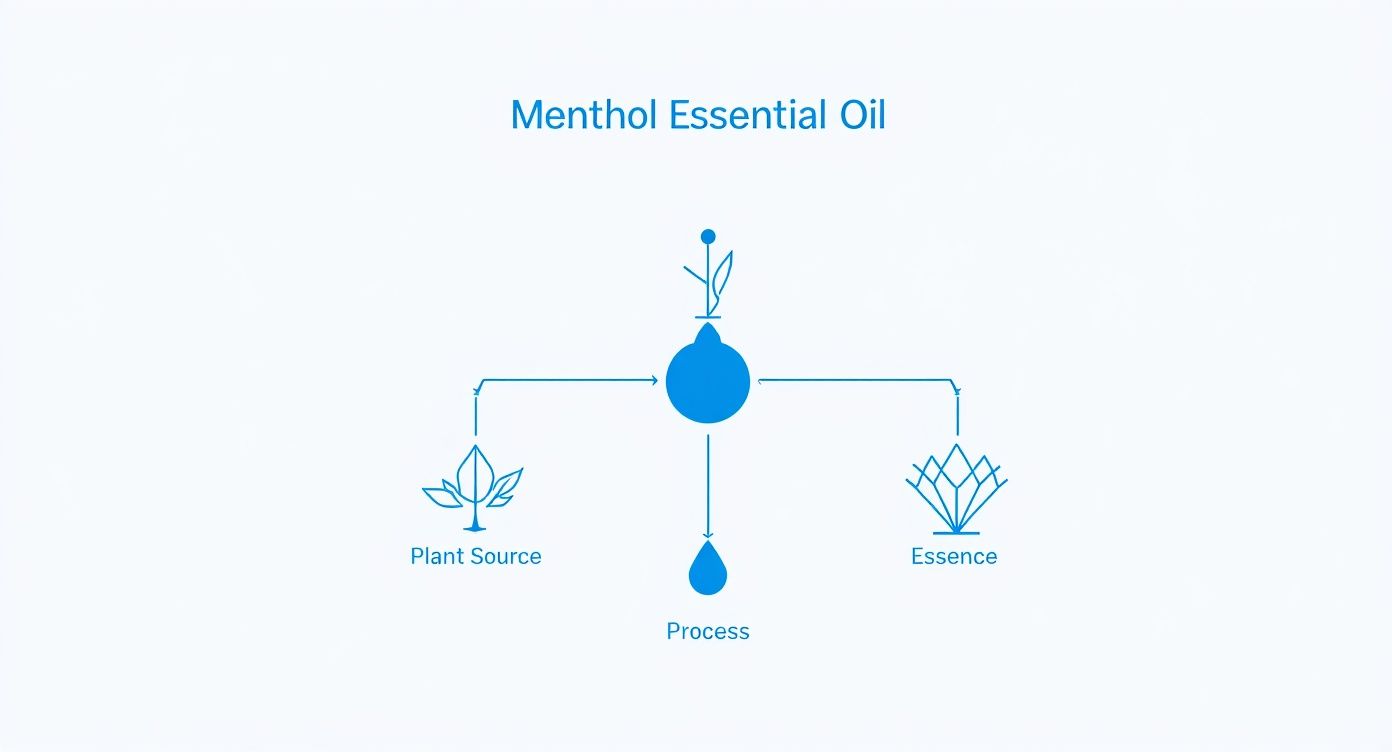
You can see the journey from mint leaf to pure crystal, a process that concentrates its natural power.
From Sensation to Soothing Relief
This cooling sensation is more than just a novelty; it’s the very foundation of menthol's therapeutic effects. When your brain receives this strong "cold" signal, it helps to override other signals, like those for minor pain and discomfort. This is known as the Gate Control Theory of Pain.
The intense cooling feeling acts as a powerful distraction, effectively "closing the gate" on minor pain signals before they can even reach the brain. This is exactly why menthol is such a star ingredient in products designed for:
- Soothing Sore Muscles: The cooling effect brings almost immediate relief to tired, overworked muscles after a workout.
- Easing Tension Headaches: When applied to the temples, the cooling sensation can help distract from the dull throb of a tension headache.
- Calming Itchy Skin: For minor irritations, the cooling can help quieten the urge to scratch.
By understanding this simple yet brilliant biological interaction, we can see how menthol provides such tangible, real-world relief. It’s a remarkable example of how a natural compound can work with our body’s own systems to create a powerful sensory and therapeutic experience—all without changing the thermometer one bit.
Choosing Your Method: Inhalation vs Topical Application
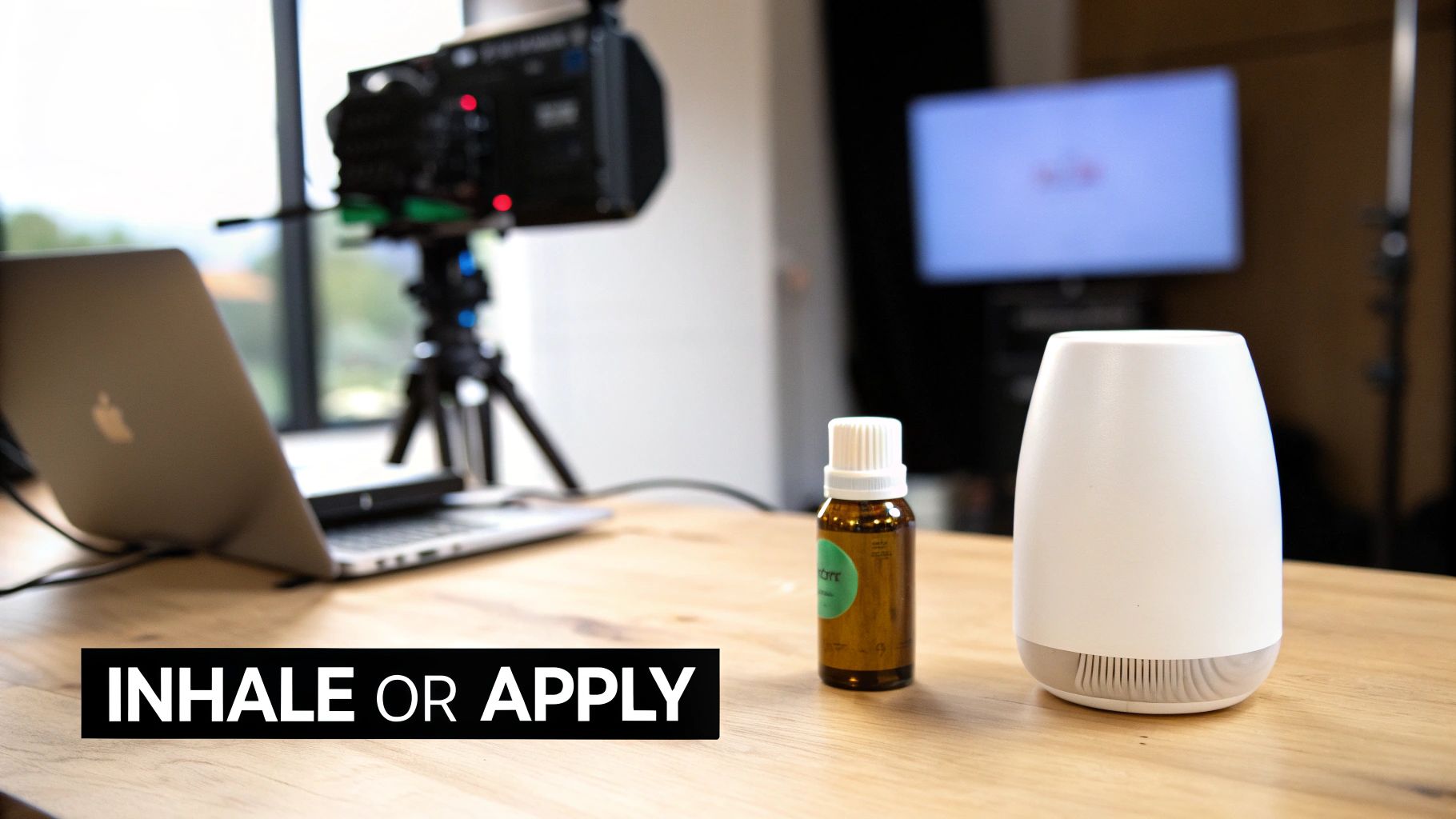
Knowing how to use menthol essential oil is the key to unlocking its full potential. The method you choose—inhalation or topical application—directly shapes the benefits you’ll receive. Each pathway delivers the oil's cooling power to your body in a completely different way, making one better suited for certain goals than the other.
Think of it like choosing the right tool for a job. You wouldn't use a hammer to turn a screw. In the same way, deciding whether to breathe in the aroma or apply it to your skin depends entirely on what you want to achieve, whether it’s clearing your airways or soothing a sore muscle.
The Aromatic Approach: Inhalation
Inhalation is by far the fastest route to experiencing the respiratory and mood-lifting benefits of menthol. When you breathe in the vapour, those tiny aromatic molecules travel straight to your lungs and into your bloodstream, while also giving your brain’s olfactory system an invigorating wake-up call. This is the ideal method for creating an immediate sense of clarity and open airways.
This direct path to the respiratory system is why it’s so popular for tackling that stuffy, congested feeling. The crisp, clean scent can make breathing feel instantly easier and more comfortable, especially when seasonal changes have you feeling blocked up. You’ll often find essential oil blends for respiratory support are designed specifically for inhalation, highlighting just how important it is to match the method to your needs.
There are a few simple ways to practise inhalation:
- Diffusers: An electronic diffuser is perfect for creating a refreshing atmosphere in your home or workspace. It disperses a fine mist of water and essential oil into the air, filling the room with its invigorating scent.
- Steam Inhalation: For a really potent dose of comfort, add a drop or two of menthol oil to a bowl of hot (not boiling) water. Lean over, pop a towel over your head to trap the steam, and just breathe deeply for a few minutes.
- Personal Inhalers: Portable inhaler sticks, like those from AuraFlow, are a brilliant way to get a discreet aromatic lift when you're on the go. They’re great for helping to centre your mind and refresh your senses in seconds.
The Targeted Approach: Topical Application
When you need focused relief for a specific part of your body, topical application is the way to go. Applying diluted menthol essential oil directly to the skin lets its cooling properties penetrate that local area, where it gets to work interacting with nerve receptors to soothe discomfort.
This is the gold standard for tackling physical complaints like muscle soreness after a workout, tension in your neck and shoulders, or other minor aches. The cooling sensation provides a powerful counter-irritant effect, essentially distracting your brain from the underlying discomfort. But here’s the most important part: menthol essential oil must always be diluted with a carrier oil (like coconut, jojoba, or almond oil) before it ever touches your skin. This is non-negotiable to prevent irritation.
Topical use delivers menthol’s benefits exactly where you need them most. It’s a targeted solution for localised issues, turning the oil’s cooling power into a precise tool for physical comfort.
How To Choose The Right Method For You
Making the right choice is simple once you match the method to your goal. Is your nose blocked, or is your shoulder aching? The table below breaks down the key differences to help you decide which approach is best for what you need right now.
Comparing Inhalation and Topical Use of Menthol Oil
| Method | Primary Benefits | Best For | Key Safety Note |
|---|---|---|---|
| Inhalation | Quick respiratory relief, mental clarity, and mood enhancement. | Clearing a stuffy nose, easing congestion, boosting focus, and creating a mindful ritual. | Use in a well-ventilated area. Avoid prolonged, direct inhalation from a diffuser. |
| Topical Application | Targeted soothing of muscles and joints, localised pain relief. | Post-workout recovery, soothing sore muscles, easing tension headaches (on temples). | Always dilute with a carrier oil before applying to the skin. Perform a patch test first. |
Ultimately, whether you choose to breathe it in or smooth it on, menthol essential oil offers a brilliantly versatile way to bring its cooling power into your wellness routine. For respiratory comfort and a clear head, inhalation is your best friend. For targeted physical relief, a properly diluted topical blend is the superior choice.
A Practical Guide to Safe Dilution and Usage
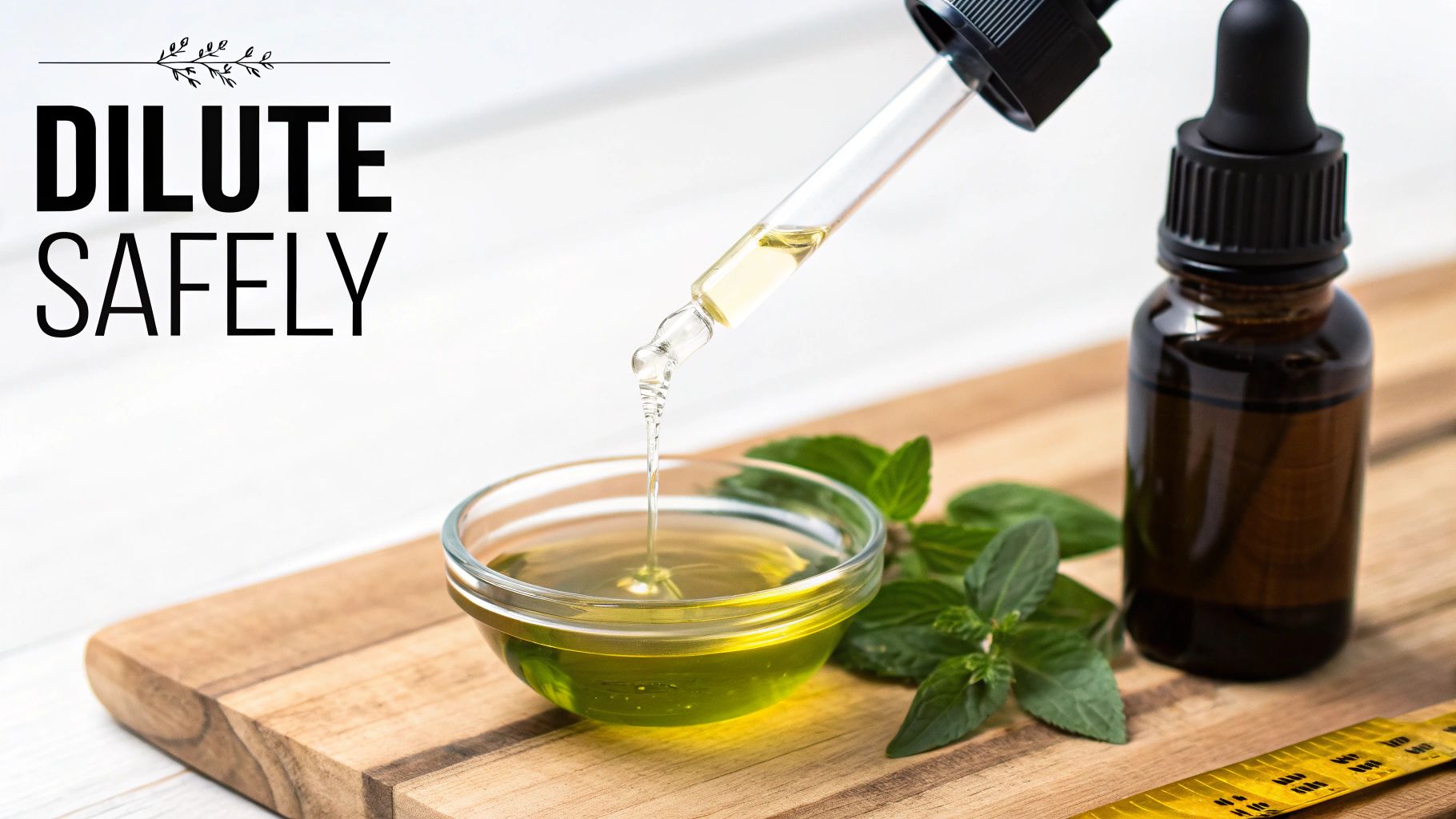
The incredible potency of menthol essential oil is its greatest strength, but it also means we have to handle it with respect. Using this powerful oil correctly ensures you get all its cooling benefits without any of the risks. The golden rule is simple yet non-negotiable: always dilute menthol essential oil before it touches your skin.
Applying undiluted, or 'neat', menthol oil directly can cause some serious irritation, redness, and a burning sensation. Think of it like a concentrated spice; a tiny pinch enhances a dish, but a whole spoonful would be overwhelming and unpleasant. Dilution is how we transform its raw power into a gentle, soothing experience.
This just means mixing the potent essential oil with a neutral, fatty carrier oil. These oils, like jojoba, coconut, or sweet almond oil, act as a safe vehicle to deliver the menthol to your skin, helping it absorb properly while protecting your skin's delicate barrier.
Mastering Dilution Ratios for Safe Application
Getting the dilution right is much easier than it sounds. The perfect ratio really depends on what you're using it for and how sensitive the skin area is. For most adults, a 1-2% dilution is a great place to start.
Here’s a simple breakdown for creating your own safe, effective blends:
- For a 1% Dilution (Ideal for sensitive skin or your face): Mix 1 drop of menthol essential oil with 1 teaspoon (5ml) of your chosen carrier oil.
- For a 2% Dilution (Standard for most body applications): Mix 2 drops of menthol essential oil with 1 teaspoon (5ml) of carrier oil.
Before you go all in with a new blend, always do a patch test. Just apply a tiny amount of the diluted oil to a discreet spot, like your inner elbow, and wait 24 hours to see if there’s any irritation. This simple step can save you a lot of discomfort later on.
Your safety is the most important part of your wellness journey. Taking a moment to properly dilute your menthol essential oil is a fundamental act of self-care that empowers you to use it confidently and effectively.
Important Safety Precautions to Remember
Beyond dilution, some people should be extra cautious or avoid using menthol essential oil altogether. Its powerful nature just isn't suitable for everyone.
It's also worth noting that as the wellness trend grows, so does the market. The UK essential oils market is projected to be worth nearly £1.5 billion by 2028, but this growth highlights a real need for us, as consumers, to be aware of product quality and safety.
Please keep these key safety guidelines in mind:
- Avoid Contact with Sensitive Areas: Never let menthol oil get near your eyes, inner ears, or other mucous membranes.
- Keep Away from Children: Menthol is far too strong for young children and infants. Keep bottles sealed tight and out of their reach.
- Pregnancy and Nursing: If you are pregnant, breastfeeding, or have a serious health condition, it's best to chat with your healthcare provider before using any essential oils.
- Do Not Ingest: Menthol essential oil should never be swallowed. It's for aromatic and topical use only.
By following these straightforward steps, you can safely harness the invigorating benefits of menthol essential oil. And for those looking to explore a variety of aromas, you might be interested in our guide on choosing the best essential oil packs for your wellness goals.
How to Source High-Quality Menthol Oil
When you choose a menthol essential oil, you’re not just buying a product; you’re investing in your wellness. But the market is flooded with options that vary wildly in quality, purity, and where they come from. Knowing how to spot the good stuff is key to finding an oil that’s both effective and safe.
The biggest difference you'll find is between natural and synthetic menthol. Natural menthol comes directly from mint plants like Mentha arvensis, capturing the plant's pure, complex essence through a crystallisation process. Synthetic menthol, on the other hand, is cooked up in a lab. While it mimics that famous cooling feeling, it’s missing the subtle, synergistic compounds that make the real deal so special.
Decoding the Label: What to Look For
Becoming a savvy shopper starts with one simple habit: reading the label carefully. A trustworthy brand will be completely open about its sourcing and what’s inside the bottle, giving you all the info you need to choose with confidence.
Here are the critical details to check for:
- Botanical Name: Look for the specific plant name, like Mentha arvensis (cornmint) or Mentha piperita (peppermint). This confirms it’s from a natural source. Vague terms like "fragrance oil" are a major red flag.
- Purity Statement: The label should clearly state "100% pure essential oil" or specify that it’s pure menthol crystals dissolved in a named carrier oil. Steer clear of products with undisclosed fillers or additives.
- Country of Origin: Knowing where the plant was grown can give you clues about its quality. Different regions produce oils with unique characteristics.
A trustworthy product tells its story right on the label. If the details are sparse or confusing, it’s often a sign that quality might be compromised. True quality doesn’t hide behind vague marketing language.
Why Sourcing and Purity Matter
The quality of your menthol oil directly impacts how well it works and, more importantly, your safety. A pure, high-quality oil delivers the cooling and soothing benefits you’re looking for without the risk of contaminants or synthetic additives that can irritate the skin.
The UK's essential oil industry is a big deal, with projected revenue hitting around £966.6 million in 2025. Since we rely heavily on imports, the focus is shifting towards manufacturers who care about sustainability and ethical production. You can learn more about how consumer preferences are shaping the UK's essential oil industry and its focus on quality.
To make sure you're getting the best product, keep these final tips in mind:
- Check for Third-Party Testing: Look for brands that perform independent lab tests, often called GC/MS (Gas Chromatography-Mass Spectrometry), to prove their oil's purity and composition.
- Evaluate the Price: If a price seems too good to be true, it probably is. Producing pure, natural menthol is a complex process, and a rock-bottom price can be a giveaway for a synthetic or watered-down product.
- Choose Dark Glass Bottles: High-quality essential oils are almost always packaged in dark amber or cobalt blue glass. This protects them from light, which can break them down and reduce their potency.
By paying attention to these details, you can choose a genuine menthol essential oil that truly supports your wellness goals. For those new to aromatherapy, exploring a curated essential oils pack can be a fantastic way to start your journey with high-quality, trusted products.
Creating Mindful Inhalation Rituals Without Nicotine
That crisp, clean scent of menthol essential oil can be an incredibly powerful tool for mindfulness. It acts as a sensory anchor, pulling you back into the present moment when your mind starts to wander.
For anyone looking to step away from habits like smoking or vaping, creating a simple, nicotine-free inhalation ritual can be a game-changer. It’s not about restriction; it’s about replacement. You’re swapping a craving for a moment of intentional calm and clarity.
Instead of reaching for nicotine, the ritual becomes about engaging your senses with something purely natural and grounding. The cooling rush of menthol provides an immediate, tangible sensation that helps interrupt those ingrained habits and soothe the nervous system.
Crafting Your Personal Inhalation Experience
The beauty of this is that your ritual can be entirely your own. It’s simple to set up and can be adapted to fit your lifestyle, whether you’re at home with a moment of peace or navigating a busy day out. The key is simply having that refreshing menthol aroma on hand for when you need to press the reset button.
This sensory cue can become a powerful ally in managing stress and navigating cravings. Two of the most popular and effective ways to do this are:
- Personal Aroma Inhalers: These are small, discreet tubes with a cotton wick inside. You can learn more about how to use an inhaler with essential oil to create a private aromatic experience. Just a few drops of menthol oil on the wick, and it's ready to go whenever you need a quick, refreshing breath.
- Diffuser Jewellery: Think pendants, bracelets, or rings made from porous materials like lava stone. A single drop of essential oil is all it takes to carry the scent with you throughout the day, offering a gentle aromatic reminder to stay centred.
The goal here is to build a new, positive association. Over time, your brain starts to link the clean scent of menthol with a deep, calming breath, transforming an old, unhelpful habit into a new ritual of self-care and focus.
A Simple Ritual to Get Started
The best way to build a new habit is to keep it simple and repeatable. This practice is designed to be done anywhere, anytime, and takes only a minute or two. It puts the focus squarely on the physical act of breathing and the sensory experience of the menthol to redirect your attention.
Here’s a step-by-step guide to get you started:
- Pause and Prepare: The moment you feel a craving or a wave of stress, just stop. Hold your personal inhaler or diffuser jewellery in your hand.
- Inhale Slowly: Bring it close to your nose and take a slow, deep breath in for a count of four, focusing completely on that cool, clean scent.
- Hold Gently: Hold your breath for a count of four, letting the sensation fill your senses.
- Exhale Fully: Breathe out slowly through your mouth for a count of six, feeling the tension release with your breath.
- Repeat as Needed: Continue this cycle three to five times, or until you feel that sense of calm and control wash over you.
By consistently turning to this ritual, you’re actively retraining your brain. You’re teaching it to seek comfort not in nicotine, but in a mindful, refreshing breath that genuinely supports your well-being. For those looking to dive deeper, exploring various stress relief techniques that incorporate aromatherapy can offer even more tools for your journey.
Common Questions About Menthor Oil
Getting into the world of essential oils can feel a bit like learning a new language. To help you feel more confident, we've gathered some of the most common questions people ask about menthol oil and answered them in a way that's easy to understand.
Is Menthol Essential Oil the Same as Peppermint Oil?
That's a great question, and the simple answer is no—but they are very closely related.
Think of peppermint essential oil as the whole, complex plant in a bottle. It’s steam-distilled from the leaves and stems, containing a rich symphony of natural compounds, including menthol, menthone, and many others. This is what gives it that full-bodied, classic minty scent.
Menthol essential oil, on the other hand, is like the star soloist of that symphony. It’s typically just the menthol itself, which has been isolated from peppermint oil through a freezing process that forms crystals. These crystals are then often dissolved into a carrier oil. So, while peppermint oil offers a broad range of effects, menthol delivers that powerful, targeted, icy-cool sensation it's famous for.
Can I Ingest Menthol Essential Oil?
We strongly advise against ingesting menthol essential oil or its pure crystals. Swallowing concentrated menthol can be toxic and cause serious harm, so it’s something to be avoided unless you're under the direct guidance of a qualified healthcare professional.
The safest and most effective ways to enjoy its benefits are by inhaling the aroma or applying it to your skin once it's been properly diluted. Your well-being is the top priority, so always stick to external use.
Menthol’s power lies in its concentration. It's incredibly effective when used externally but unsafe to ingest. Respect its potent nature by sticking to diffusion and diluted skin application.
How Long Does the Cooling Sensation Last on Skin?
This can vary quite a bit from person to person. How long you feel that signature chill depends on things like the dilution strength, your own skin's sensitivity, and where on your body you've applied it.
Generally, you can expect the cooling effect to feel most intense for the first 15 to 30 minutes. After that initial peak, the feeling usually softens into a gentle coolness that can linger for up to an hour or so.
A little tip: applying the diluted oil after a warm shower can sometimes make the sensation feel stronger and last a bit longer, as your pores are more open. Just remember to always do a patch test first and follow safe dilution guidelines to ensure it's a comfortable and soothing experience.
Ready to embrace a calmer, nicotine-free ritual? The AuraFlow Starter Kit provides a natural, flavourful way to replace cravings with moments of mindfulness. Discover a gentler path to a smoke-free life and find your flow at https://aura-flow.co.uk.