
If you’ve ever wondered what gives peppermint its icy-cool kick, the answer is menthol. It’s a naturally occurring compound that delivers that signature cooling sensation and crisp, minty aroma we all recognise. But when we talk about menthol essential oils, we’re not talking about a single oil.
Instead, we're referring to a whole family of plant-based oils that are naturally rich in this powerful compound.
What Exactly Are Menthol Oils?
It’s a common mix-up, but there isn’t a plant out there called the "menthol plant" that gives us "menthol essential oil." The term is more like a family name for any essential oil that contains a high concentration of menthol. Think of it like describing a group of fruits as "citrus"—you have lemons, oranges, and grapefruits, all different, yet they all share that defining zesty quality.
For this group of oils, menthol is the star of the show. It’s the specific molecule that interacts with the cold-sensitive receptors in your skin and nose, tricking your brain into feeling a cooling sensation even though the temperature hasn't changed. This clever effect is why these oils are so popular in everything from muscle balms and headache remedies to aromatherapy blends.
The Caffeine Analogy
A great way to wrap your head around this is to think about caffeine. You can get your caffeine fix from coffee, tea, or even a fizzy drink. Each one has a completely different taste and experience, but the active ingredient giving you that energising buzz is the same.
It’s the same story with menthol. Different plants produce essential oils with varying amounts of it, which directly impacts their aroma, intensity, and therapeutic feel. The two most common sources you’ll come across are:
- Peppermint Oil (Mentha piperita): This is the one most people know. It has a beautifully balanced, sweet, and classic minty scent, typically containing around 40% menthol.
- Cornmint Oil (Mentha arvensis): Think of this as peppermint’s more intense cousin. It packs a serious punch with a menthol content that can reach 70-80%, giving it a much sharper, almost medicinal aroma.
The menthol percentage is what really dictates the oil’s personality and power. A higher concentration means a more intense cooling and clearing effect, which is why cornmint is often chosen for products where maximum potency is needed.
Getting this distinction down is the first step in choosing the right oil for what you need. Whether you're after the gentle, uplifting feel of peppermint or the potent, clearing power of cornmint, you’re tapping into the incredible natural properties of menthol essential oils.
Where Does Natural Menthol Come From?
When we talk about "menthol," we're not talking about a single plant. Instead, a few key members of the mint family produce essential oils that are naturally bursting with this incredible molecule. Think of them like different types of apples—a Granny Smith is sharp and tart, while a Gala is sweet and mild. They're all apples, but each has its own unique character.
Getting to know these primary sources is the first step in finding the right oil for you. The biggest difference usually comes down to the concentration of menthol, which completely changes the oil's aroma, its cooling power, and what it’s best used for.
Let's meet the key players.
Peppermint Oil: The Balanced All-Rounder
If you were to picture a menthol essential oil, chances are you’re thinking of Peppermint (Mentha piperita). It’s the undisputed classic, loved for its sweet, crisp, and beautifully well-rounded minty scent.
Peppermint oil typically contains around 40% menthol, which gives it a perfect sense of balance. It provides a distinct cooling feeling without being harsh or overpowering, making it incredibly versatile for everything from aromatherapy and personal care to simply creating an uplifting atmosphere in your home.
Cornmint Oil: The Potent Powerhouse
Then there’s Cornmint (Mentha arvensis), which is often seen as the powerhouse of the menthol world. If Peppermint is a refreshing breeze, Cornmint is a full-on arctic blast. Its claim to fame is a jaw-droppingly high menthol concentration, often soaring between 70% and 80%.
This sheer potency gives Cornmint a much sharper, more intensely medicinal aroma. You’re less likely to find it in a diffuser because of its intensity, but it’s the main source for extracting pure menthol crystals. Its powerful cooling effect makes it the go-to choice for targeted topical products like muscle rubs and soothing balms, where you need maximum impact.
Eucalyptus Dives: The Peppermint Eucalyptus
A more unusual but fascinating source is Eucalyptus Dives, sometimes called 'Peppermint Eucalyptus'. This oil creates a unique aromatic bridge between the mint and eucalyptus families. While its main component is actually piperitone, it also contains menthol, which contributes to its distinctive camphor-like minty scent. It's often found in blends designed to support clear, easy breathing.
Menthol isn't just for personal use; it’s a massive global commodity. It's one of the most traded essential oil compounds in the world, with consumption figures reaching thousands of metric tonnes every single year.
This worldwide demand has a huge impact on local economies. Here in the UK, the essential oil manufacturing sector is valued at around £966.6 million for 2025, and it relies heavily on these menthol-rich oils. As a major buyer and processor, the UK market is very sensitive to global supply chains and pricing, which just goes to show how important these natural sources really are. You can dive deeper into these trends with market insights from IBISWorld.
To make choosing a little easier, it’s helpful to see these oils side-by-side.
Comparing Popular Menthol-Rich Essential Oils
Here's a quick reference guide to the main characteristics of the most common essential oils known for their high menthol content.
| Essential Oil | Botanical Name | Typical Menthol % | Primary Aroma Profile |
|---|---|---|---|
| Peppermint | Mentha piperita | 35-45% | Sweet, fresh, classic mint |
| Cornmint | Mentha arvensis | 70-80% | Sharp, intensely cooling, medicinal |
| Eucalyptus Dives | Eucalyptus dives | Varies | Minty, camphoraceous, fresh |
By understanding these key differences, you can pick the perfect oil for whatever you need, whether it's the gentle, familiar refreshment of Peppermint or the powerful, targeted relief that Cornmint offers.
How Menthol Delivers Its Cooling and Soothing Effects
Ever dabbed a bit of peppermint oil on a sore muscle and felt that instant, icy-cool relief? That powerful sensation isn’t magic—it’s the fascinating science of menthol at work.
What’s interesting is that menthol doesn't actually lower your skin's temperature at all. Instead, it plays a clever trick on your nervous system.
Think of your body's nerve receptors as tiny sensors, each designed to detect different things like heat, pressure, or cold. One particular receptor, known as TRPM8 (short for Transient Receptor Potential Melastatin 8), is wired specifically to sense cold.
Menthol’s unique molecular structure allows it to fit perfectly into this TRPM8 receptor, activating it just as if you’d placed an ice cube on your skin.
This activation sends a signal whizzing up to your brain that says, "It's cold here!" Your brain, trusting the message it received, creates the distinct cooling sensation we all associate with menthol essential oils. It's a sensory illusion, but the relief it brings is very real.
More Than Just a Cooling Trick
But the story doesn't end with that signature chill. Menthol’s ability to create this cold sensation also has a mild numbing effect, which is brilliant for temporarily soothing tired muscles and joints.
The intense cooling signal essentially distracts your brain, overriding and dialling down the perception of minor aches and pains. This is precisely why menthol is a star ingredient in so many topical rubs and salves designed for physical comfort.
And when inhaled, menthol’s crisp, penetrating aroma interacts with receptors in your nasal passages. This is what creates that feeling of clearer, more open airways, making it a go-to when you're feeling a bit stuffy. For many, the scent itself is incredibly clarifying and invigorating.
Menthol’s dual action is what makes it so uniquely versatile. It delivers a sensory cooling effect to soothe the body while also offering an aromatic lift to refresh the mind.
The diagram below shows the most common natural sources of the menthol behind these effects.
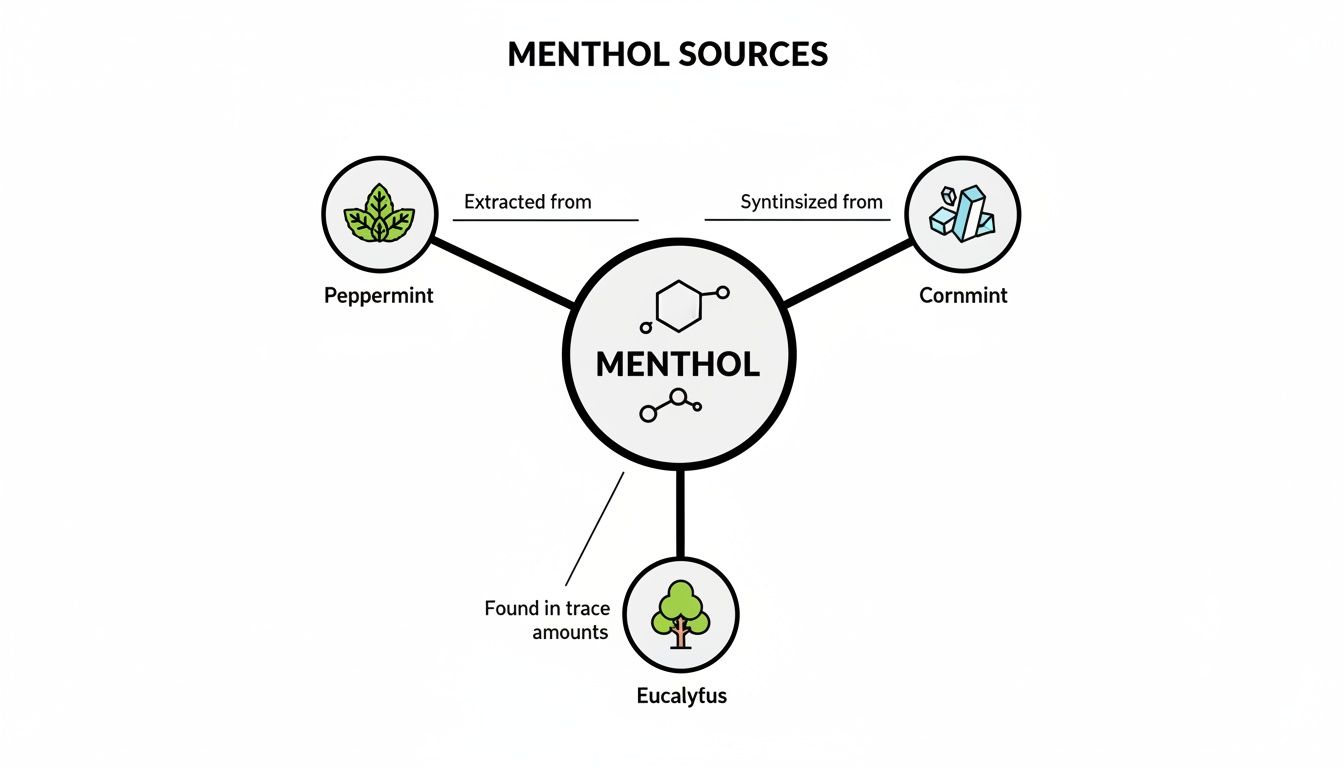
As you can see, popular oils like Peppermint and Cornmint are nature’s primary producers of this remarkable compound. Whether you’re using it topically for muscle relief or aromatically for that feeling of clear breathing, the mechanism is the same: menthol is simply talking to your body’s sensory pathways to produce powerful, tangible effects. It's a simple process that explains why it has been so valued for centuries.
Safe and Effective Ways to Use Menthol Oils
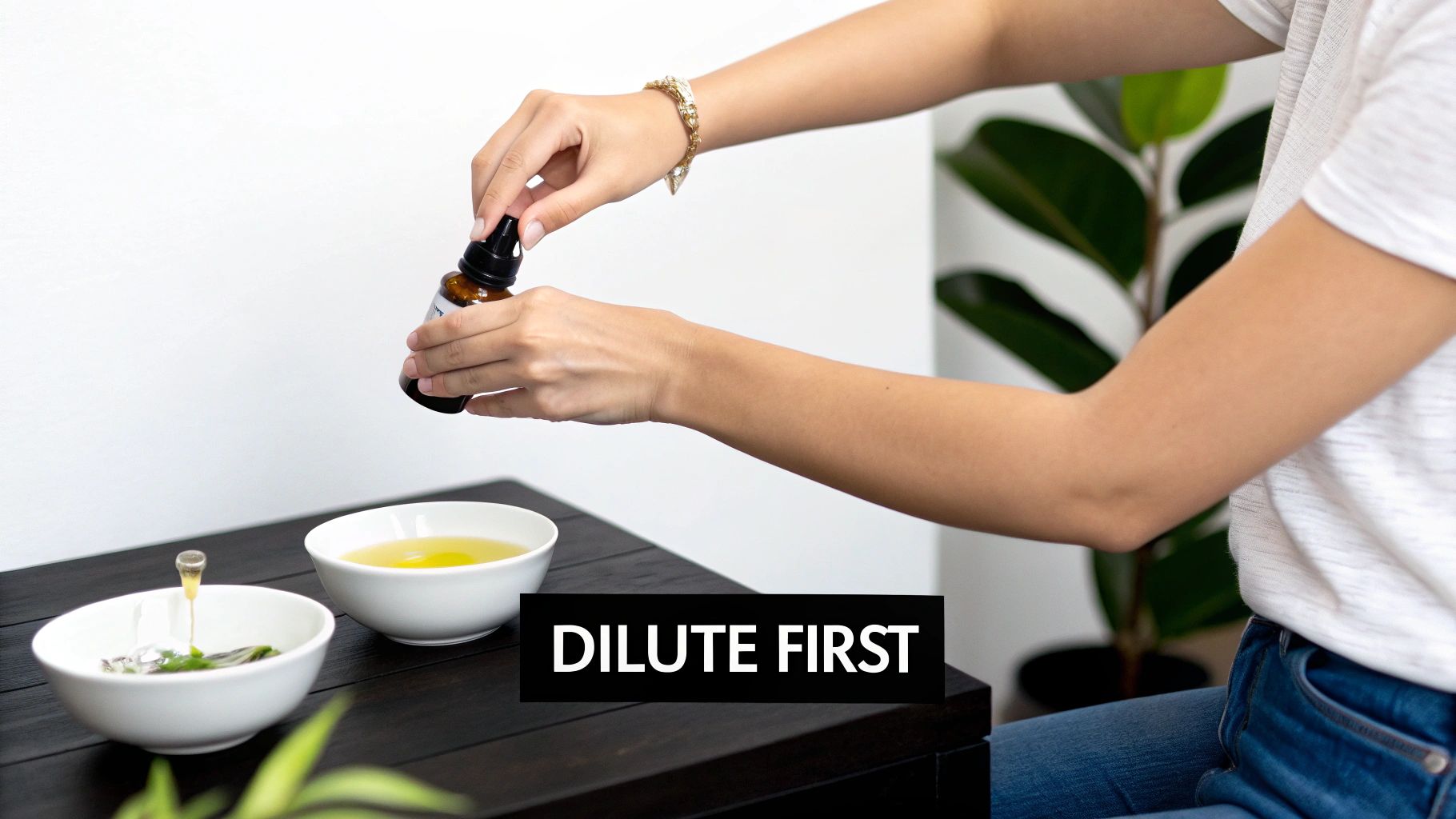
Understanding the power of menthol essential oils is one thing, but knowing how to use them safely is what truly unlocks their benefits. These are potent plant extracts, and a little goes a very long way, whether you’re clearing a stuffy head or soothing tired muscles.
The secret lies in respecting their concentration. Let’s explore the best ways to bring them into your wellness routine without overdoing it.
Topical Application: The Golden Rule of Dilution
Here’s the single most important thing to remember: never apply menthol essential oils “neat” (undiluted) directly onto your skin. Their high concentration of menthol is what makes them so effective, but it can also easily cause irritation, redness, or a burning sensation if you’re not careful.
Instead, you always want to dilute them in a carrier oil. Think of a carrier oil as a neutral, plant-based oil—like jojoba, sweet almond, or fractionated coconut oil—that helps "carry" the essential oil safely onto your skin, allowing it to be absorbed properly without any drama.
Here’s a simple guide to get you started on safe, effective blends:
| Strength | Essential Oil Drops | Carrier Oil Amount | Ideal For |
|---|---|---|---|
| 1% Dilution | 3 drops | 1 Tablespoon (15 ml) | Gentle daily use, facial applications |
| 2% Dilution | 6 drops | 1 Tablespoon (15 ml) | Most common for body use, muscle rubs |
| 3% Dilution | 9 drops | 1 Tablespoon (15 ml) | Short-term use on specific, localised areas |
Before you go all in, always do a quick patch test on a small patch of skin, like your inner elbow. It’s a simple step that ensures you won’t have an unexpected reaction to your new blend.
Aromatic Use: Inhalation and Diffusion
Breathing in the crisp, cool aroma of menthol oils is one of the fastest ways to feel their clearing and invigorating effects. It’s a fantastic way to instantly lift your spirits and open your airways.
There are a few great ways to do this safely:
- Steam Inhalation: Add 1-2 drops of peppermint or eucalyptus oil to a bowl of hot (not boiling!) water. Drape a towel over your head, close your eyes, and lean over the bowl to breathe in the steam for 5-10 minutes. It's a classic for a reason.
- Personal Inhaler: For relief on the go, a personal inhaler is a brilliant option. You can learn more about how an essential oil inhaler gives you targeted benefits without filling the whole room with scent.
- Room Diffusion: An ultrasonic diffuser is perfect for dispersing the aroma throughout your space. Just add 3-5 drops to the water in your diffuser to create a fresh, energising atmosphere.
A good rule of thumb is to diffuse in a well-ventilated area and for limited periods, like 30-60 minutes at a time. This stops the scent from becoming overwhelming.
Practical Applications for Everyday Relief
Once you’re comfortable with these methods, you can start using menthol oils for all sorts of everyday needs. A gentle 2% dilution of peppermint oil in jojoba oil can be massaged onto your temples and the back of your neck for a cooling sensation. Menthol oils are widely appreciated for this kind of comfort, and you can explore more about natural headache relief with essential oils where menthol often plays a starring role.
For a post-workout muscle rub, try a 3% dilution of cornmint oil in a carrier like almond oil. It provides a powerful, targeted cooling effect that feels incredible on tired limbs. By following these simple guidelines, you can safely harness the remarkable benefits of menthol-rich oils in your daily life.
Essential Safety and Dilution Guidelines
The incredible power of menthol essential oils comes with a responsibility. These aren't just pleasant scents; they are highly concentrated plant extracts, and treating them with respect is the key to unlocking their benefits safely. Just a few drops contain the potent essence of the plant, so thinking carefully before you use them isn’t just a suggestion—it’s essential.
One of the most common mistakes is applying these potent oils ‘neat’—or undiluted—directly onto the skin. This can easily lead to irritation, redness, or even long-term sensitisation. To avoid this, the golden rule is to always dilute menthol oils in a neutral carrier oil like jojoba, sweet almond, or fractionated coconut oil before they ever touch your skin.
The Importance of Dilution
Think of a carrier oil as a safe vehicle that helps deliver the essential oil without overwhelming your system. It ensures the menthol is absorbed gently and effectively, spreading its benefits over a wider area. A safe and effective dilution for most adults is around 1-2%. That translates to about 6-12 drops of essential oil per 30 ml (or two tablespoons) of your chosen carrier oil.
Creating your own blend is beautifully simple:
- Choose Your Carrier: Start with a quality carrier oil like coconut or jojoba.
- Measure Accurately: Pour it into a clean, non-reactive bowl or bottle.
- Add Essential Oil: Carefully add the desired number of drops.
- Mix Thoroughly: Gently swirl or stir the mixture until it’s fully combined.
Before you go all in, it’s always wise to do a quick patch test. Just dab a small amount of your new blend on a discreet area of skin, like your inner arm, to make sure you don’t have an adverse reaction.
Always remember the old saying: less is more. You can always add another drop if you feel you need it, but you can’t take one away. Starting with a lower dilution is always the smartest and safest approach.
Special Precautions to Keep in Mind
Some situations and individuals require a little extra caution. The potent nature of these oils means they simply aren’t suitable for everyone, and their strong, cooling aroma can be overwhelming for more sensitive systems.
- Children and Pets: Keep menthol essential oils well out of reach of children and pets. Their little systems are far more sensitive, and oils like peppermint can be particularly toxic to dogs and cats if they lick or absorb it through their skin.
- Pregnancy and Health Conditions: If you are pregnant, breastfeeding, or have a pre-existing health condition like asthma or epilepsy, it’s crucial to chat with a qualified healthcare professional before using any essential oils.
By following these simple but non-negotiable guidelines, you can confidently and safely enjoy the remarkable benefits these oils have to offer. If you're curious about exploring different combinations, learning about curated blends in our guide to essential oil packs can provide some great inspiration for your wellness journey.
How to Choose a High-Quality Menthol Essential Oil

Walking into the world of essential oils can feel a bit like navigating a maze. With so many bottles and brands promising the best, how do you sort the genuinely good stuff from the rest? Getting your hands on a high-quality, authentic menthol essential oil is key—not just for getting the results you want, but for your safety, too.
First things first, check the botanical name. It sounds technical, but it’s the simplest way to spot a reputable brand. They’ll always list the precise Latin name, like Mentha piperita for Peppermint or Mentha arvensis for Cornmint. If you see a vague label that just says “mint oil,” that’s a red flag. It could be a cheap blend or even a synthetic imitation.
Next, have a look for details about where the plant came from and how the oil was made. Information like the country of origin and the fact it was steam-distilled shows a company that’s transparent and cares about its product.
Verifying Purity and Potency
To be absolutely sure you’re getting a pure, unadulterated product, look for brands that can prove it with third-party testing. This is the gold standard for confirming an oil’s authenticity and what’s actually inside the bottle.
Gas Chromatography/Mass Spectrometry (GC/MS) is a lab test that essentially acts like a chemical fingerprint for an essential oil. It’s how experts confirm the oil is free from pesticides and other nasties, and that it has the right levels of natural compounds like menthol.
Genuine menthol essential oils should be clearly labelled as ‘100% pure’. This is what separates them from synthetic fragrance oils, which are concocted in a lab. Fragrance oils might smell nice, but they don't have the complex, therapeutic properties of their natural cousins, so they won't offer any real wellness benefits.
Knowing what to look for means you can invest in a product that truly delivers. It ensures the oil you choose is not only the real deal but also potent enough to help you reach your goals, whether that’s finding powerful relief or simply creating a peaceful, calming atmosphere.
For more on creating a tranquil space, have a read of our guide to the best essential oils for relaxation.
Your Menthol Oil Questions, Answered
Jumping into the world of essential oils can feel a bit overwhelming, and it's natural to have questions. Getting clear, straightforward answers is the best way to make sure you’re using these powerful oils safely and getting all the good stuff without any of the guesswork. Let's clear up a few common questions.
Can I Put Peppermint Oil Directly on My Skin?
That’s a definite no. You should never apply pure peppermint oil, or any potent menthol oil, straight onto your skin. It’s incredibly concentrated and can cause a pretty nasty reaction, like redness, a burning feeling, or serious irritation.
Always, always dilute it first. A good rule of thumb is to mix it with a carrier oil—something gentle like jojoba, sweet almond, or coconut oil. A safe dilution for most body applications is around 1-2%, which is just a few drops per tablespoon of carrier oil.
Is Cornmint Oil the Same as Peppermint Oil?
They’re close cousins from the mint family, but they are definitely not the same. Cornmint (Mentha arvensis) is the powerhouse of the two, with a massive menthol content that can reach up to 80%. This gives it a very sharp, almost medicinal scent.
Peppermint (Mentha piperita), on the other hand, is more balanced. Its menthol level sits around 40%, and it has that classic sweet, fresh scent that most of us know and love. It’s much more complex and generally the go-to for diffusers and general aromatherapy.
Think of it this way: Peppermint is perfect for creating that uplifting, sweet minty atmosphere, while the intense cooling power of Cornmint is best reserved for things like targeted muscle rubs where you need a serious cooling kick.
What's the Best Way to Use Menthol Oils for a Stuffy Nose?
For that frustrating blocked-up feeling, a simple steam inhalation is one of the quickest and most effective tricks in the book.
Just add 1-2 drops of a clearing oil like peppermint or eucalyptus to a bowl of hot (not boiling) water. Drape a towel over your head to create a little tent, lean carefully over the bowl, and breathe in the steam for about 5-10 minutes. It works wonders for helping to open up your airways and brings that instant feeling of relief.
At AuraFlow, we believe in the power of natural flavours and gentle rituals to support your wellness journey. Explore our nicotine-free essential oil inhalers to find a calming alternative that fits your lifestyle. Discover a new way to breathe at https://aura-flow.co.uk.