
So, you’ve decided to quit smoking. That’s a huge, life-changing decision, and probably one of the best you’ll ever make for your health. But let’s be honest—the first few days and weeks can feel like you’re navigating a storm.
This is your map. We're going to break down exactly what happens when you quit, why your body feels the way it does, and what you can expect along the way.
What’s Really Happening When You Stop?
For years, your brain has come to expect a regular hit of nicotine. Think of it like a scheduled delivery that releases dopamine, that "feel-good" chemical that makes you feel relaxed and satisfied. When you suddenly stop those deliveries, your brain has to scramble to figure out how to function without it.
That whole recalibration process? That’s what we call withdrawal.
It’s a mix of physical and psychological hurdles as the nicotine leaves your system and your mind starts to unlearn old, ingrained habits. It’s a temporary, and yes, sometimes intense, sign that your body is starting to heal.
Those feelings of irritation, restlessness, and the powerful cravings aren't a sign that you’re failing. They're proof that your body is fighting its way back to its natural, healthier state.
Understanding the typical smoking cessation withdrawal timeline takes the fear of the unknown out of the equation. Instead of being blindsided by a sudden mood swing or a craving that hits you like a ton of bricks, you’ll recognise it for what it is: a predictable bump in the road. Knowing this is empowering. It turns tough moments into milestones.
This guide will give you a clear, reassuring roadmap of what to expect, from the first few hours to the challenging first days and the rewarding weeks that follow. You’ll be navigating a few key phases:
- The Initial Shock (First 72 Hours): This is where your body puts up its biggest physical fight as the last of the nicotine makes its exit.
- The Mental Game (Weeks 1-4): The focus shifts from physical symptoms to tackling mental triggers and consciously building new, healthier routines.
- Long-Term Healing (Beyond One Month): This is all about learning to manage those lingering cravings and truly settling into your new identity as a non-smoker.
By knowing what's coming, you can face this journey with confidence and a solid plan to succeed.
Navigating the First 72 Hours
Let’s be honest: the first three days after you quit smoking can be the toughest. This is the peak of the physical battle, the moment your body is working overtime to flush out the last traces of nicotine and figure out its new normal. Understanding what's really going on inside your body is the first step to taking back control.
For a long time, your brain has been outsourcing its dopamine production to nicotine. Dopamine is that feel-good chemical that helps with pleasure, focus, and motivation. When you suddenly take the nicotine away, your brain goes into a bit of a panic, trying to remember how to make dopamine on its own again. That's what's behind the intense irritability, restlessness, and that dreaded "brain fog." It's not a sign of weakness—it's proof that your body is already starting to heal.
To give you a clearer picture of the road ahead, this timeline breaks down the main stages you’ll go through, from the very first hours to the first few days and into the weeks to come.
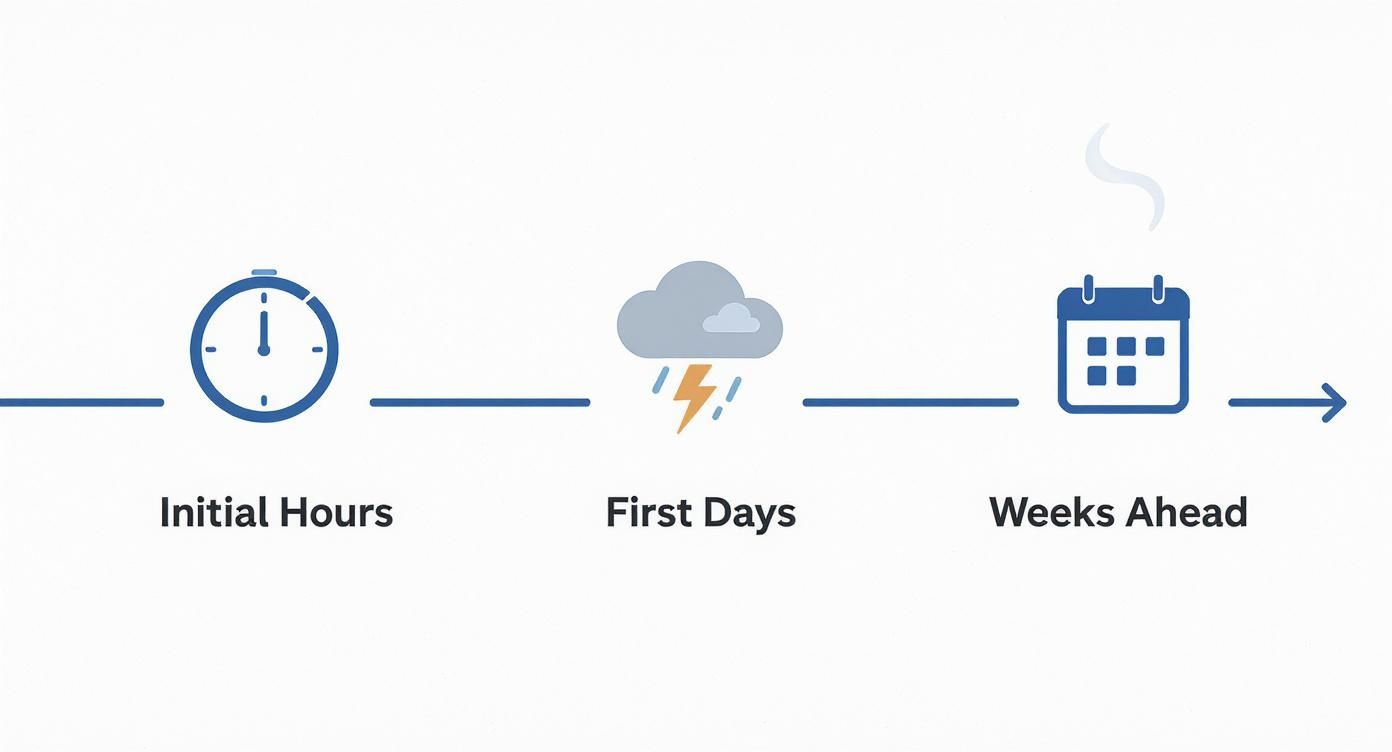
As you can see, while the first couple of days might feel like a storm, the forecast clears up remarkably quickly as you push through.
The Hour-by-Hour Breakdown
The withdrawal timeline kicks in surprisingly fast, with the first twinges often appearing just a few hours after your last cigarette. Research shows that your blood nicotine levels can plummet by up to 90% within just four hours, which is the trigger for those initial cravings and feelings of anxiety. By the time you hit the 24-hour mark, these symptoms are often hitting their stride, making this a massive milestone to get through.
So, what can you expect?
- Hours 1-4: The first cravings start to knock at the door. These are just your body's initial calls for the nicotine it's become accustomed to. Your best friend here is distraction.
- Hours 12-24: This is often when you might start feeling restless and irritable. Your brain is working hard to rebalance itself, which can leave you feeling a bit frayed around the edges.
- Hours 24-72: You've arrived at the peak. Cravings, headaches, and moodiness can be at their most intense during this window. Think of it as the final, big push before the physical side of things really starts to calm down.
Practical Coping Strategies
Knowing what’s coming is one thing, but having the right tools to handle it is everything. During these challenging first 72 hours, feelings like anxiety can be overwhelming. Finding effective ways to manage it, like exploring meditation techniques for anxiety relief, can make a world of difference.
Remember: A craving is a temporary wave, not a permanent state. Your job is to learn how to ride it out until it passes, which it always will.
To help you get through the thick of it, I've put together a simple timeline table that breaks down what to expect and what to do during those crucial first three days.
Your Withdrawal Timeline The First Three Days
Here's a closer look at the common symptoms you might face in the initial 72 hours and some practical, hands-on strategies to help you cope moment by moment.
| Timeframe | Common Symptoms | Effective Coping Strategy |
|---|---|---|
| 0-12 Hours | Initial cravings, mild restlessness, and a feeling of "something's missing." | Distraction is key. Call a friend, put on your favourite music, or tackle a small task you've been putting off. The goal is to shift your focus. |
| 12-24 Hours | Increased irritability, trouble concentrating (brain fog), and stronger, more frequent cravings. | Get moving. A brisk 10-minute walk can release endorphins that ease stress. Keep healthy snacks like nuts or fruit on hand to keep your hands and mouth busy. |
| 24-72 Hours | Peak cravings, potential headaches, heightened anxiety, and intense mood swings. | Focus on your breath. When a craving hits, take three slow, deep breaths. Drink plenty of water to help flush out toxins and stay hydrated. This is a great time to lean on support from friends or family. |
Arming yourself with this knowledge and these practical tools means you’re not just hoping for the best—you're actively building a strong foundation for the smoke-free weeks ahead. For those who chose to quit smoking cold turkey, these tips can offer even more targeted support for this critical phase. You can do this.
Finding Your Rhythm in the First Month

So, you’ve made it through the first 72 hours. Give yourself a pat on the back, because the most intense physical fight is largely behind you. Now, the battleground shifts. It's less of an all-out physical war and more of a strategic, psychological game.
This is where you settle in for the first month. Your body is still working things out, but the main symptoms have likely faded. The real work is happening in your brain as it rewires its chemistry without the constant drip of nicotine. This phase brings a new set of challenges, tied more to your daily habits and emotions than anything else.
Think about it. For years, smoking was probably woven into the very fabric of your day. It was the trusty companion to your morning coffee, the full stop at the end of a meal, and your go-to reflex when stress hit. Your job now is to consciously create new patterns to fill those gaps.
Managing Triggers and Cravings
The biggest hurdles you'll face during this stage are the psychological triggers and the ‘craving waves’ they bring. These powerful urges are often sparked by specific situations, feelings, or routines you’ve always associated with lighting up.
You might notice a few things popping up:
- Mood Swings and Irritability: Without nicotine pulling the strings on your dopamine levels, your emotions can feel a bit all over the place. It's completely normal.
- Increased Appetite: Many people find they're hungrier as their metabolism begins to regulate itself.
- Sleep Disturbances: It's common to have trouble falling asleep or staying asleep as your brain finds its new, natural rhythm.
The most important thing to remember is that these cravings are temporary. Each urge you ride out, you win. Every time you don't give in, you weaken the old habit's grip and strengthen your own resolve. It gets easier.
Learning to ride these waves is a skill, and you'll get better at it with practice. When a craving hits, see it as a signal to do something different. This is where having a plan is a game-changer. Instead of reaching for a cigarette, you could grab a glass of water, step outside for some fresh air, or use a tool like the AuraFlow device to satisfy that hand-to-mouth habit with a pleasant, nicotine-free flavour.
Rewriting Your Routines for Success
This period is all about being proactive. Don't just focus on resisting the old habits; get excited about building new, healthier ones. If that morning coffee is a major trigger, why not switch to herbal tea for a week, or simply drink your coffee in a different room?
This is your chance to redefine what comfort and reward look like for you. Celebrate the small wins. Did you get through a stressful meeting without a single craving? Brilliant. Did you enjoy a meal without feeling that itch to smoke afterwards? That’s a huge victory.
By consciously rewriting these daily scripts, you’re not just quitting smoking. You're laying a solid foundation for lasting success and a life free from nicotine.
Tracking Your Body's Remarkable Recovery

When you're navigating the ups and downs of withdrawal, it's easy to get bogged down and lose sight of the incredible rewards waiting for you. But focusing on the good stuff—the amazing ways your body is healing—can be a powerful motivator, turning tough moments into reminders of why you started this in the first place.
The best part? The healing process begins almost immediately.
Think of it as a live report of your body’s victory. Every single hour you stay smoke-free, your system is busy repairing itself and undoing years of damage. These aren't abstract, far-off goals; they are real, measurable improvements that start just minutes after you put out your last cigarette.
This focus on recovery is a crucial part of the smoking cessation withdrawal timeline, giving you solid proof that your hard work is paying off right now.
Your Immediate Health Wins
The speed at which your health improves after quitting is genuinely remarkable. According to NHS-supported data, within just 20 minutes, your heart rate and blood pressure begin to settle back towards normal.
By 48 hours, your nerve endings start to regrow, which brings a noticeable improvement to your sense of taste and smell. Food will suddenly have more flavour, and you'll pick up on scents you haven't noticed in years. It’s one of the first, most rewarding signs that you’re on the right track.
After 72 hours, breathing becomes easier as the bronchial tubes in your lungs relax. Between 2 and 12 weeks, your circulation improves, making physical activity feel less like a chore. And after just one year, your risk of heart disease is slashed in half compared to someone who keeps smoking.
Each milestone, whether it's your blood pressure normalising or your sense of smell returning, is a testament to your body's incredible capacity to heal. Celebrate these victories; they are the foundation of your new, healthier life.
Visualising Your Body's Recovery Timeline
To truly appreciate the progress you're making, it helps to see it all mapped out. The timeline below highlights the key health improvements you can look forward to as you move further away from your last cigarette. Each step is a powerful incentive to stay on track.
For a deeper dive into the specific advantages, you might be interested in our guide on the health benefits of quitting smoking, which explores these milestones in more detail.
Your Body's Recovery Timeline After Quitting
This timeline isn’t just a list of clinical facts; it’s the story of your body’s amazing resilience. It shows just how quickly things start getting better.
| Time After Quitting | Health Improvement Achieved |
|---|---|
| 20 Minutes | Your heart rate and blood pressure begin to return to normal. |
| 8 Hours | Harmful carbon monoxide levels in your blood are cut by half, and oxygen levels return to normal. |
| 48 Hours | All carbon monoxide is flushed out. Your lungs start to clear mucus and debris. Your sense of taste and smell improves. |
| 72 Hours | Breathing becomes easier as your bronchial tubes start to relax. Your energy levels increase. |
| 2 Weeks to 3 Months | Your circulation improves, and your lung function increases by up to 30%. |
| 1 Year | Your risk of a heart attack is halved compared to a smoker's. |
Keep this timeline handy. It's a fantastic reminder that every craving you overcome is a direct investment in a longer, healthier, and more vibrant future.
You've made it past the one-month mark. Take a moment and let that sink in. The toughest physical part of the smoking withdrawal timeline is now in your rearview mirror, and you're starting to build a new life without cigarettes. That's a huge win, but the journey isn't over. Quitting is a marathon, not a sprint.
Now, the game changes. This next phase is all about cementing your new identity as a non-smoker and learning to handle the mental hurdles that can pop up when you least expect them. While the constant, nagging cravings have probably faded, you might still get ambushed by a sudden urge. A stressful day at work, a pint with friends, or even an old memory can bring a craving roaring back.
This is completely normal, so don't panic. Think of those cravings as old, dusty paths in your brain. You haven't walked down them in a while. Your job now is to keep strengthening the new, smoke-free paths until they become your automatic go-to.
Navigating Lingering Psychological Hurdles
After the first month, the main challenge isn't the constant physical battle anymore. It's about dealing with those occasional, powerful psychological triggers. It's also common to feel a sense of loss for a habit that was a big part of your daily routine and identity. Facing this head-on is the key to staying on track.
To build real, long-term resilience, it's time to get serious about new coping skills.
- Find New Stress-Busters: If a cigarette was your crutch for stress, you need a replacement. It could be a quick five-minute walk around the block, a few deep breathing exercises, or just putting on your favourite song. The trick is to have a healthy alternative ready to go before the stress hits.
- Rewrite Your Reward System: Celebrate your wins with rewards that feel good and support your new lifestyle. Instead of a smoke break, treat yourself to a fancy coffee, buy that book you've been eyeing, or stash the cash you've saved for something truly special.
- Embrace Your New Identity: Start thinking of yourself, actively, as a non-smoker. The more you truly believe it and lean into this new identity, the less power the old habit will have over you.
Remember, an unexpected craving months down the line doesn't mean you're failing. It’s just an echo of an old connection, one that gets weaker every single day. Acknowledge it, let it pass, and carry on.
Solidifying Your Smoke-Free Future
Building a smoke-free life that lasts is all about being prepared. Don't let yourself get caught off guard by those sneaky triggers. Instead, think ahead and have a plan. If you know you're walking into a stressful meeting, decide beforehand how you'll handle it without reaching for a cigarette.
Many people find that having a physical tool helps them ride out these moments. A device like AuraFlow offers a nicotine-free, flavourful way to satisfy that hand-to-mouth ritual without undoing all your hard work. It gives you a moment of calm and sensory satisfaction, helping you navigate a craving without giving in.
Every time you successfully manage a trigger, you're not just avoiding a cigarette—you're reinforcing your new, healthier habits and building the confidence you need to stay smoke-free for good. This is how you secure a healthier, more vibrant future, one mindful choice at a time.
Using UK Support Systems to Stay Quit
Trying to get through the withdrawal timeline on your own can feel like climbing a mountain without a rope. The good news? You don’t have to. The UK has a fantastic network of support systems ready to give you the tools, guidance, and encouragement you need to reach the summit and quit for good.When you tap into these resources, you're not just getting help; you're building a personal support toolkit. Think of it as combining professional advice with practical aids to make the whole journey feel a lot less bumpy. From the NHS to local groups, there’s a path forward for everyone.
Getting Help from NHS Stop Smoking Services
Your first and best port of call should always be the NHS. Local stop smoking services are free, friendly, and staffed by experts who can work with you to create a personalised quit plan that actually fits your life. These services offer one-on-one support and can get you access to proven quitting aids.
They can walk you through options like Nicotine Replacement Therapy (NRT), which is brilliant for taking the edge off the physical withdrawal symptoms. NRT comes in all sorts of forms, so you can find what works for you:
- Patches give you a steady, all-day release of nicotine.
- Gum and lozenges are perfect for tackling those sudden, intense cravings.
- Inhalators and sprays help mimic the hand-to-mouth action of smoking you might be missing.
Combining professional guidance with an aid like NRT can more than double your chances of quitting successfully compared to just going it alone.
Tapping into a structured support system isn't a sign of weakness; it's a strategic move. It's about giving yourself the best possible odds during the most challenging phases of the withdrawal timeline.
The Power of Community and Peer Support
Beyond professional services, never underestimate the power of shared experience. Just knowing you’re not the only one going through it can be a massive motivator. This is where local support groups and national campaigns come into their own. For a closer look at how these communities can help, check out our detailed guide on quit smoking support groups.
Campaigns like Stoptober are built on solid evidence. Research shows that if you can stay smoke-free for 28 days, you are five times more likely to quit permanently. This just goes to show how critical support is during that first, pivotal month of the withdrawal timeline.
Vaping as a Quitting Tool in the UK
Here in the UK, e-cigarettes (vapes) have become a popular and effective tool for quitting smoking. Public Health England has consistently said that vaping is significantly less harmful than smoking. For many people, it provides the nicotine and sensory experience they miss, but without the tar and carbon monoxide that comes from tobacco smoke.
Success rates for quitting in the UK are closely tied to the support people use. Only about 3-4% of smokers who try to quit with no help succeed. In contrast, a 2023-2024 survey found e-cigarettes were used in 40.2% of quit attempts and were linked with the highest chances of success. You can find more of these findings on gov.uk.
By combining the right tools with the right support, you can confidently navigate your journey to a smoke-free life.
Common Questions About Quitting Smoking
Thinking about the smoking cessation withdrawal timeline can bring up a lot of questions, and that's completely normal. Having the right answers can make the whole process feel less intimidating and give you the confidence to see it through. Let's tackle some of the most common worries people have when they decide to quit for good.
A lot of the fear comes from the unknown, especially when it comes to withdrawal. While everyone’s journey is different, understanding the typical pattern shows you there’s a light at the end of the tunnel.
How Long Do the Worst Nicotine Withdrawal Symptoms Last?
Let's be honest, the first few days can be rough. The most intense physical symptoms—think irritability, brain fog, headaches, and those powerful cravings—usually hit their peak within the first 72 hours after your last cigarette. This is often the toughest part of the entire journey.
But here's the good news: after that initial hurdle, the physical side of things starts to get much easier. Over the next one to two weeks, the symptoms will fade significantly. The psychological triggers might stick around for a while longer, but they’ll become less frequent and a lot less powerful over time.
Will I Gain Weight When I Quit Smoking?
This is a big concern for many, and it's true that some people gain a little weight. Nicotine gives your metabolism a slight, artificial boost, so when you quit, it returns to normal. You might also notice your appetite increases or you find yourself snacking to replace the hand-to-mouth habit of smoking.
However, weight gain isn’t a given. You can absolutely get ahead of it by planning healthy snacks, moving your body a little more (which is so much easier now your lungs are healing!), and drinking plenty of water. Honestly, the incredible health benefits you get from quitting smoking far outweigh the risk of gaining a few pounds.
The real secret is to replace the old habit with new, healthier routines, not just trade one habit for another. Focus on nourishing your body as it heals from the inside out.
Is It Better to Quit Cold Turkey or Gradually?
There’s no one-size-fits-all answer here; the best method is whichever one feels right for you. For some people, going ‘cold turkey’ and making a clean break works brilliantly. It rips the plaster off and removes any grey areas.
In fact, NHS guidance often suggests that setting a firm quit date and stopping completely gives you the best shot at success, especially with good support. That said, others find that gradually cutting down their daily cigarette count is a more manageable and less overwhelming approach. The most important thing isn't how you quit, but that you make a solid decision and lean on your support systems, no matter which path you take.
Ready to make quitting feel more approachable? The AuraFlow starter kit offers a nicotine-free, flavour-forward way to manage cravings and build new, calming rituals. Discover a smoother transition to a smoke-free life at https://aura-flow.co.uk.