
A stop smoking inhalator is a simple tool designed to help you quit by tackling the physical act of smoking, but without any of the harmful chemicals. It satisfies that familiar hand-to-mouth ritual, giving you a safe, nicotine-free way to manage behavioural cravings and finally break the habit. Think of it as a support system for the psychological side of quitting.
How Stop Smoking Inhalators Tackle the Habit of Smoking
Quitting smoking often feels like fighting two separate battles. The first is against nicotine, the addictive chemical that keeps you hooked. The second, and often more stubborn battle, is against the habit itself—the deeply ingrained physical ritual that has become part of your daily life.
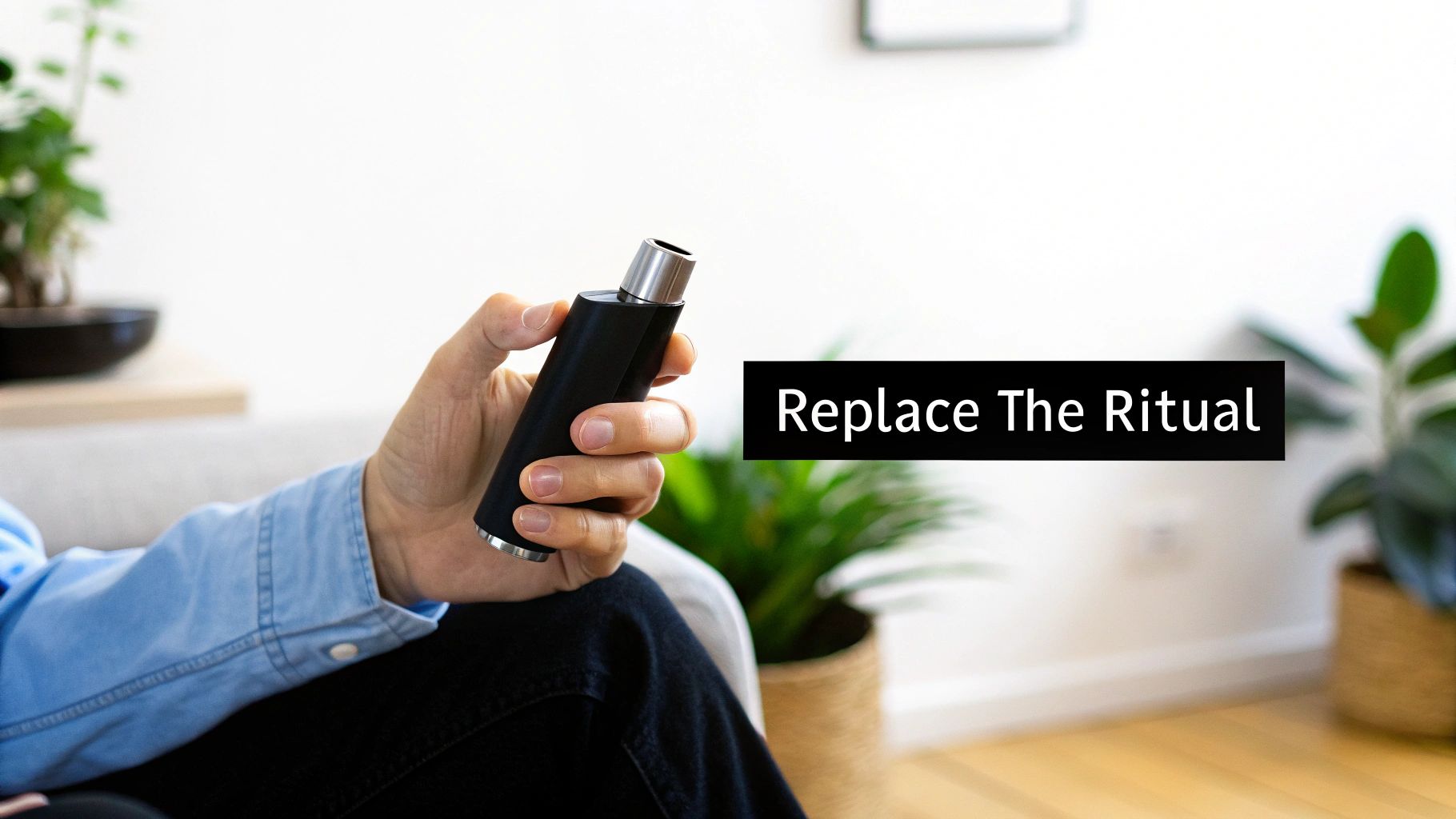
Think about it for a moment. The morning coffee, the break at work, that stressful phone call—these moments are powerful triggers. For years, your automatic response has been to reach for a cigarette. It’s not just about the nicotine; it’s about the familiar comfort of holding something, the motion of bringing it to your lips, and the sensation of inhaling.
This is exactly where a stop smoking inhalator comes in. It acts as a substitute for your habit, providing a direct replacement for the physical actions you miss so dearly. This lets you deconstruct the smoking ritual, keeping the parts that provide comfort while removing the dangerous elements like tar and carbon monoxide.
Deconstructing the Smoking Ritual
At its core, smoking is just a sequence of actions you've repeated thousands of times. An inhalator helps you interrupt this sequence by satisfying key physical urges without the health consequences. Here’s how it works:
- Hand-to-Mouth Action: It gives your hands something to do, satisfying the need to hold and lift an object to your mouth.
- Oral Fixation: The device provides a mouthpiece to draw on, fulfilling the oral fixation that so many smokers develop.
- The Sensation of Inhaling: It mimics the act of taking a draw, which can be a powerful psychological relief during a craving.
By addressing these sensory needs, the inhalator helps manage withdrawal symptoms that aren't purely chemical. It empowers you to face a trigger and respond with a new, healthier action. We dive deeper into this in our article on the secret challenge of quitting smoking no one talks about.
Nicotine vs. Nicotine-Free Inhalators
It’s really important to understand the two main types of inhalators available, as they serve very different purposes on your quitting journey. One tackles the chemical addiction, while the other focuses purely on the habit.
Two Main Types of Stop Smoking Inhalators
| Inhalator Type | Primary Purpose | How It Works |
|---|---|---|
| Nicotine (NRT) Inhalator | To manage chemical withdrawal symptoms. | Delivers a controlled dose of nicotine vapour to reduce physical cravings as part of a Nicotine Replacement Therapy (NRT) plan. |
| Nicotine-Free Inhalator | To manage behavioural habits and rituals. | Uses flavoured air or essential oils to replicate the sensory experience of smoking, providing a safe outlet for the hand-to-mouth habit. |
While NRT inhalators are all about tackling the chemical dependency, nicotine-free options like AuraFlow focus entirely on the behavioural aspect. This distinction is vital, especially for those who find the ritual of smoking to be the biggest barrier to quitting for good.
The good news is that these kinds of aids, alongside public health initiatives, are making a real difference. The smoking rate among adults in England was 10.4% in 2024, a huge drop from 19.8% in 2011. Still, rates remain higher in certain groups, highlighting the ongoing need for accessible and effective quitting tools that address every part of the addiction. You can discover more insights about these smoking trends on GOV.UK.
Ultimately, a stop smoking inhalator provides a way to consciously uncouple the trigger from the harmful response. Instead of fighting the urge, you redirect it, building a new, healthier habit one breath at a time.
Breaking the Cycle of Cravings with Behavioural Support
Quitting smoking is so much more than a chemical battle with nicotine. It’s a psychological challenge, built on years and years of repeated behaviour. Every single time you’ve linked an action—like that first morning coffee or finishing a meal—with lighting up, you’ve carved a deeper neural pathway in your brain. This is known as behavioural conditioning.
Over time, these pathways become so automatic that the connection feels instant. A stressful phone call ends, and before you even consciously think, your hand is already reaching for a cigarette. These everyday moments become powerful triggers, sparking a craving that feels almost impossible to shut down. Breaking this cycle takes more than willpower; it requires a tool that can actively disrupt the pattern.
This is exactly where a stop smoking inhalator becomes your ally. It serves as a 'pattern interrupt'—a physical object that helps you step in and intercept the craving before it pulls you back into the old habit.
Rewiring Your Brain One Action at a Time
Think of your smoking habit like a well-worn path through a field. Every time a trigger happens, your brain naturally walks down this path because it’s the easiest, most familiar route. Trying to block it with a big rock (sheer willpower) is exhausting and, let's be honest, rarely works for long. A much smarter way is to start creating a new, more pleasant path right alongside it.
A stop smoking inhalator helps you build that new path. When a trigger pops up, instead of reaching for a cigarette, you reach for your inhalator. This simple substitution does something incredible:
- It breaks the old connection: The trigger no longer leads directly to lighting up.
- It builds a new connection: The trigger now leads to a safe, controlled, and harmless action.
Every time you make this choice, you strengthen the new neural pathway, making it the more natural, automatic choice. Meanwhile, the old, unused path begins to fade away. You are literally, actively rewiring your brain’s response to stress, boredom, and social cues.
By consistently replacing the smoking ritual with a harmless alternative, you're not just fighting a craving in the moment—you're dismantling the very psychological machinery that creates the craving in the first place.
The Power of Satisfying Physical Urges
Many people who quit are surprised to find that even after the nicotine is long gone, the physical urges remain incredibly strong. Two of the biggest hurdles are the hand-to-mouth action and oral fixation. These are the deep-seated, sensory parts of the smoking habit that patches or gums simply can't touch.
This is why satisfying these physical compulsions is so critical for success. The simple act of holding something shaped like a cigarette and bringing it to your lips can provide a huge sense of psychological relief. To truly break free, it's essential to understand and apply proven strategies to stop compulsions that help you regain control over these automatic actions.
A stop smoking inhalator directly targets these needs:
- It occupies your hands, satisfying that ingrained need to be holding and fiddling with something.
- It satisfies oral fixation, giving your mouth something to do when the urge strikes.
- It mimics the act of inhaling, providing a sensory release that calms the anxiety of withdrawal.
By fulfilling these deep-seated physical habits, an inhalator makes your quit journey feel far more manageable and less like a constant, uphill battle. It gives you an immediate, practical response to a craving, putting you back in the driver's seat. This journey can feel isolating, but remember that connecting with others who get it is a powerful tool. You can explore the benefits of joining quit smoking support groups in our detailed guide to find the community you need.
Comparing Your Quitting Options Side by Side
Choosing the right way to quit smoking can feel like you're lost in a maze. There are so many options out there—patches, gums, vapes, and different types of inhalators—and it’s easy to feel a bit overwhelmed. The real key is finding something that actually fits your struggle. Is it the chemical pull of nicotine, the physical habit of lighting up, or a mix of both?
To help cut through the noise, let's put the most common quitting aids next to each other. We’ll look at what they do, which part of the smoking habit they target, and what you can expect when it comes to cost and ease of use. This should give you a much clearer picture of what might work for you.
Nicotine Replacement Therapy (NRT) Patches and Gums
Traditional NRTs like patches and gums are designed to do one job and one job only: tackle your body's chemical dependence on nicotine. They work by giving you a steady, controlled dose of nicotine, which takes the edge off those nasty withdrawal symptoms like irritability and intense cravings.
But here’s the thing—their focus is purely chemical. A patch on your arm won't help when your hands feel empty on a work break. Chewing gum doesn't satisfy that deep-seated need for the hand-to-mouth ritual. So, while they’re great for weaning your body off nicotine, they leave the entire behavioural side of the habit completely untouched.
Vaping and E-Cigarettes
Vaping has become a hugely popular alternative, mainly because it offers both nicotine and a hand-to-mouth action that feels a lot like smoking. For many people, that combination is a game-changer. In fact, a recent English study found that e-cigarettes were used in about 40.2% of quit attempts and had the highest success rates among the different aids.
But vaping comes with its own baggage. The devices often need a fair bit of upkeep—charging batteries, refilling liquids, and swapping out coils. If you’re just looking for a simple, no-fuss tool to help you quit, the techy side of vaping can feel like more trouble than it's worth. You can read the full research on quit attempt success rates on JAMA Network.
The Stop Smoking Inhalator Advantage
This is where the stop smoking inhalator finds its sweet spot. It comes in two flavours—one with nicotine (NRT) and one without—but both are brilliant at targeting the psychological and behavioural habits that other methods miss. For so many of us, it’s the ritual itself that’s the hardest part to break.
The little diagram below shows the simple choice you get to make whenever a trigger hits. Instead of reaching for a cigarette, you can redirect that habit toward something much healthier.
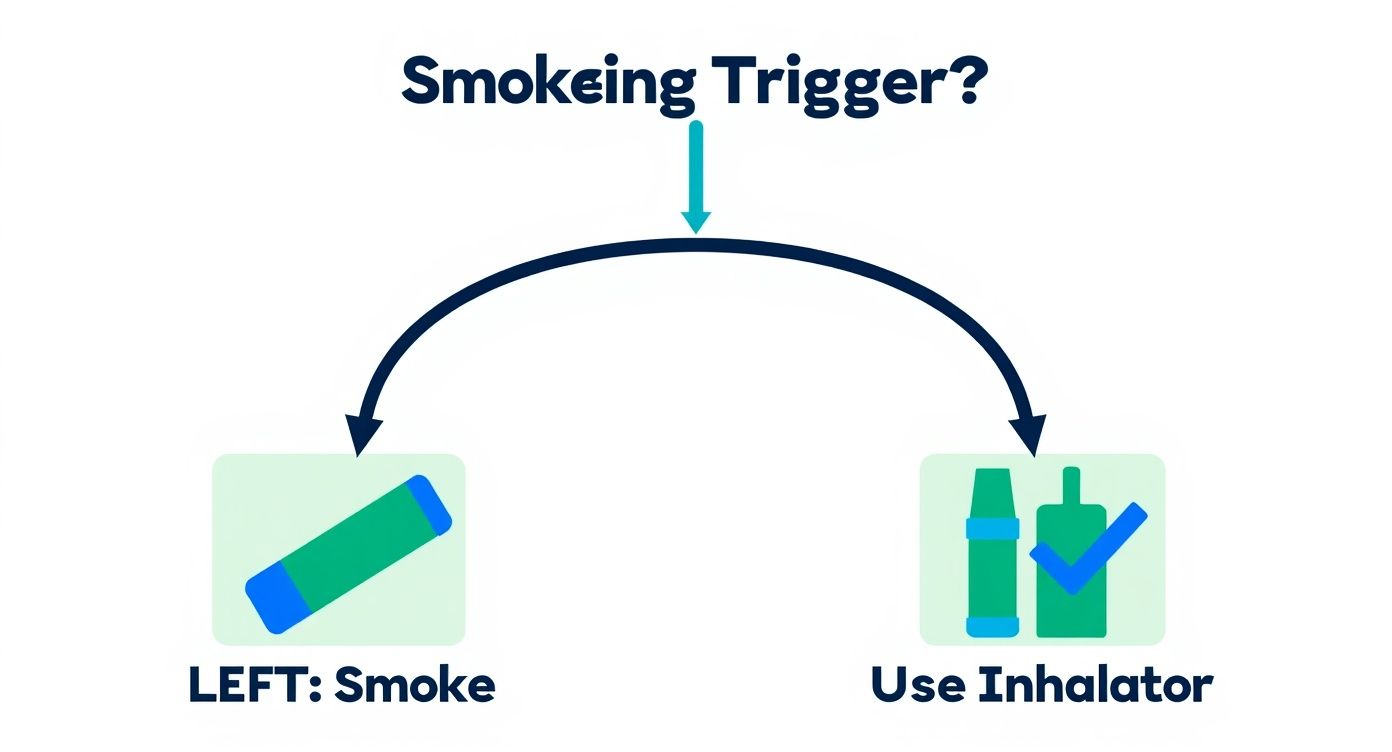
This shows how an inhalator can step in as a direct substitute, letting you satisfy that physical urge without giving in to the harmful act of smoking.
Quitting Aids Compared Head-to-Head
To put it all into perspective, this handy table breaks down the key differences between each method. It’s a simple way to weigh the pros and cons against what you personally need to succeed.
| Method | Primary Function | Addresses Habit? | Nicotine Delivery? | Average Monthly Cost | Key Benefit |
|---|---|---|---|---|---|
| NRT Patch/Gum | Chemical withdrawal | No | Yes | £25 - £40 | Simple, passive nicotine delivery. |
| Vaping/E-Cig | Chemical & Behavioural | Yes | Yes (variable) | £30 - £60+ | Closely mimics the smoking experience. |
| NRT Inhalator | Chemical & Behavioural | Yes | Yes (controlled) | £30 - £50 | Tackles both habit and nicotine cravings. |
| Nicotine-Free Inhalator | Purely Behavioural | Yes | No | £20 - £35 | Isolates and breaks the physical ritual. |
As you can see, the nicotine-free inhalator is the only tool purpose-built to dismantle the behavioural addiction without any nicotine involved. This makes it an ideal stop smoking aid for anyone who feels like the physical ritual is their biggest hurdle. It lets you make a clean break from nicotine while still giving you the comfort and action you need to get through a craving.
By focusing solely on the habit, a nicotine-free stop smoking inhalator empowers you to conquer the psychological side of smoking, making it a powerful tool for achieving long-term freedom without creating a new chemical dependency.
Practical Steps for Using an Inhalator Effectively
Having a stop-smoking inhalator is one thing; turning it into a powerful, reliable part of your quit plan is another. This isn't just about having a substitute for a cigarette—it's about building new, healthier rituals that give you a sense of control when cravings strike. Let’s walk through the practical, actionable steps to make your inhalator an indispensable ally on your journey.
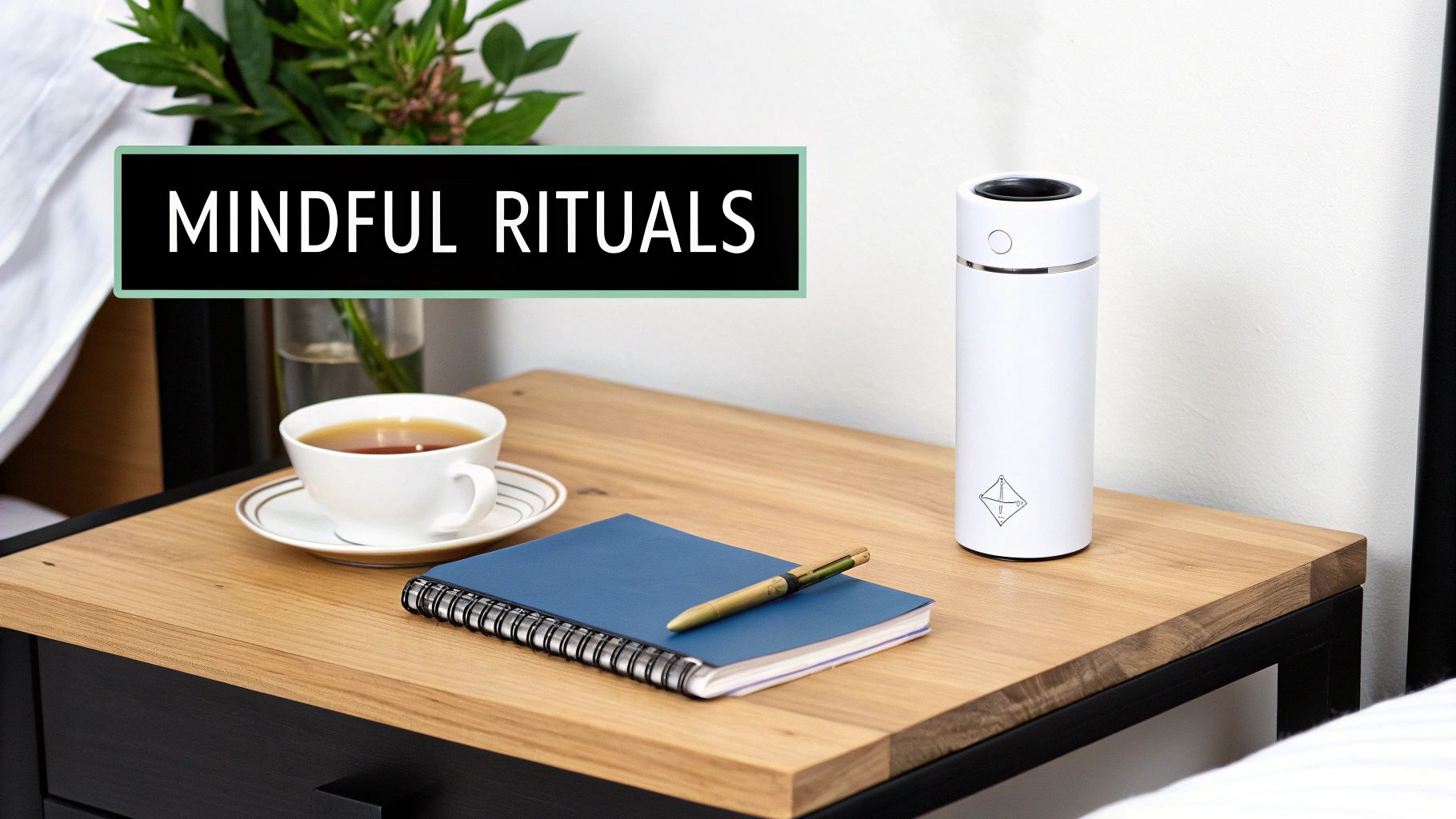
The key is to transform the simple act of using the device into a mindful moment of calm. Instead of a frantic, desperate grab during a craving, you can create a deliberate ritual that retrains your brain to associate triggers with peace, not panic. This is how you shift from merely reacting to cravings to proactively managing them.
Create Your Mindful Inhalator Ritual
When a craving hits, it often brings a wave of anxiety. Your mission is to intercept that feeling and replace it with a calming, structured routine. Think of it as a circuit breaker for your stress response.
Here is a simple but powerful ritual to practise:
- Stop and Acknowledge: The moment you feel a craving, pause. Don't fight it. Simply acknowledge the feeling without judgement.
- Reach for Your Inhalator: Slowly and deliberately, take out your inhalator. This is your new, conscious action.
- Take a Deep Breath: Before using it, take one slow, deep breath in through your nose and out through your mouth. This simple step helps to ground you.
- Inhale with Intention: Use your stop-smoking inhalator, focusing on the sensation of the airflow or flavour. Concentrate on the physical act.
- Exhale Slowly: As you exhale, imagine the craving and tension leaving your body with your breath.
- Repeat: Continue for a minute or two until you feel the intense urge has passed and you're back in control.
This routine does more than just distract you; it actively calms your nervous system and builds a new, positive association with your triggers. It proves you have a reliable way to get through a tough moment without lighting up.
Strategic Placement and Proactive Use
Where you keep your inhalator matters. To break old habits, you need to disrupt the physical patterns associated with them. This means putting your new tool exactly where your old one used to be.
- Replace Your Cigarettes: Keep your inhalator in the same pocket, bag, or drawer where you used to store your cigarettes. This builds a new muscle memory.
- Anticipate Your Triggers: Know a stressful meeting or a coffee break is coming up? Use your inhalator before the trigger event. This proactive approach puts you ahead of the craving, preventing it from taking hold in the first place.
Using a supportive tool dramatically improves your chances of success. In 2024-25, quit rates among those using local stop smoking services in England with aids like NRT were 50-60%, compared to just 40% for those without such support. This proves that having a reliable tool in your corner makes a significant difference. You can read the full report on quitting success rates at ash.org.uk.
By proactively using your inhalator, you're not just waiting for cravings to attack—you're building a defence system that weakens their power before they even arrive. It's the difference between firefighting and fire prevention.
Track Your Progress and Build Confidence
One of the most motivating parts of quitting is seeing tangible evidence of your success. Tracking your usage can provide that proof and reinforce your commitment.
Use a simple notebook or an app on your phone to jot down when you use your inhalator. Note the time, the trigger, and how you felt. Over a few weeks, you'll start to see patterns. More importantly, you'll likely notice that the frequency of your cravings starts to decrease.
This isn't just data; it's a visual record of your victory. Each time you reach for your inhalator instead of a cigarette, you've won a small battle. Seeing these wins add up builds incredible confidence, proving to yourself that you are fully capable of living a smoke-free life.
How to Choose the Right Stop Smoking Inhalator
Deciding to quit is a massive step, and choosing the right tool to help you can make all the difference. With a few different types of stop smoking inhalators out there, picking the best one for you is what really matters. This guide will help you cut through the noise and find the perfect fit for your own journey.
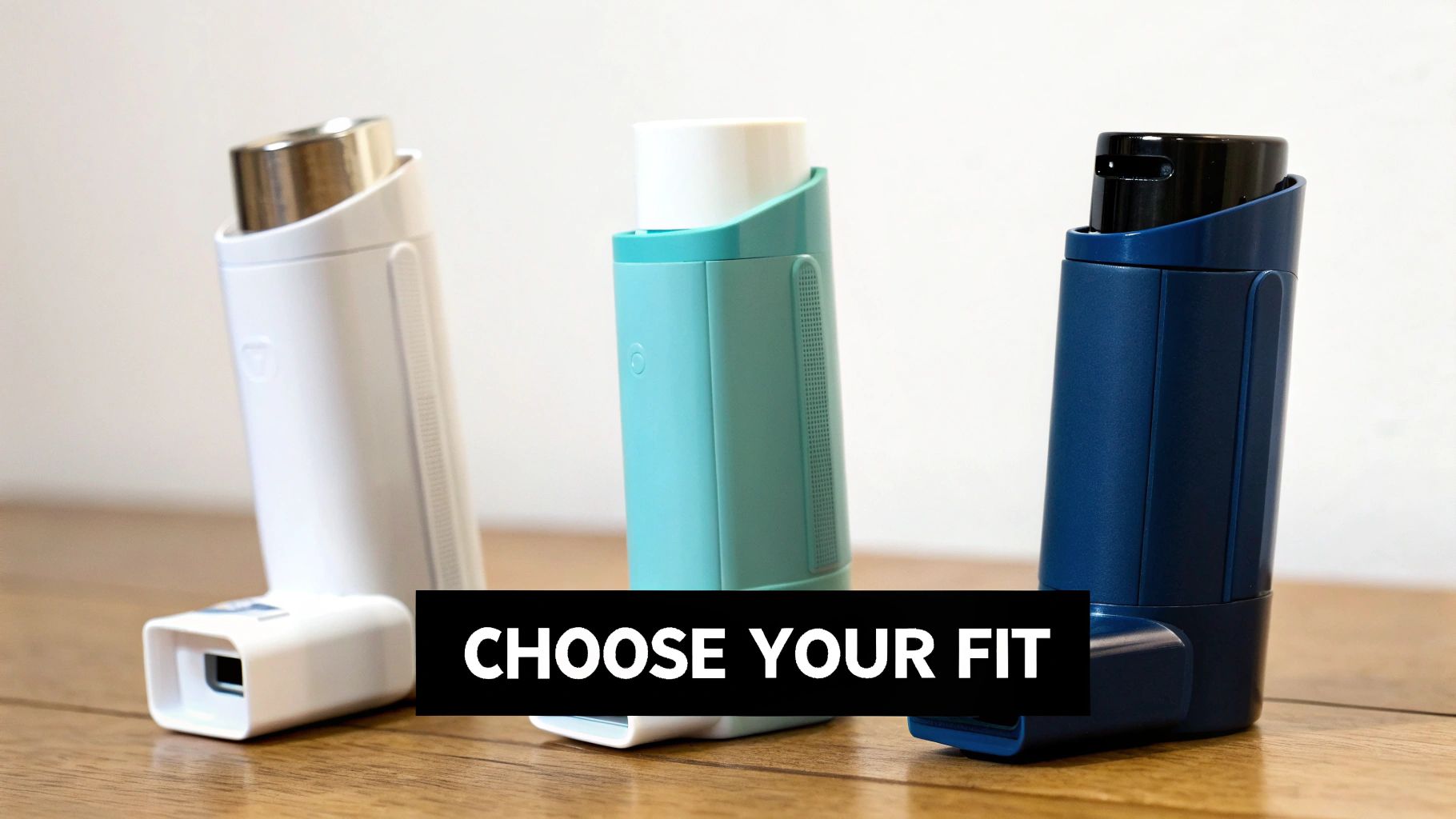
It really all boils down to one simple, honest question: What part of smoking is the hardest for you to give up? Is it the nicotine rush, or is it the physical comfort of that hand-to-mouth ritual? Your answer will point you in exactly the right direction.
Nicotine or Nicotine-Free: The First Big Choice
The main difference between stop smoking inhalators is whether or not they contain nicotine. This one thing changes their entire purpose.
-
Nicotine Replacement Therapy (NRT) Inhalators: These are medical devices built to deliver a controlled dose of nicotine. Their goal is to gently wean your body off its chemical dependency, easing those rough physical withdrawal symptoms. If your biggest battle is with intense, physical nicotine cravings, this is likely the route to explore.
-
Nicotine-Free Inhalators: These devices, like AuraFlow, have absolutely no nicotine. Their purpose is purely behavioural. They’re designed for people who find the ritual—that familiar hand-to-mouth action and oral fixation—is the real hurdle. They give you a safe, harmless way to satisfy that physical habit without any addictive chemicals.
If you’re not sure which habit is stronger, try a little experiment. Pay close attention to your triggers for a day or two. Do you reach for a cigarette out of stress and habit, or because you feel the physical pangs of nicotine withdrawal? The answer will tell you a lot.
Considering Flavour and Sensory Experience
Once you've settled the nicotine question, the next thing to think about is the sensory experience. For so many of us, the flavour and feeling of inhaling are a huge part of the smoking ritual.
A plain, unflavoured plastic NRT inhalator might not do much to satisfy that sensory craving you're trying to replace. This is where nicotine-free options really shine, as they often focus on providing pleasant, engaging flavours. It can make the switch feel so much more enjoyable.
Think of it as replacing a negative sensory habit with a positive one—like enjoying a burst of fresh mint or sweet strawberry instead of the harshness of smoke.
Choosing an inhalator with a flavour you genuinely enjoy transforms it from a medical tool into a pleasant ritual. This simple switch can be incredibly powerful in retraining your brain to seek healthier forms of comfort and reward.
Simplicity and Convenience Matter
Your quitting journey will have enough challenges; your chosen tool shouldn't add to them. It’s worth thinking about the practical side of using a device day-to-day.
Ask yourself:
- Do I want to be charging batteries? Many vaping devices need regular charging, which can be a real hassle.
- Am I happy to be refilling e-liquids? This can get messy and inconvenient, especially when you're out and about.
- Do I need to replace coils or cartridges? NRT inhalators require you to swap out nicotine cartridges quite often.
If you value simplicity, a device like AuraFlow—which needs no charging, no liquids, and no buttons—is a breath of fresh air. The goal is to find a stop smoking inhalator that fits into your life without any fuss, making it easy to reach for in a moment of need. The less friction there is, the more likely you are to stick with it.
Ultimately, the right choice is the one that addresses your specific struggle, feels good to use, and makes your path to a smoke-free life feel not just possible, but achievable.
Got Questions About Stop Smoking Inhalators? We’ve Got Answers.
Deciding to use an inhalator is a massive step forward, but it’s completely normal to have a few questions before you commit. Feeling confident in your quitting tool is a huge part of your success, so let’s clear up some of the most common queries.
We want you to feel reassured and ready to start your smoke-free journey with total clarity.
How Long Should I Use a Stop Smoking Inhalator?
This is a personal one, as everyone’s journey looks a little different. The right amount of time really depends on which type of inhalator you choose and what you need as you move forward.
With nicotine-based (NRT) inhalators, it’s best to follow the plan from the manufacturer or your GP. These usually involve a structured tapering-off period over several months, designed to gently wean your body off its chemical dependence.
But for a nicotine-free behavioural inhalator, there’s no strict timeline. You can use it for as long as you need to feel secure against your smoking triggers. Many people find they naturally use it less and less as their old habits fade, eventually just keeping it on hand for stressful moments or unexpected cravings. It’s a support tool you use until you feel you don’t need it anymore.
Are Nicotine-Free Inhalators Safe to Use?
Yes, high-quality nicotine-free inhalators are considered very safe for adults. They have one simple job: to help you tackle the physical habit of smoking without introducing any harmful or addictive substances into your body.
Here’s why they’re a safe alternative:
- No Nicotine or Tobacco: They are completely nicotine-free, so there's zero risk of trading one chemical dependency for another.
- No Harmful Chemicals: You won't find any of the tar, carbon monoxide, or thousands of other toxins that come with cigarette smoke.
- No Combustion or Vapour: These devices typically use pressurised air and food-grade flavourings to mimic the sensory feeling. There’s no heating, no burning, and no vapour produced.
You’re essentially satisfying that hand-to-mouth habit with flavoured air. Just be sure to choose reputable brands that are open about their ingredients to make sure you’re getting a quality product.
Think of a nicotine-free inhalator as a bridge. You're replacing a harmful, life-threatening habit with a harmless, temporary one. It's a crutch you use while healing—you won't need it forever, but it's incredibly helpful during your recovery.
Can I Use an Inhalator with Other Quitting Methods?
Absolutely. In fact, it’s often a brilliant strategy. Combining different aids lets you tackle both the chemical and behavioural sides of smoking at the same time, which can really boost your chances of success.
A nicotine-free stop smoking inhalator is the perfect partner for other methods. For example, someone using a nicotine patch to manage their chemical cravings can use a behavioural inhalator to handle those powerful hand-to-mouth urges that a patch just can’t touch. It’s a combined approach that covers all the bases.
Will an Inhalator Just Replace One Habit with Another?
This is a really common and valid concern. The key difference is in the nature of the habits you’re swapping. You're making a conscious choice to replace a dangerous, addictive habit with a harmless, non-addictive one.
Unlike smoking, using a nicotine-free inhalator doesn't fill your body with toxins or addictive chemicals. It's designed to be a temporary support system—a bridge to help you cross from being a smoker to a non-smoker. As you build new, healthier ways of coping with stress and other triggers, your reliance on the inhalator will naturally fade until you don't need it at all.
Ready to find a simple, flavour-forward way to replace the ritual of smoking without nicotine? The AuraFlow starter kit provides a sleek, fuss-free device and a variety of natural flavour cores to help you build a new, calming habit.
Discover how AuraFlow can support your journey at aura-flow.co.uk