
When you hear the phrase “vapor essential oils,” it’s easy to get the wrong idea. Let's clear the air: this has absolutely nothing to do with traditional nicotine vaping.
Instead, it refers to the modern way of enjoying aromatherapy—inhaling the natural aromatic compounds from essential oils using devices designed for wellness, like a room diffuser or a personal aromatherapy pen. It’s a practice centred on sensory experience and well-being, not delivering a chemical hit.
Understanding Vapor Essential Oils and Aromatherapy
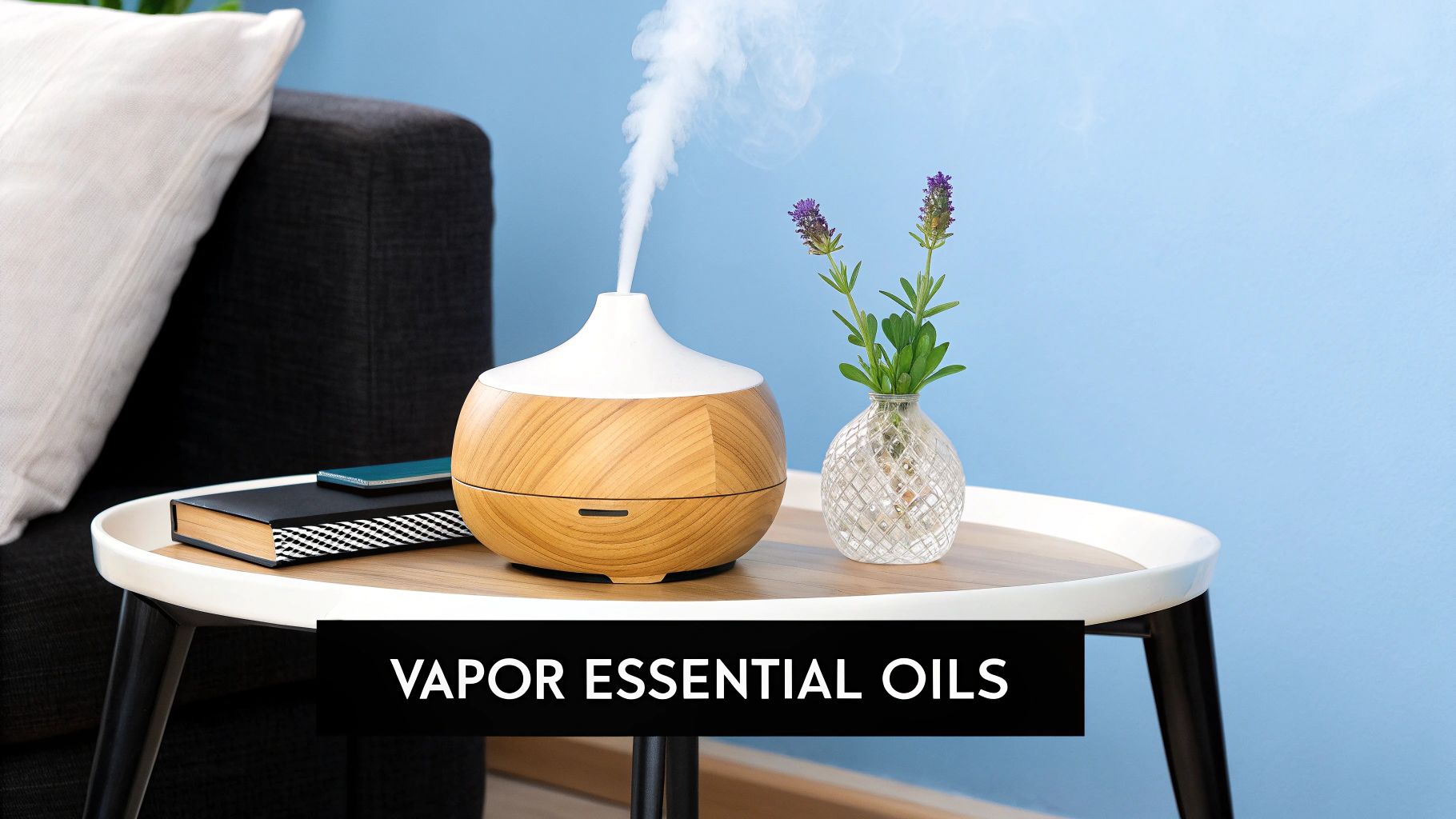
At its heart, inhaling vaporised essential oils is just a new take on the age-old practice of aromatherapy. For centuries, people have used natural plant extracts to promote health and create a sense of calm. Modern devices just make it more convenient.
Think of a standard room diffuser. It doesn’t burn anything. Instead, it typically uses ultrasonic vibrations—a cool-mist technology—to break down a blend of water and essential oils into microscopic particles. These are then released into the air as a fine, fragrant mist that you breathe in gently and passively. No smoke, no combustion, just pure aroma.
A Clear Distinction: Aromatherapy Inhalation vs E-Cigarette Vaping
To avoid any confusion, it’s crucial to understand how fundamentally different aromatherapy inhalation is from nicotine-based e-cigarette vaping. One is a wellness practice, the other is a nicotine delivery system with well-documented health risks.
Here’s a simple breakdown of the key differences:
Aromatherapy Inhalation vs E-Cigarette Vaping
| Aspect | Vapor Essential Oils (Aromatherapy) | E-Cigarette Vaping |
|---|---|---|
| Primary Purpose | Wellness, relaxation, and sensory experience. | Nicotine delivery to satisfy addiction. |
| Key Ingredients | Natural essential oils and a carrier base. | Nicotine, propylene glycol, vegetable glycerin, artificial flavourings. |
| Heating Method | Gentle, low-temperature warming or cool-mist technology. | High-temperature heating coils (atomisers) to create an aerosol. |
| Core Function | To release natural aromas for inhalation. | To deliver an addictive chemical into the bloodstream via the lungs. |
| Health Goal | To support well-being and offer a sensory ritual. | Marketed as a smoking cessation tool, but with its own health risks. |
This isn't just a minor difference in terminology; it's a completely different category of product with a completely different intention.
Personal Aromatherapy: A Different Approach
Portable devices like the AuraFlow take the principles of aromatherapy and put them in your pocket. They are specifically engineered to gently warm a blend of essential oils just enough to create a light, breathable mist.
This method is worlds apart from vaping because:
- There is no nicotine. The goal is purely sensory and therapeutic, not to feed an addiction.
- Temperatures are much lower. The devices are designed to preserve the delicate nature of the essential oils, not scorch them.
- It’s all about the scent. The experience is built around inhaling pleasant aromas to help shift your mood or mindset.
Understanding this distinction is vital. While e-cigarette vaping is rightly linked to nicotine addiction and serious health concerns, inhaling essential oil vapor is about using scent as a wellness tool. It offers a sensory ritual that can be incredibly helpful for managing daily stress or as a supportive aid for anyone trying to quit smoking by replacing the physical hand-to-mouth habit.
The turn towards natural wellness solutions is undeniable. The UK essential oils market brought in a massive £1.2 billion in 2023, and it's projected to more than double to £2.5 billion by 2033. This shows just how much people are looking for natural products for aromatherapy and personal care. Read more about the UK essential oils market growth.
Once you see that "vapor essential oils" simply means modern aromatherapy, you can start to explore how these natural scents can become powerful allies in creating calm, boosting focus, and supporting your journey towards a smoke-free life.
The Science Behind Scent And Well-Being
Have you ever caught a whiff of something and been instantly whisked back to a childhood memory? Or felt a wave of calm wash over you from a single scent? That’s not just in your head; it’s a powerful biological process, and it’s the secret behind why inhaling vapor essential oils can so profoundly shift your mood.
When you breathe in the gentle mist, you're not just smelling a pleasant aroma. You're kickstarting a remarkable chain reaction. Tiny aromatic molecules from the essential oils travel up your nasal passages and connect with the olfactory epithelium—a special patch of tissue packed with millions of sensory neurons. This is where the real magic happens.
The Brain's Direct Scent Hotline
Think of your sense of smell as a high-speed, direct line to the most ancient parts of your brain. Unlike your other senses like sight or touch, which get routed through the brain's main switchboard (the thalamus), scent signals bypass all that and go straight to the limbic system.
This is a big deal. The limbic system is your brain's command centre for emotion, memory, and instinct. It houses the amygdala (your emotional processor) and the hippocampus (your memory-maker). This direct connection is precisely why a particular smell can trigger such a strong, immediate emotional or nostalgic feeling before you even have time to think about it.
Key Insight: Smell is the only one of our senses with a direct, unfiltered pathway to the brain's emotional and memory centres. It’s this unique wiring that allows aromatherapy to have such a noticeable impact on our mental state.
How Different Scents Create Different Feelings
So, why does lavender feel calming while lemon feels energising? It comes down to a bit of chemistry, like a lock and key. Each aromatic molecule has a unique shape, and when it binds to a receptor in your nose, it fits into a specific ‘lock’, sending a distinct signal to your brain.
This is how different essential oils get their signature effects:
- Lavender: Its key compound, linalool, is known for interacting with brain receptors in a way that encourages relaxation and a sense of calm.
- Lemon: The zesty molecule limonene sends signals your brain often interprets as uplifting and energising. A little burst of sunshine.
- Peppermint: Menthol, its primary component, creates a cooling sensation that can sharpen the mind and help you focus.
Understanding this lock-and-key system shows that using scent isn't just a nice idea—it's a scientifically grounded way to influence your own well-being. For a deeper look at how this works, consider how products like aromatherapy heat packs pair soothing aromas with physical comfort. By consciously choosing specific scents, you’re actively engaging with your brain’s emotional core to help manage stress, lift your mood, or simply create the mental space you need.
Exploring The Benefits Of Aromatic Vapours
The real power of inhaling aromatic vapours isn't just about enjoying a pleasant scent. It's about using specific aromas as a tool to intentionally shift your mental and emotional state. This practice, known as aromatherapy, is quickly moving from a niche interest into a mainstream strategy for well-being.Think about the pressure of a looming deadline or a difficult meeting. Instead of instinctively reaching for a cigarette, imagine taking a moment for a calming ritual. Inhaling a gentle mist infused with chamomile or lavender can help soothe those frayed nerves, giving you a pocket of peace in an otherwise hectic day.
Tailoring Scents To Your Needs
The beauty of using vapour essential oils is the freedom to choose a scent that matches your goal. You can curate your environment and your mindset with remarkable precision.
- For Relaxation and Sleep: Oils like chamomile and lavender are famous for their calming properties. Diffusing them in your bedroom can create a tranquil atmosphere, signalling to your body that it's time to unwind for a restful night.
- For Focus and Clarity: When that afternoon mental slump hits, scents like peppermint or eucalyptus can provide a welcome lift. Their sharp, clean aromas help cut through brain fog and sharpen your concentration, whether you're studying or working on a creative project.
- For Mood Enhancement: On a gloomy day, the bright, uplifting scent of citrus oils like orange or lemon can fill your space with a sense of energy and positivity.
But how does a simple smell create such a noticeable effect? This diagram shows how the scent signals travel directly from the vapour to your brain's control centre.

As you can see, there’s a direct pathway from inhaling those aromatic molecules straight to the parts of your brain that manage emotion.
Integrating Aromatherapy Into Modern Life
This growing interest in scent-based wellness isn't just a fleeting trend. The UK aromatherapy market is projected to grow at a 9.6% compound annual rate from 2025 to 2030. In fact, the spa and relaxation sector alone made up 45.6% of the market's revenue in 2024. This isn't just noise; it shows a clear public desire for natural, effective ways to manage stress. For more on this, you can check out the UK aromatherapy market trends on 6wresearch.com.
By consciously choosing which scents to inhale, you are actively participating in your own well-being. It’s a small, manageable action that can have a noticeable impact on your day-to-day experience of stress and anxiety.
Whether you're using a room diffuser or a personal device, integrating vapour essential oils gives you a tangible way to manage your mood and mindset. It transforms an abstract wellness concept into a practical, repeatable habit.
For a deeper dive into how these practices can help, you might find our guide on aromatherapy for stress and anxiety useful.
How To Inhale Essential Oils Safely
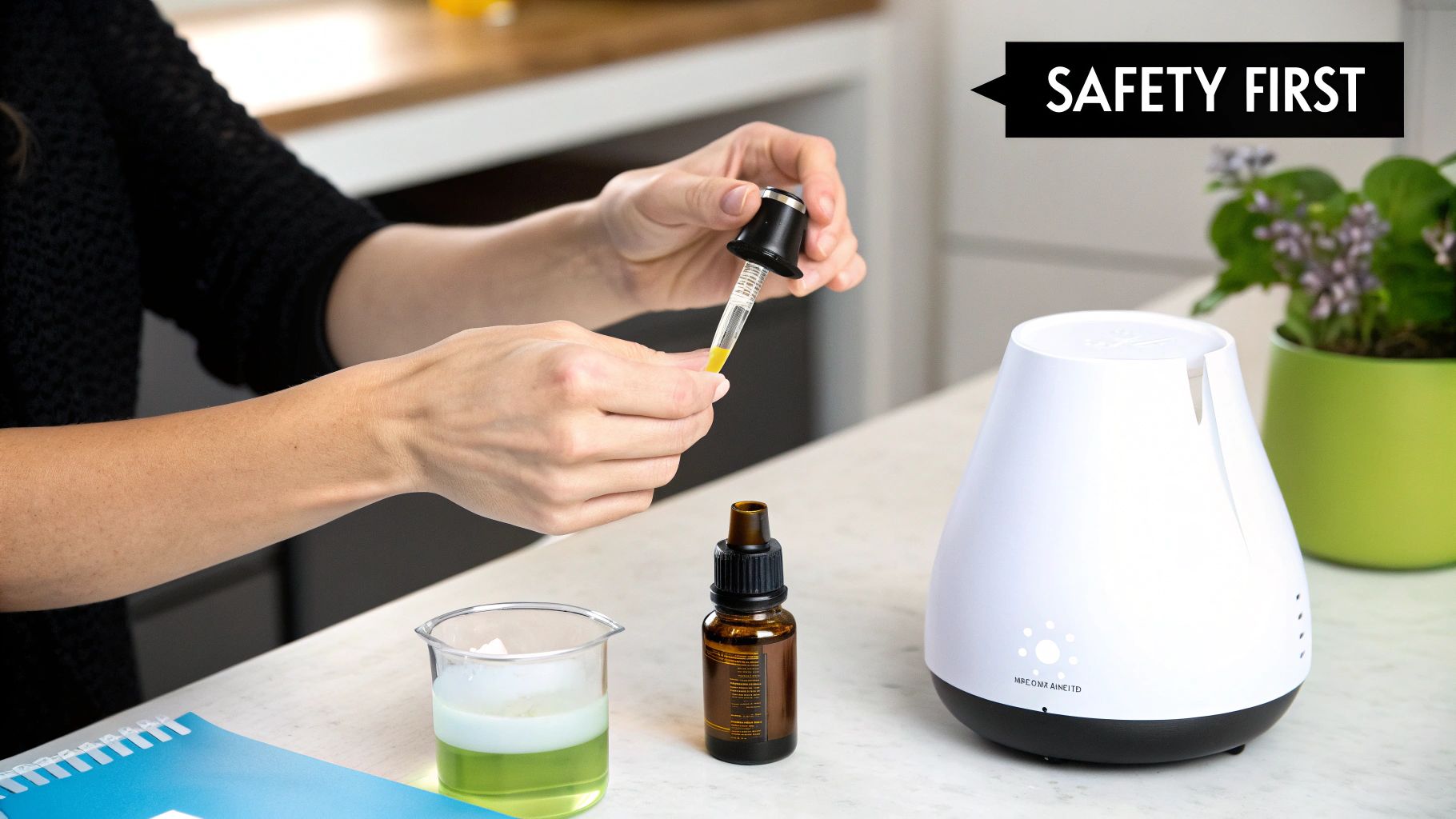
While the world of aromatherapy is incredibly appealing, your safety has to come first, always. When it comes to vapor essential oils, it's vital to know what's safe and what’s an absolute no-go. Let’s be perfectly clear on one thing: you should never put pure essential oils into a standard e-cigarette or vape pen.
Those devices are built to heat e-liquids to scorching temperatures. Subjecting essential oils to that kind of intense heat can completely break down their chemical structure, creating nasty byproducts that are dangerous to inhale directly into your lungs. Safe inhalation is all about methods that keep the oil’s integrity intact.
Safe Methods Versus Unsafe Practices
The real difference comes down to temperature and how the aroma is delivered. Safe methods use low heat—or no heat at all—to gently release the aromatic molecules. Unsafe practices, on the other hand, involve combustion or dangerously high heat.
- Safe Methods: Think cool-mist ultrasonic diffusers, personal aromatherapy inhalers (like AuraFlow), and even simple steam inhalation. These are all designed to release the scent without burning the oil.
- Unsafe Practices: Using standard vape pens or adding oils to any device that superheats the liquid. This is a fast track to respiratory irritation and exposure to potentially toxic compounds.
It's a bit like cooking with a delicate herb. You’d gently infuse it into a warm oil to release its flavour, but you wouldn't take a blowtorch to it. The same principle applies here.
Crucial Takeaway: The goal is to experience the aroma, not to burn the oil. True aromatherapy devices work at low, controlled temperatures or use cool-mist technology to protect both you and the oil's natural properties.
Potential Risks And How To Avoid Them
Even when using the right methods, it's smart to be aware of potential sensitivities. Some people might experience respiratory irritation or allergic reactions, especially with certain oils or if they have conditions like asthma. It’s a good reminder that creating any kind of aromatic experience requires mindfulness—for instance, learning how to burn bakhoor safely offers similar lessons in handling potent botanicals with care.
To make sure you have a positive experience, always put quality and awareness at the top of your list.
A Quick Guide to Safe Inhalation
Following a few simple rules can help you enjoy all the benefits of aromatherapy without the risks. Here are the essential do's and don'ts.
Do:
- Use High-Quality Oils: Always choose 100% pure, therapeutic-grade essential oils from suppliers you trust.
- Choose the Right Device: Stick to ultrasonic diffusers or personal inhalers that are specifically made for essential oils.
- Ensure Good Ventilation: Use diffusers in a well-ventilated room so the aroma doesn't become overwhelming.
- Listen to Your Body: If you get a headache, feel nauseous, or notice any irritation, stop immediately and get some fresh air.
Don't:
- Never Use in a Vape Pen: Don't add essential oils to any device not explicitly designed for them. It’s just not worth the risk.
- Don't Ingest Oils: Never swallow essential oils unless you are under the direct supervision of a qualified professional.
- Avoid Overuse: More isn't better. Start with just a few drops and always follow the manufacturer's instructions for your device.
By approaching vapor essential oils with a bit of knowledge and respect, you can safely bring this powerful wellness practice into your daily life. For more info on safe and effective ways to inhale, check out our guide to using a personal inhaler essential oil device.
Using Aromatherapy As A Smoking Alternative

For anyone looking to leave smoking behind, the biggest challenge often isn't just the nicotine—it’s breaking the deep-seated ritual. The hand-to-mouth motion, the deep breath, the moment of pause. These physical habits are incredibly powerful.
This is where aromatherapy steps in, offering a mindful, nicotine-free alternative.
It helps you build a new kind of ritual, one centred on wellness rather than dependence. Instead of harmful smoke, you're inhaling a gentle, flavourful mist. Devices designed for this, like the AuraFlow, work on a completely different principle from cigarettes or e-cigarettes.
They use very low temperatures to gently warm a blend of natural essential oils and a carrier base. This creates a satisfying aromatic mist, not smoke, and gives you that sensory experience without any of the combustion.
A Powerful Behavioural Aid
The real strength of using vapor essential oils as a smoking alternative lies in how it works as a behavioural aid. It directly addresses the physical habits that make quitting so difficult, offering a clean substitute that satisfies the muscle memory of smoking.
By replacing the act of lighting a cigarette with the simple act of inhaling a pleasant aroma, you can begin to retrain your brain. It's a practical way to manage cravings and dial down the anxiety that so often comes with the quitting process.
By satisfying the hand-to-mouth habit and providing a pleasant sensory experience, aromatherapy can help manage cravings and support the journey to quit smoking. It’s about replacing a destructive ritual with a constructive one.
This approach transforms the act of quitting from one of deprivation to one of positive replacement.
Making A Conscious Wellness Choice
Choosing a high-quality aromatherapy device means you're opting for pure, well-sourced ingredients. Instead of the thousands of chemicals found in tobacco smoke, you’re engaging with natural plant extracts known for their pleasant aromas. This makes it a conscious wellness choice over harmful traditional products.
The UK essential oils manufacturing sector is a testament to this growing demand for quality, reaching a market size of £964.1 million in 2024. Exports even saw a significant jump of 6.81% in mid-2024, highlighting the UK's expertise in producing premium, vapour-grade oils like eucalyptus and peppermint. You can see more data on the UK's essential oil manufacturing on ibisworld.com.
By redirecting the smoking habit towards a wellness-focused ritual, you're not just stopping a negative behaviour; you're actively starting a positive one. To learn more about how this can work for you, see our guide on using an inhaler to quit smoking.
Got Questions About Vapor Essential Oils? We Have Answers.
As you start looking into aromatic wellness, it’s only natural for questions to pop up. Let's clear up some of the most common ones about using vapor essential oils so you can feel confident and informed.
Is It Safe To Put Essential Oils In A Vape Pen?
Absolutely not. Putting pure, undiluted essential oils into a standard e-cigarette or vape pen is incredibly dangerous. Those devices are built to hit seriously high temperatures, which can actually burn the oils. This not only destroys their delicate properties but can create nasty, harmful compounds you should never, ever be inhaling deep into your lungs.
A personal aromatherapy diffuser is a completely different piece of kit. It’s engineered to work at much lower, carefully controlled temperatures. It gently warms a specially formulated, diluted blend to create a light, aromatic mist designed for the mouth and your sense of smell—not for deep lung inhalation. The golden rule is simple: always use a product exactly how the manufacturer intended.
Key Takeaway: High-heat vape pens and pure essential oils are a hazardous combination. Stick to devices specifically designed for aromatherapy, which use low-heat or cool-mist technology to keep both you and the oil’s integrity safe.
Can Inhaling Essential Oils Help Me Quit Smoking?
While it's not a magic cure for nicotine addiction, inhaling essential oils can be a massive help in breaking the behavioural side of smoking. The real power here lies in tackling the psychological and physical rituals that keep you hooked.
Think about it. The simple act of using a personal aromatherapy diffuser mimics that familiar hand-to-mouth habit. This alone can be a game-changer for managing cravings and easing the stress that always seems to show up when you're trying to quit.
The pleasant flavours and aromas from vapor essential oils provide a satisfying sensory substitute for a cigarette, but you're getting it without any nicotine, tobacco, or the thousands of harmful chemicals. So many people find it helps them finally break the cycle by swapping a negative habit for a positive, wellness-focused one. It's about taking back control of the ritual.
What’s The Difference Between A Diffuser And A Vaporizer?
People often use these terms as if they mean the same thing, but there are some key differences you should know about, especially when oils are involved.
- A traditional 'vaporizer' usually works by boiling water with direct heat to create steam. This high heat is bad news for essential oils—it can degrade their delicate therapeutic compounds, making them less effective and potentially changing their chemical makeup.
- An 'ultrasonic diffuser' is what you typically see scenting a room. It uses vibrations to create a fine, cool mist of water and oil particles. This method is great because it preserves the oil's natural properties.
- A 'personal aromatherapy diffuser' like the AuraFlow is designed for a more direct, personal experience. It creates a gentle, waterless vapour at a very low, precisely controlled temperature, so it’s not about filling a space with scent, but about providing a moment of calm just for you.
Knowing the difference helps you pick the right tool for the job.
Are There Any Essential Oils I Should Avoid Inhaling?
Yes, for sure. Some essential oils are known as ‘hot’ oils because they’re more likely to cause skin or respiratory irritation. You’ll want to be extra cautious with these or maybe avoid them altogether for direct inhalation.
Oils to be careful with include:
- Cinnamon Bark
- Clove
- Oregano
- Thyme
It’s also crucial that you only use 100% pure, therapeutic-grade oils from a brand you trust. This helps you avoid any synthetic additives or fillers.
And finally, some people should always chat with a healthcare professional or a qualified aromatherapist before inhaling any essential oils. This is especially true for anyone with respiratory conditions like asthma, women who are pregnant or breastfeeding, and when using them around young children or pets, as their systems are far more sensitive.
Ready to replace a harmful habit with a mindful ritual? The AuraFlow Starter Kit offers a simple, nicotine-free way to enjoy the benefits of aromatic vapour. With six natural flavour cores and a sleek, easy-to-use device, you can find your moment of calm anytime, anywhere. Discover your smoke-free journey with AuraFlow today.