
Deciding to quit smoking is the single best thing you can do for your health, but figuring out how to quit can feel overwhelming. With so many options out there, where do you even start? The truth is, the best smoking cessation products are the ones that fit you—your habits, your triggers, and your lifestyle.
The most successful quit attempts often tackle the problem from two angles: the physical nicotine craving and the psychological hand-to-mouth habit. That’s why you’ll see everything from medically-proven aids like Nicotine Replacement Therapy (NRT) to sensory tools like nicotine-free inhalers.
Your Guide to Choosing the Right Quitting Aid
You’ve made the decision to quit. That’s a huge first step. But walking into a chemist or searching online can feel like stepping into a maze. This guide is here to be your map, clearing up the confusion so you can feel confident in your choice.
There’s no magic bullet for quitting; what works wonders for a friend might not be the right fit for you. Success comes from understanding what you’re up against. We're not just fighting a chemical addiction to nicotine; we're also breaking a deep-seated psychological habit.
Understanding Your Options
To make sense of it all, let’s group the main quitting aids into a few key categories. Each one targets a different part of the quitting journey, and knowing what they do is the first step to finding your match.
- Nicotine Replacement Therapy (NRT): Think patches, gums, and lozenges. These give you a clean, controlled dose of nicotine to gently wean your body off it, easing those tough physical withdrawal symptoms without the tar and carbon monoxide from cigarettes.
- Prescription Medications: A GP can prescribe medication like Varenicline (Champix), which works on a brain-chemistry level. It helps by making smoking less pleasurable while also reducing cravings and withdrawal.
- Behavioural and Sensory Aids: This is where tools like flavourful, nicotine-free inhalers come in. They don’t contain any nicotine at all. Instead, they focus entirely on replacing the physical ritual—that familiar hand-to-mouth action that has become second nature.
And the evidence is clear: getting some help works. In England, local stop smoking services have seen incredible results. People who get support have quit rates as high as 50-60%. That’s a massive leap from the roughly 4% success rate for those who try to quit with willpower alone. You can find more of these powerful statistics over at ASH.org.uk.
Choosing the right product is like picking the right key for a lock. While many keys exist, only the one designed for your specific lock will open the door to a smoke-free life. It’s about matching the tool to your individual triggers and dependencies.
This guide will walk you through each of these options, breaking down how they work, their pros and cons, and who they’re best suited for. The goal is to give you the clarity you need to build a quit plan that you can actually stick with.
Getting to Grips with Nicotine Aids and Prescription Meds

When you make the big decision to quit smoking, you’re up against more than just a bad habit. You’re dealing with a physical dependence, and that’s a tough battle to fight alone. This is where medically proven aids like Nicotine Replacement Therapy (NRT) and prescription medications come in. They’re designed to tackle the physical side head-on, easing those intense withdrawal symptoms that make the first few weeks feel impossible.
Think of it like a nicotine ladder. When you smoke, you’re right at the top, flooding your system with high, uncontrolled doses of nicotine plus thousands of other nasty chemicals. NRT products help you step down that ladder safely. They give you a clean, measured dose of nicotine without all the tar, carbon monoxide, and carcinogens found in cigarette smoke.
This gentle approach lets you gradually lower your nicotine intake over time, descending the ladder at your own pace. By separating the nicotine from the act of smoking, you can focus on breaking the behavioural triggers first, while your body slowly learns to live with less.
The Different Types of NRT
Not all NRT is created equal. The options are designed to fit different routines and craving styles, offering both slow-release support and fast-acting relief. In fact, many people find that a combination of the two works best.
- Patches: These are your slow-and-steady supporters. You stick one on your skin in the morning, and it delivers a constant, low level of nicotine all day. This is brilliant for keeping those baseline withdrawal symptoms, like irritability and brain fog, under control.
- Gum and Lozenges: Think of these as your emergency response team. When a sudden, powerful craving ambushes you, chewing a piece of gum or using a lozenge delivers a quick nicotine hit to take the edge off. They put you back in control.
- Inhalators and Sprays: These options give you fast relief but also do something else crucial—they mimic the hand-to-mouth action of smoking. For many, that physical ritual is just as addictive as the nicotine, making these a powerful tool.
Using NRT properly can make a massive difference. Studies have shown it can nearly double your chances of success compared to going cold turkey. If you want to dive deeper into what might work for you, it’s worth exploring the different kinds of stop smoking aid available.
How Prescription Medications Can Help
Beyond NRT, there are prescription-only medications that take a completely different approach. Instead of giving you nicotine, they work on your brain chemistry to make smoking less appealing. These are serious tools, and you’ll need to have a chat with your GP to see if they’re right for you.
The two main medications available in the UK are Varenicline (often known as Champix) and Bupropion (brand name Zyban). They get to the root of the addiction right inside the brain.
Varenicline is clever. It latches onto the nicotine receptors in your brain, which does two things at once: it dampens down your cravings and withdrawal symptoms, and it blocks the pleasurable hit you’d normally get from a cigarette.
Bupropion, which was first used as an antidepressant, was also found to help people quit smoking. It’s thought to work by tweaking the brain chemicals involved in nicotine cravings, simply making it easier to say no.
Your GP or a local stop smoking advisor is your best ally on this journey. They can look at your smoking history, how dependent you are, and your general health to figure out if NRT, a prescription, or a mix of strategies is your best starting point. Getting that expert guidance ensures your quit plan is safe, effective, and gives you the strongest possible foundation for building a smoke-free life.
The Role of E-Cigarettes in Quitting Smoking
E-cigarettes, or vapes as they’re more commonly known, hold a complicated and often controversial spot in the world of quitting smoking. For a lot of people trying to stop, they seem like a very compelling option. Why? Because they tackle the two biggest parts of the addiction head-on: the chemical craving for nicotine and the deeply ingrained physical habit of smoking.
Unlike patches or gums that deliver nicotine but do nothing for the ritual, vaping mimics the entire act. You get the hand-to-mouth motion, the inhale and exhale, even the sensation in your throat. This similarity can make the switch from cigarettes feel a lot less jarring. It lets you deal with the chemical side of things first, while still holding onto a familiar physical comfort.
Are Vapes an Effective Quitting Tool?
For many people, the evidence points to yes. Vapes deliver nicotine without the thousands of toxic chemicals you get from burning tobacco, which is why they’re widely seen as a less harmful alternative. This approach is all about harm reduction—a strategy that focuses on lowering the massive health risks of smoking, even if it doesn't mean quitting nicotine straight away.
Recent data really shines a light on how popular they've become as a quitting aid. In England, e-cigarettes were the number one tool used in quit attempts, making up 40.2% of all efforts. They also showed the highest success rates compared to other methods, proving just how big an impact they can have. If you want to dive into the details, you can learn more about the study on smoking cessation aids and see the full findings.
A big reason for this success is the control they offer. E-liquids come in all sorts of nicotine strengths, so you can gradually reduce your intake over time. This gives you a personalised roadmap to becoming completely nicotine-free, a bit like the "nicotine ladder" idea used with traditional NRT.
Navigating the Downsides and Concerns
But for all their potential, vapes come with some significant drawbacks and are at the centre of ongoing health debates. One of the biggest worries is simply swapping one addiction for another. While vaping is less harmful than smoking, you’re still inhaling substances into your lungs and keeping that nicotine dependency alive and well.
The long-term health effects are still a big question mark. The technology is pretty new, and we don't fully know what inhaling vapour ingredients for years will do to the body. This uncertainty makes many people wonder if vaping is a real end-point or just a temporary stopgap.
On top of that, the sheer choice of devices and e-liquids can be completely overwhelming. From chunky, complex "mods" to simple disposables, the market is a minefield. And for some, the goal is to break the hand-to-mouth habit entirely, not find a new way to reinforce it. It’s worth knowing the difference between devices, including the new wave of smokeless e-cigarettes that offer a very different experience.
The central question when considering e-cigarettes is what you want your quitting journey to look like. Are you comfortable with a harm-reduction approach that involves a gradual transition, or is your goal to break free from both the chemical and behavioural ties to nicotine as quickly as possible?
Ultimately, whether you use a vape is a deeply personal choice. You have to weigh up their proven effectiveness as a quitting aid against the very real concerns about long-term health and ongoing nicotine addiction. For some, they’re the best tool available; for others, a completely nicotine-free behavioural aid offers a cleaner break and a whole lot more peace of mind.
Tackling the Habit with Nicotine-Free Behavioural Aids
Everyone talks about nicotine when you decide to quit smoking, but for so many of us, that’s only half the story. The real battle is often fought in those quiet, automatic moments.
It’s the cigarette you have with your morning coffee. The one you instinctively reach for during a stressful phone call. It's the familiar, almost comforting, hand-to-mouth motion that has become a part of you. This is the psychological habit, and honestly, it can feel even tougher to break than the chemical addiction itself.
Think of it like muscle memory. For years, your brain has forged powerful links between certain triggers—a feeling, a time of day, a place—and the physical act of smoking. These rituals get so deeply wired in that even when the nicotine cravings start to fade, the powerful urge to just do something with your hands and mouth lingers. This is exactly where nicotine-free behavioural aids come in.
These tools are designed to tackle the habit head-on, giving you a satisfying replacement for the ritual of smoking without any nicotine. They're built on a simple but powerful idea: sensory replacement. It’s all about giving your mind the familiar sensations it’s looking for while your body heals.
The Power of Sensory Replacement
Sensory replacement is about satisfying that deep-seated craving for a familiar ritual. It’s like wanting the comfort of a warm drink on a cold day—it’s not just about the liquid, but the whole experience: the warm mug in your hands, the steam, the aroma. Behavioural aids offer a similar multi-sensory experience to stand in for the act of smoking.
This approach cleverly helps you separate the physical action from the chemical hit. By consciously choosing a new, healthier action in place of the old one, you begin to rewire your brain, building fresh neural pathways. You're essentially teaching yourself to find calm and satisfaction in a new way, which is a massive step towards lasting freedom.
So, what does this actually look like?
- Mimicking the Action: They let you replicate that hand-to-mouth motion, a core part of the smoking ritual that feels so naked when it's gone.
- Providing Oral Fixation: They give you something to puff on, satisfying that restless need for oral stimulation.
- Engaging the Senses: Many use natural, gentle flavours and scents to create a pleasant, calming experience that replaces the harshness of smoke.
This focus on habit-breaking is why nicotine-free aids are such a great choice for so many people. They’re perfect if you want to quit nicotine completely from day one, but also for vapers looking to finally break the hand-to-mouth cycle for good. You can see how a simple stop smoking stick can target this crucial behavioural side of addiction.
Introducing Nicotine-Free Inhalers
One of the most effective and elegant behavioural aids is the nicotine-free inhaler, like AuraFlow. Their beauty is in their simplicity. There's no nicotine, no tobacco, and no electronics. Nothing to charge, no buttons to press, and no vapour to inhale.
Instead, they use pressurised air and natural flavours to deliver a satisfying sensory experience. When you draw on the inhaler, you get that familiar feeling of inhalation combined with a pleasant taste, like fresh mint or sweet blueberry. It provides an immediate, grounding distraction right when a craving hits.
The core idea is to replace a harmful dependency with a mindful moment. Instead of reaching for a cigarette on autopilot, you consciously choose a gentle, flavourful breath. This small shift empowers you to take back control from your triggers.
This process helps you build a new, healthier routine from the ground up. That sharp, demanding urge for a cigarette is met not with a chemical fix, but with a moment of calm. Over time, this helps to weaken the old trigger-response pattern and reinforces a much more positive one.
Who Benefits Most from a Nicotine-Free Approach?
Everyone's journey is different, but a nicotine-free behavioural aid is a particularly good fit for certain people. See if any of these sound like you:
- The "Clean Break" Quitter: If your goal is to get nicotine out of your life completely and right away, these aids support you from the very first moment.
- The Vaper in Transition: If you've already switched from smoking to vaping but now want to quit vaping, these tools can help break that final hand-to-mouth habit without reintroducing other chemicals.
- The Habit-Focused Individual: If you know your biggest struggle is the ritual—the morning cigarette, the after-dinner smoke—then a tool designed specifically for that habit just makes sense.
Ultimately, these aids offer a way to address the psychological weight of smoking. They give you a physical tool to manage a mental challenge, helping you build new habits one mindful breath at a time. This makes them a powerful and supportive part of any well-rounded quit plan.
How to Choose Your Ideal Smoking Cessation Product
With so many quitting aids out there, trying to find the "best" one can feel impossible. But here’s the secret: there is no single best product for everyone. There's only the one that's right for you. Your success story will be written by choosing a tool that fits your unique habits, your level of dependence, and what you ultimately want to achieve.
Think of it like getting in shape. You wouldn't hand a beginner a marathon training plan. In the same way, the quitting aid you choose has to match where you're starting from.
This guide will walk you through a few simple questions to ask yourself. By the end, you’ll go from feeling overwhelmed by choice to feeling confident and ready to pick the perfect partner for your smoke-free journey.
This decision tree can help you visualise the first big choice: do you tackle the chemical addiction first, or the behavioural habit?
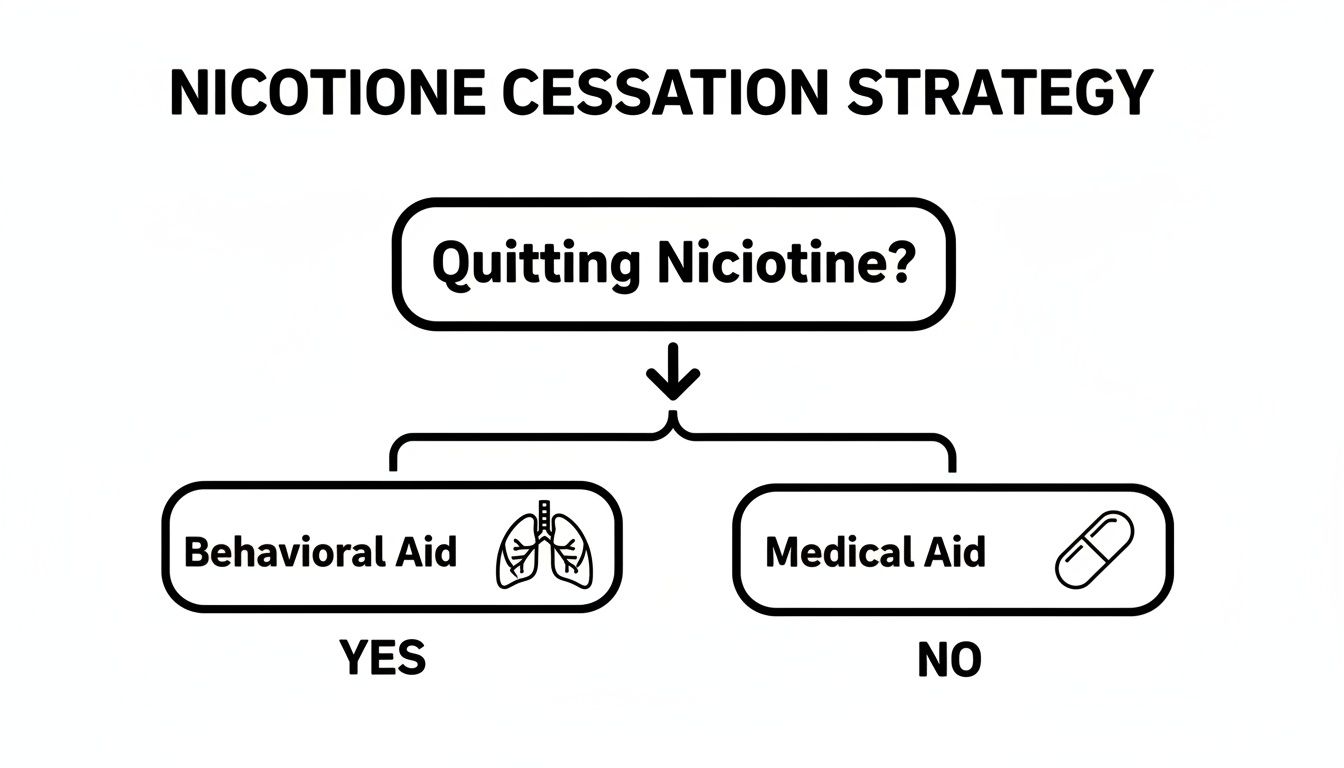
As you can see, there’s a clear fork in the road. Deciding whether you need a medical aid to manage withdrawal or a behavioural tool to break the ritual is your first and most important step.
Assess Your Level of Nicotine Dependence
First, be honest with yourself about how hooked you are on nicotine. This is the biggest factor in figuring out what kind of support you’ll need, especially in those first tough weeks.
Ask yourself these simple questions:
- How soon after waking up do you light up? If it’s within the first 30 minutes, that’s a strong sign of a higher physical dependence.
- How many cigarettes do you smoke a day? More than 10-15 a day usually points to a stronger addiction.
- Do withdrawal symptoms hit you hard when you try to stop? Intense cravings, irritability, anxiety, and brain fog are all signals that your body is physically demanding nicotine.
If these sound familiar, starting with some form of Nicotine Replacement Therapy (NRT) or having a chat with your GP about prescription options is a really smart move. These products are designed to take the edge off the physical misery, freeing you up to focus your energy on breaking the actual habit of smoking.
Consider Your Lifestyle and Daily Routine
To be effective, your quitting tool needs to slide seamlessly into your daily life. If it’s awkward, obvious, or inconvenient, you simply won’t stick with it.
What does your average day look like? If you work in an office, chewing nicotine gum or using an inhaler might be perfectly fine. But if you need something more discreet, a patch you can pop on and forget about might be a better fit.
Your quitting tool should reduce stress, not add to it. Choosing a product that aligns with your daily activities—whether you need discretion at work, something to do with your hands during your commute, or a way to manage cravings at social events—is crucial for long-term success.
For instance, if your biggest trigger is the drive to work, having a nicotine-free inhaler or NRT gum in the car can be a lifesaver. It replaces that hand-to-mouth action right when you need it most. If it's that first coffee of the day that gets you, a fast-acting lozenge can help you navigate the moment without derailing your entire day.
Define Your Ultimate Quitting Goal
What does "quitting" truly mean to you? Your end goal is a huge factor in deciding your starting point. Are you aiming to be completely free of nicotine from day one, or are you looking for a harm-reduction approach to ease into it?
- Total Nicotine Elimination: If your goal is to be 100% nicotine-free, then behavioural supports like the AuraFlow inhaler are a fantastic choice. They let you tackle the psychological habit head-on without putting any nicotine into your body.
- Harm Reduction and Gradual Tapering: If the thought of going cold turkey feels terrifying, that's okay. Products like e-cigarettes or NRT let you step away from the thousands of toxic chemicals in tobacco smoke while giving you the control to slowly reduce your nicotine intake over time.
There’s no right or wrong path here. The plan that will actually work is the one that feels achievable to you.
Which Quitting Aid Is Right for Your Lifestyle?
This table breaks down the main options we've discussed, comparing them across the key factors to help you find your perfect match.
| Product Type | Primary Use | Nicotine Content | Average Monthly Cost | Best For Which Quitter |
|---|---|---|---|---|
| NRT (Patch, Gum) | Manages physical withdrawal | Yes (varied doses) | £25 - £50 | Heavy smokers needing steady, all-day craving control. |
| Prescription Meds | Reduces cravings & pleasure | No | £50 - £80 | Those with severe dependence who need medical support. |
| E-Cigarettes | Replaces smoking ritual & delivers nicotine | Yes (varied levels) | £20 - £60 | Smokers looking for a similar physical sensation. |
| Nicotine-Free Inhalers | Replaces behavioural habit | No | Under £25 | Anyone wanting a clean break from nicotine. |
Ultimately, choosing a quitting aid is a personal decision. By taking a moment to consider your dependence, lifestyle, and goals, you can select a tool that doesn’t just help you quit, but empowers you on your journey to a smoke-free life.
Creating Your Personal Quit Plan for Success
Choosing a good smoking cessation product is a brilliant first step, but the tool itself is only half the story. Real, lasting success comes from pairing that tool with a smart, personal strategy. Think of a solid quit plan as your roadmap—it guides you through the bumps and turns of the first few weeks and keeps your eyes on the prize.
This plan doesn't need to be some complicated manifesto. It's just a simple set of promises you make to yourself, designed to give you structure and confidence when a craving suddenly hits. You wouldn't set off on a long journey without a map, and you shouldn’t start your smoke-free life without one either.
Building Your Quit-Day Checklist
A good quit plan is all about preparation. When you think through your triggers and line up your coping strategies before quit day arrives, you take all the guesswork and panic out of those tough moments. It’s about being proactive, not reactive.
Here’s a simple, step-by-step checklist to build your own:
- Set a Firm Quit Date: Pick a specific day, maybe a week or two from now. This makes the goal feel real and gives you time to get your head in the game. Circle it on the calendar, tell a friend—make it official.
- Identify Your Triggers: Be honest with yourself. When do you really want a cigarette? Is it that first coffee in the morning? The drive home from work? When you’re feeling stressed, or out for a drink with mates? Get it all down on paper.
- Develop Coping Strategies: Now, for every trigger you just listed, come up with a new, healthy action. If stress is your trigger, your plan could be to take five slow, deep breaths using a nicotine-free inhaler. If it’s the morning coffee ritual, plan to drink it in a different room or while standing by a window.
- Clear Your Environment: This is a big one. Before your quit day, get rid of every single cigarette, lighter, and ashtray from your house, car, and workspace. A clean, smoke-free space removes the easy temptation.
Creating a Powerful Support System
You don’t have to go it alone. In fact, your chances of success shoot way up when you’ve got people in your corner. Let your friends, family, and even colleagues know about your quit date and ask them for their encouragement. Be specific about how they can help, whether it's just being patient if you're a bit grumpy or agreeing not to smoke around you.
A strong support network is your safety net. These are the people who will cheer on your wins, listen when you’re struggling, and gently remind you why you started when your resolve feels a bit shaky.
It also helps to set up small rewards for hitting milestones—a week, a month, or three months smoke-free. This reinforces all your hard work and gives you something to look forward to. For an even broader perspective, understanding tactics like the best way to quit dipping tobacco for lasting success can offer insights that strengthen your own plan. Your journey is yours alone, but a well-thought-out plan makes all the difference in the world.
Of course. Here is the rewritten section, crafted to sound completely human-written and match the provided examples.
Your Quitting Questions, Answered
Deciding to quit is a huge step, but it naturally comes with a lot of questions. Knowing what's ahead can make the whole process feel less intimidating and give you the confidence you need to see it through. Let’s break down some of the most common worries people have when they're ready to make a change.
How Long Do Cravings Really Last?
It’s helpful to know you’re up against two different types of cravings. First, there’s the intense, physical withdrawal. These cravings are usually the strongest during that first tough week after you quit, but they fade pretty significantly over the next few weeks.
Then you have the psychological cravings, and these are a different beast altogether. They’re woven into your habits, your emotions, and your daily schedule, so they can pop up for much longer. This is where finding the right smoking cessation product—whether it’s NRT or a behavioural support tool—is so important for managing both sides of the coin.
Can I Mix and Match Different Quitting Aids?
Absolutely—in fact, this is often a fantastic strategy. It’s always best to chat with a healthcare professional first, but a really common and effective approach is to combine a long-acting aid with a fast-acting one.
Think of it like this: a nicotine patch is your safety net, giving you a steady, low-level of support all day long. But when a sudden, powerful craving ambushes you, a fast-acting gum or lozenge is your immediate rescue, helping you get through that one tough moment.
You can also pair a nicotine product with a behavioural tool, like a nicotine-free inhaler. This combo tackles both the chemical addiction and the familiar hand-to-mouth habit at the same time, giving you a powerful, two-pronged approach to quitting.
What if I Have a Slip-Up?
First thing’s first: don't panic. Having one cigarette doesn't mean you’ve failed or that all your hard work is undone. For so many people, a slip-up is just a normal bump in the road.
The most important thing is not to let one mistake spiral into a full-blown relapse. Instead, try to see it as a learning moment. What triggered it? Use that insight to make your quit plan even stronger. Forgive yourself, get right back on track, and recommit to your goal. You’ve got this.
Ready to tackle the behavioural side of quitting with a mindful, nicotine-free approach? Discover how the AuraFlow starter kit can support your journey. Find your flavour and begin your smoke-free life today.