
For anyone looking to move away from traditional cigarettes, the term ‘smokeless e‑cigarette’ often comes up. But what does it actually mean? In simple terms, these devices are a modern answer to an old problem, offering a way to step away from combustible tobacco without the smoke, tar, and ash.
The magic is in the method. Instead of burning tobacco—the very process that creates thousands of toxic chemicals—smokeless devices gently heat a substance to create a vapour or aerosol you can inhale. It's this fundamental difference that positions them as a tool for harm reduction or a stepping stone for quitting altogether.
Why Millions in the UK Are Making the Switch
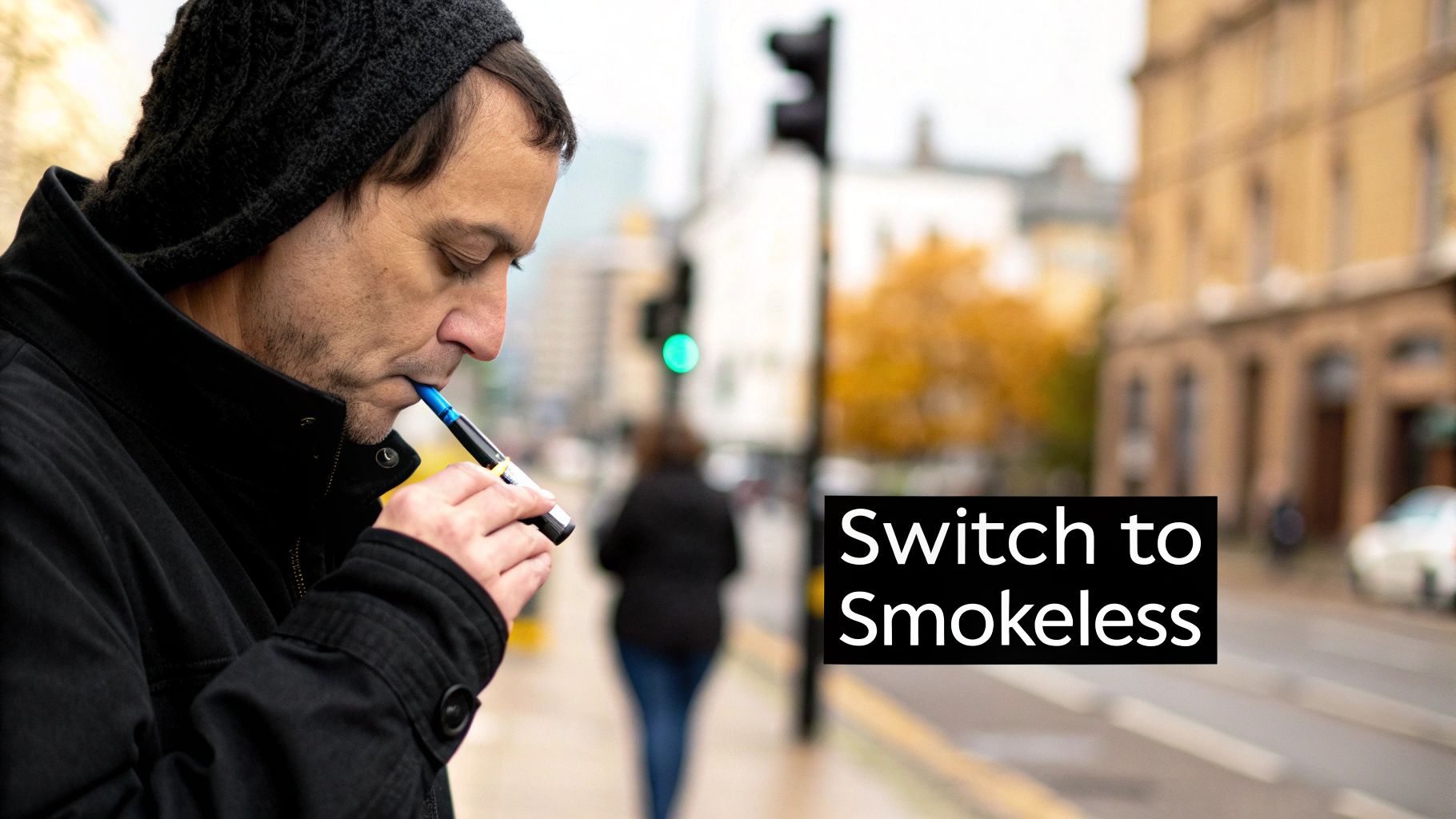
The shift towards smokeless alternatives isn't just a fleeting trend; it’s one of the biggest public health stories unfolding in the UK right now. For years, the message has been clear: quitting smoking is the best thing you can do for your health. But as anyone who's tried knows, it’s far easier said than done. This is where smokeless e‑cigarettes have carved out their role.
Think of it like the switch from petrol cars to electric vehicles. While EVs aren't perfect, they're a massive leap forward in cutting down harmful emissions. In much the same way, smokeless devices offer a practical harm-reduction path for smokers who aren't ready or able to stop using nicotine cold turkey.
A Look at the Numbers
You don't have to look far to see the impact. The UK has seen a stunning drop in smoking rates, falling from around 20% in 2011 to a record low of 11.9% in 2023. It’s no coincidence that this decline happened as vaping became more common.
Public Health England famously estimated that e-cigarettes are around 95% less harmful than traditional cigarettes. Today, about 5.5 million UK adults are regular vapers, and here’s the most telling part: an incredible 55% of them are ex-smokers who have completely kicked the tobacco habit.
This data paints a clear picture: for millions of people, smokeless alternatives have served as an effective off-ramp from deadly combustible tobacco, despite ongoing myths about their relative risks.
The Path Forward
At its heart, the appeal of a smokeless e‑cigarette is simple. It uncouples nicotine from the thousands of dangerous chemicals created by setting tobacco on fire. This lets people manage their cravings without breathing in the worst offenders, like tar and carbon monoxide.
As you start looking into your options, you'll find a wide world of healthy cigarette alternatives that can align with your personal goals, whether that's reducing harm or quitting for good.
This guide is here to cut through the noise and give you a clear, honest look at this modern approach. We'll break down the different devices out there, weigh the benefits against the known risks, and share practical advice for making a successful switch. Our goal is to give you the knowledge you need to make an informed choice for your health and your future—moving away from smoke and toward a cleaner path.
Breaking Down the Different Types of Smokeless Devices
Trying to make sense of smokeless e-cigarettes can feel like learning a new language. With all the different gadgets, acronyms, and styles out there, it’s easy to feel a bit lost. But once you get to grips with the basic ideas behind them, it becomes much easier to see which path might be right for you.
Think of it less as one big, confusing category and more like a family of related tools, each built for a slightly different job.
The real difference between them comes down to what they heat and how they do it. Some use a nicotine-laced liquid, others use real tobacco, and a few of the newer options use nothing more than natural, plant-based flavours. Getting this distinction clear is the first step to matching a device to what you actually want to achieve, whether that’s managing nicotine cravings or leaving nicotine behind for good.
Traditional E-Cigarettes or Vapes
This is the category most people are familiar with. E-cigarettes, better known as vapes, work by gently heating a liquid solution known as e-liquid or vape juice. This liquid is usually a mix of propylene glycol (PG), vegetable glycerine (VG), various flavourings, and, most of the time, nicotine.
When you use the device, a tiny heating element called a coil warms the e-liquid, turning it into an aerosol, or vapour, that you inhale. They come in all shapes and sizes, from simple disposable pens to big, customisable "mod" systems that look far more complex.
- Best for: People who want a huge choice of flavours and nicotine strengths. Vapes offer the most control for gradually tapering down your nicotine intake over time.
Heat-Not-Burn Devices
Just as the name suggests, heat-not-burn (HNB) products do things differently. Instead of using a liquid, they use little, specially made sticks or pods that contain real, processed tobacco. The device heats this tobacco to a very specific temperature—just hot enough to release a nicotine-filled vapour, but not hot enough to actually burn it.
This process cleverly avoids creating the smoke, tar, and ash that come with lighting a traditional cigarette. Because it uses real tobacco, many people find the experience feels much closer to smoking than vaping does.
- Best for: Smokers who’ve tried vaping but find they really miss the familiar taste and ritual of tobacco.
Nicotine-Free Inhalers and Alternatives
There’s a growing category of devices that focus purely on the behavioural side of smoking—the hand-to-mouth habit and the simple ritual of taking a moment for a deep breath. These devices, like AuraFlow, are completely nicotine-free and tobacco-free.
They work by creating a pleasant, flavoured vapour from natural extracts or essential oils. The goal here isn't to deliver nicotine, but to offer a sensory replacement that helps manage the psychological habits and hand-to-mouth cravings tied to smoking. You can explore more about the various devices to quit smoking that focus on breaking the habit itself.
By separating the physical action from the addictive substance, these alternatives offer a clear path towards becoming completely free from both smoking and nicotine dependence.
To make things a bit clearer, here’s a simple table to help you compare these different approaches at a glance.
Comparing Popular Smokeless E Cigarette Technologies
This quick breakdown compares the core features of each device, helping you see which one might align best with your personal goals.
| Device Type | Mechanism of Action | Primary Ingredient | Best For Users Seeking |
|---|---|---|---|
| E-Cigarettes (Vapes) | Heats a liquid (e-liquid) to create an aerosol. | Nicotine, PG/VG, Flavourings | Customisable flavour and nicotine levels for gradual reduction. |
| Heat-Not-Burn | Heats real tobacco sticks without burning them. | Processed Tobacco, Nicotine | A sensation closer to traditional smoking without combustion. |
| Nicotine-Free Inhalers | Creates a flavoured vapour from natural extracts. | Plant Extracts, Essential Oils | A nicotine-free way to satisfy the hand-to-mouth habit. |
Ultimately, the best choice depends entirely on what you're looking for—whether it's a way to manage nicotine, replicate the feel of smoking, or break the psychological habit for good.
Weighing the Benefits Against the Risks
Deciding to move away from smoking is a huge step, and to make the right choice for you, it’s important to look at smokeless e-cigarettes from every angle. This isn't about finding a magic bullet; it's about understanding the real-world trade-offs in the journey away from combustible tobacco.
The biggest plus, and one that's backed by major health bodies, is significant harm reduction. When you stop burning tobacco, you cut out the tar and carbon monoxide that cause the vast majority of smoking-related diseases. That single change is a massive win for your health.
Many people also find they save a significant amount of money over time. Then there are the social benefits—no more lingering smell of smoke on your clothes or breath, which can make interactions feel a lot more comfortable for everyone.
This diagram shows the main types of smokeless devices you’ll come across.

It gives you a clear picture of the different paths you can take, from nicotine-based vapes and heat-not-burn products to completely nicotine-free inhalers.
Understanding the Potential Downsides
But let's be honest about the risks, because they are real. Most smokeless e-cigarettes contain nicotine, which is a highly addictive substance. While it’s the smoke that does the most damage, nicotine dependence is a tough cycle to break, and these devices can keep you in that loop if your goal isn't clearly focused on quitting altogether.
Another question mark hangs over the long-term health impact of inhaling certain flavouring chemicals. Many are approved for eating, but their effects when heated and inhaled over many years are still not fully understood. It's a genuine unknown to factor into your decision, especially when you're weighing up different options. If you're exploring alternatives, our guide on whether herbal cigarettes are safe might offer some useful perspective.
The core principle here is harm reduction, not harm elimination. For a current smoker, switching completely to a regulated smokeless product is a positive move for your health. For a non-smoker, starting one is not.
We also can't ignore the environmental side of things. The explosion of single-use disposable vapes has created a huge problem with electronic waste and litter.
The Youth Vaping Concern
Finally, no conversation about this topic is complete without talking about youth vaping. Recent data shows a worrying trend. In 2023, 12% of 11–17 year-olds in the UK reported having used an e-cigarette recently. This number jumps to a startling 25% among 15-year-olds. While these products are meant to be tools for adult smokers, their appeal to young people is a serious public health issue that has rightly led to calls for much stricter rules.
Ultimately, smokeless e-cigarettes sit in a complicated middle ground. They can be a powerful tool for adults desperate to quit smoking, but they come with their own set of risks that need to be understood and carefully managed.
Crunching the Numbers: UK Rules and Your Wallet
Making the switch from smoking isn't just about picking a new device. You've also got to get your head around the UK's rules and, just as importantly, what it’s all going to cost. The laws are there to keep you safe, but the difference in cost? That’s often the real game-changer.
In the UK, the main set of rules is the Tobacco and Related Products Regulations (TRPR). Think of it as the rulebook for anything containing nicotine. It sets clear limits to protect people. For anyone using e-liquids, this means nicotine strength is capped at 20mg/ml, and the biggest bottle you can buy is 10ml. Vape tanks are also limited to a 2ml capacity.
What’s Changing on the Horizon?
Things are always shifting, and the government has big plans to tackle youth vaping. A ban on disposable vapes is on the cards, and there’s talk of restricting certain flavours that appeal to a younger crowd.
These moves are all about protecting kids, but the goal is to do it without cutting off access for adult smokers who are trying to find a less harmful option.
It's a tricky balancing act: stop a new generation from starting, but keep the door open for adults who want to quit smoking.
While we don't have exact dates yet, it’s clear the market is heading in a new direction. For you, this might mean it's a good time to think about moving from disposables to a refillable system, which is not only more sustainable but much cheaper in the long run.
Comparing Your Annual Spend
Let's be honest, one of the biggest motivators for quitting smoking is the money. The cost of a pack of cigarettes has gone through the roof, and the savings you can make by switching are staggering.
So, let's break down what a year's worth of spending looks like for a typical user across different options.
Estimated Annual Cost Smoking vs Smokeless Alternatives
This table gives a ballpark figure of what you can expect to spend over a year.
| Product | Average Daily Cost | Estimated Annual Cost |
|---|---|---|
| Traditional Cigarettes (20/day) | £15.50 | ~ £5,650 |
| Disposable Vapes | £4.00 | ~ £1,460 |
| Refillable Pod Systems | £1.50 | ~ £550 |
| Heat-Not-Burn Products | £6.00 | ~ £2,190 |
The numbers really do speak for themselves. Ditching a 20-a-day habit for a refillable pod system could put over £5,000 back in your pocket every single year. That kind of financial freedom is a huge win and a powerful reason to stick with your decision to go smoke-free for good.
How to Successfully Switch from Smoking

Deciding you want to move on from smoking is a massive first step. But the real secret to making it stick isn't just willpower—it's having a smart, practical plan. Making the switch to a smokeless e-cigarette isn't about just buying a device; it's about setting yourself up for success from the very beginning.
Before you do anything else, pause and figure out your ‘why’. Is it for your health? Your family? To save money? Whatever it is, write it down and stick it somewhere you’ll see it every day. That reason will be your anchor when the inevitable cravings or moments of doubt creep in.
Choosing Your First Device
When you’re just starting, simple is always better. Forget about those complex, high-powered kits with all the bells and whistles for now. A basic pod system or an easy-to-use vape pen is the perfect starting point.
These devices are designed to mimic the feeling of drawing on a cigarette, which makes the physical transition feel much more natural and less like a shock to the system.
The next piece of the puzzle is nicotine strength. It might sound backwards, but starting with a higher nicotine level (think 18-20mg/ml if you're a heavy smoker) is often the key. This ensures your new device actually satisfies those powerful cravings, stopping you from reaching for a cigarette out of pure frustration.
Don't be afraid to start with a higher nicotine strength. The goal is to replace smoking completely. You can always taper down your nicotine intake gradually once you've successfully kicked tobacco for good.
Navigating the Transition Period
Let's be realistic: most people go through a 'dual-use' phase, where they're still smoking a few cigarettes while also using their new device. This is completely normal, so don't beat yourself up about it. The trick is to have a plan to actively phase out the cigarettes.
Try these practical steps:
- Delay Your First Cigarette: Each morning, challenge yourself to wait just a little longer before having that first smoke. Use your new device to get you through that initial morning craving instead.
- Create Smoke-Free Zones: Designate certain places—like your car or your home—as strictly no-smoking areas. This forces you to rely on your alternative in those environments and helps break old routines.
- Find Your Flavour: That little cough when you first try vaping is common as your body adjusts. Don't let it put you off. Experiment with different flavours—sometimes a simple tobacco or mint is the best place to start, while others find a fruit flavour works wonders. Finding a taste you genuinely enjoy makes the switch so much easier to stick with.
Remember, this is a journey, not a sprint. Be patient with yourself, celebrate the small wins, and keep your ‘why’ front and centre. Every single cigarette you don't smoke is a step in the right direction.
Your Roadmap to a Nicotine-Free Future
For a lot of people, the journey away from smoking doesn’t just stop at quitting tobacco. The real finish line is a future completely free from nicotine dependence. This final leg of the journey is often the most rewarding because it’s about reclaiming full control from the substance itself.
Getting there means tackling the deep-rooted psychological habits you’ve built over years. The hand-to-mouth action, the ritual of taking a break, the simple act of inhaling—these are powerful triggers that don’t just vanish overnight. This is where modern, nicotine-free alternatives can make all the difference.
Devices like AuraFlow are designed for exactly this moment. They deliver a satisfying, flavoured experience without any nicotine, helping you manage the behavioural side of the habit while your body adjusts to a nicotine-free life.
Tapering Down Your Nicotine Intake
If you’re currently using nicotine-based smokeless e-cigarettes, the shift to zero needs a clear, gradual plan. Going cold turkey can trigger intense withdrawal symptoms, making it much harder to stick with it.
The key to a sustainable nicotine-free life isn't about a sudden leap of faith; it's about building a steady bridge away from dependence, one small step at a time.
Here’s a simple, effective tapering strategy that actually works:
-
Assess Your Current Level: First, get a clear picture of your daily nicotine intake. If you're using a 12mg/ml e-liquid, that’s your starting point.
-
Make Small Reductions: Every few weeks, step down to the next lowest nicotine strength available. For example, move from 12mg to 6mg, then from 6mg down to 3mg. Give yourself time to adjust at each level.
-
Introduce a Zero-Nicotine Option: Once you're comfortable on the lowest strength (like 3mg), start mixing it with a 0mg version of the same flavour. Begin with a 50/50 mix, and then slowly increase the proportion of the zero-nicotine liquid over time.
-
Make the Final Switch: Eventually, you’ll find you're using a 100% nicotine-free product. You’ll have gently weaned your body off its physical dependence without a major shock to your system.
Still Have Questions About Smokeless E-Cigarettes?
It’s completely normal to have questions when you’re exploring alternatives to smoking. Let's clear up a few of the most common ones so you can feel confident about the path you’re choosing.
Are These Devices Completely Safe?
While UK health authorities have stated that regulated e-cigarettes are around 95% less harmful than traditional cigarettes, it's important to know they aren't entirely risk-free. The real health win comes when adult smokers make the switch completely and leave tobacco behind.
For this reason, if you don't smoke, you should never start using any kind of e-cigarette or nicotine product. The long-term effects of inhaling various ingredients are still being researched.
What’s the Main Difference Between Vaping and Heat-Not-Burn?
It really comes down to what you're heating up.
- Vaping uses a special liquid (often called e-liquid) that usually contains nicotine and flavourings. The device heats this liquid until it creates an aerosol, which you then inhale.
- Heat-not-burn devices work with sticks of real, processed tobacco. They heat the tobacco just enough to release a nicotine vapour without ever actually burning it.
So, one uses a liquid, and the other uses real tobacco. This creates a very different taste and overall experience.
A quick word of advice: choosing the right nicotine strength from the get-go is crucial. A common slip-up is starting too low, which can leave you feeling unsatisfied and tempted to go back to smoking.
How Do I Choose the Right Nicotine Strength?
A good rule of thumb is to match the nicotine strength to your old smoking habit. If you were a heavy smoker (around 20 or more cigarettes a day), you'll likely have more success starting with a higher concentration, like 18-20mg/ml. This dose is usually strong enough to keep those initial, intense cravings at bay.
If you were a lighter smoker, you might feel more comfortable starting on a lower dose, somewhere in the 6-12mg/ml range. The aim is to make the transition as smooth as possible by satisfying your body’s need for nicotine. Once you've stopped smoking for good, you can then start to gradually reduce that strength over time.
Ready to take that final step and live completely nicotine-free? See how AuraFlow can support your journey with a natural, flavour-focused approach. Explore our starter kits today.