
Want to pause anxiety in its tracks? With five key oils and three simple methods, you can slip calm into your day—no matter where you are. It’s like carrying a mini sanctuary in your pocket.
“A single whiff can shift your brain from tension to tranquillity in seconds.”
Quick Guide To Anxiety Relief Oils
Think of your sense of smell as a direct line to your emotions. When you breathe in an essential oil, molecules zip along olfactory pathways into the limbic system, nudging stress hormones down. It’s a gentle nudge that only takes minutes to work its magic.
- Lavender: Packed with linalool, it lulls you into deeper relaxation.
- Bergamot: Bursting with limonene, it brightens the mood like morning sunlight.
- Chamomile: Rich in bisabolol for a soft, soothing calm.
- Ylang Ylang: Full of geranyl acetate to steady turbulent emotions.
- Frankincense: Contains incensole acetate to keep nerves grounded.
Three Simple Application Methods
Choose one of these on-the-go rituals to reset your inner calm:
- Diffusion: Add 3-5 drops to a diffuser for 10 minutes during a quick break.
- Inhalation: Hold the bottle to your nose and take three slow, deep breaths.
- Roller Blend: Combine 2 drops of each oil with carrier in a 10ml roller, then glide on pulse points.
A discreet sniff before a meeting, a brief diffuser burst as you stretch—these small pauses become anchors. In under five minutes, they can cut through a wave of tension and restore focus.
Top Oils Quick Reference
Below is a handy table to compare leading anxiety-relief oils, their main perks and best ways to use them.
| Essential Oil | Key Benefit | Typical Use | Quick Tip |
|---|---|---|---|
| Lavender | Deep relaxation | Diffusion | Inhale before sleep |
| Bergamot | Mood uplift | Roller blend | Apply on wrist |
| Chamomile | Gentle calm | Diffusion | Use in pillow spray |
| Ylang Ylang | Emotional balance | Inhalation | Breathe deeply |
| Frankincense | Steady nerves | Roller blend | Roll on temples |
Keep this snapshot close at hand. Whether you’re at your desk, on public transport or winding down at night, you’ll have an instant toolkit to soothe any stress wave.
Why Essential Oils Are Trusted for Anxiety Relief in the UK
Anxiety seems to be on the rise across Britain, nudging many of us to seek gentler, natural support. Day by day, more people find comfort in the subtle power of essential oils. These fragrant extracts have built trust through both scientific studies and heartfelt recommendations.
In the United Kingdom, the essential oils market is riding a wave of growth—expected to hit USD 1.75 billion by 2028, largely thanks to aromatherapy aimed at easing anxiety and stress. The aromatherapy sector alone is set to expand at a 9.6% CAGR from 2025 to 2030 Read more about UK market outlook.
Meanwhile, consumer surveys reveal that 65% of UK aromatherapy users notice a drop in anxiety after just one session. It’s clear: these oils are fast becoming part of our daily wellness rituals.
- Ethical Sourcing meets UK organic and fair-trade guidelines, so each bottle tells a transparent story of provenance.
- Survey Insights show 68% of users prefer natural over synthetic remedies for everyday stress.
- Professional Backing from London holistic centres highlights consistent feedback of reduced tension.
- Hospital Programmes within several NHS trusts include regular lavender aromatherapy, with patients reporting lower anxiety scores.
Ethical Sourcing Standards
UK regulations insist that any essential oil labelled organic complies with Soil Association guidelines. Brands undergo strict testing to prove purity and the absence of synthetic additives. You simply look for recognised certification marks to verify authenticity.
For example, a family-run distillery in Somerset sources lavender from nearby farms and publishes batch-by-batch test results. That kind of transparency ensures calming compounds—like linalool—remain intact and potent.
"Patients often say that the scent of pure lavender feels like a mindful pause in a busy day," says Sarah Holloway, lead aromatherapist at Cambridge Holistic Centre.
Clinical Endorsement And Real World Cases
Take Kings College Hospital: they’ve trialled ten-minute aromatherapy sessions combining inhalation and light massage with lavender or chamomile. By the end, many patients feel noticeably calmer.
Up in Manchester, holistic centres report 73% of weekly group-therapy participants experiencing improved relaxation scores. These real-world examples show how essential oils can complement conventional care, adding a moment of calm to people’s lives.
Together, these market trends, ethical practices and clinical endorsements form a sturdy foundation of credibility. No wonder essential oils continue to be a go-to tool for tackling workday stress and nurturing mental wellbeing.
Consumer surveys consistently rank essential oils among the top solutions for managing workday anxiety.
This widespread acceptance underscores why these natural remedies remain a cornerstone of modern wellness strategies.
How Essential Oils Work To Reduce Anxiety
When you draw in the scent of an essential oil, aromatic molecules race through your nasal passages in seconds. They head straight for the limbic system—your brain’s emotional epicentre. It’s like delivering a handwritten note that says “relax” right to the door of your mind.
Below is an infographic illustrating how essential oils for anxiety progress from growth and sourcing to clinical endorsement in the UK market.
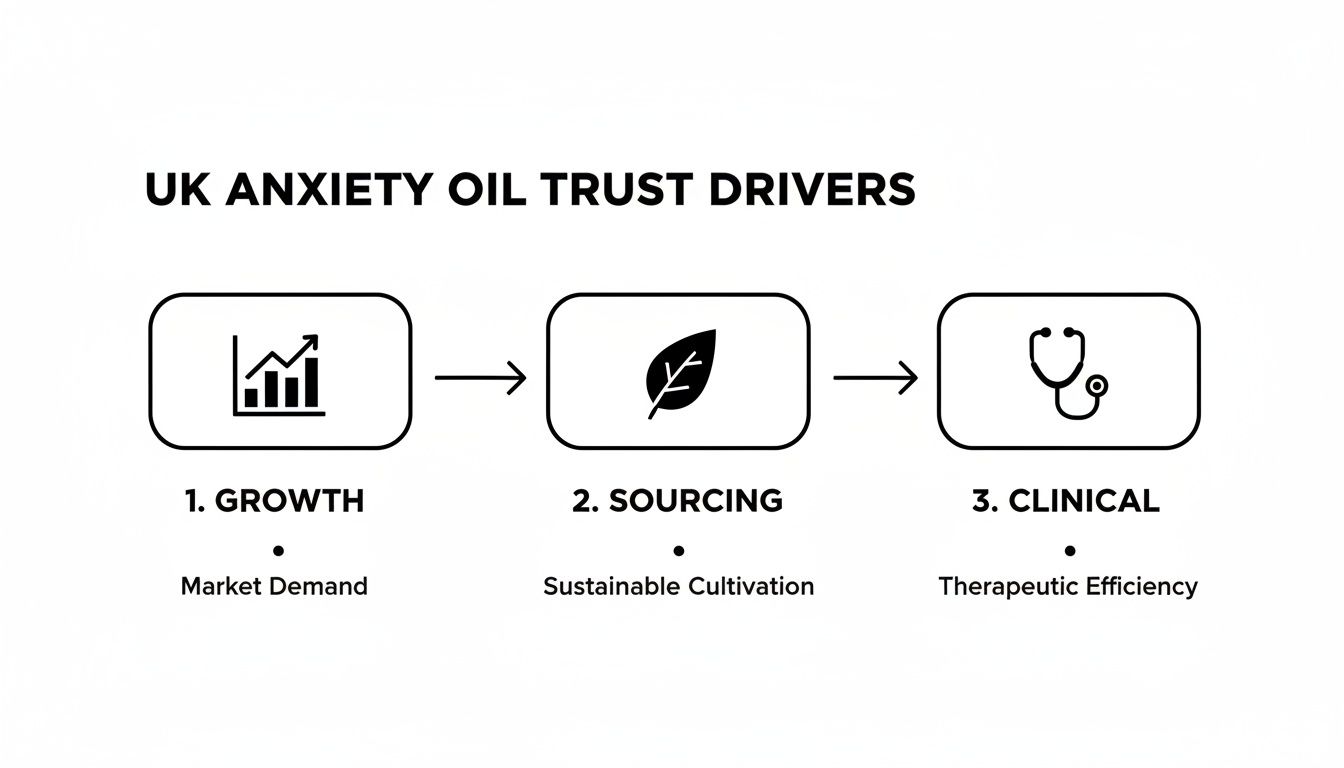
This diagram shows how healthy market demand backs responsible sourcing and builds trust in hospitals and holistic centres alike.
Scientific Pathways To Calm
Research in aroma neurobiology reveals that linalool from lavender can lower cortisol levels by up to 28%. Meanwhile, limonene in citrus oils gently nudges mood-regulating neurotransmitters toward balance.
“Aromas are like gentle messengers that signal calm to the brain.”
- Molecules meet sniff receptors within milliseconds.
- Signals zip to the amygdala, then on to the hippocampus.
- Stress-hormone production eases off almost instantly.
This rapid scent pathway pairs beautifully with mindful breathing. For a step-by-step guide, visit our mindful breathing techniques.
Extraction Methods Comparison
| Method | Retains | Ideal For |
|---|---|---|
| Steam Distillation | Delicate terpenes | Floral oils |
| Cold Pressing | Bright citrus aroma | Citrus oils |
| Solvent Extraction | High oil concentration | Resins |
Imagine a lavender oil distilled gently in Provence—its fragrance unfolds like a soft hello along your nerves. On the other hand, a solvent-extracted resin may feel stronger but lose those subtle heart notes.
Applying These Insights
To fill a room with calm, set up a diffuser:
- Add 3–5 drops of your chosen oil to water.
- Inhale deeply for a slow count of three.
- Repeat throughout your quit ritual to reinforce the sense of calm.
Each tiny drop acts as a mini-message, guiding your nervous system away from tension. Always perform a patch test and follow dilution guidelines before topical use.
“A three-minute aromatherapy pause can lower heart rate by 5 bpm.”
Key Takeaways
- Aromatic compounds connect directly with emotional centres.
- Extraction methods shape both potency and scent profile.
- Pairing scent with ritual amplifies calm responses.
- Always test and dilute to protect your skin.
Top Essential Oils For Calming Anxiety
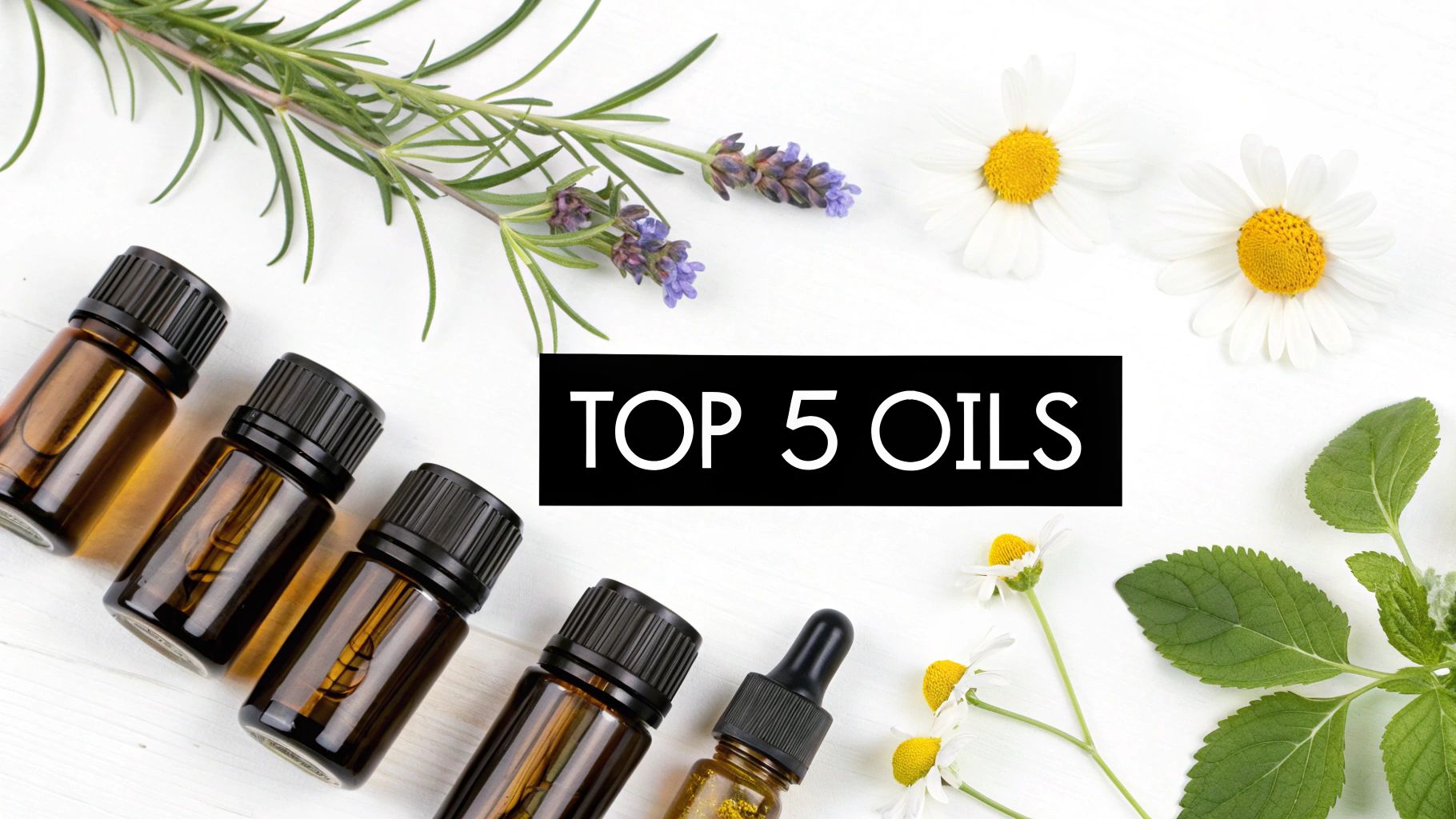
When life feels like a whirlwind, a few drops of the right essential oil can ground you instantly. Here are five tried-and-tested oils that ease tension, soothe frazzled nerves and invite a moment of stillness.
Lavender Oil And Its Effects
Imagine a warm summer evening breeze brushing past lavender fields—that’s the sensation this oil brings. A 2019 review found that inhaling lavender or pairing it with a gentle massage lowers heart rate and stress hormones. Its secret lies in linalool, a natural compound that gently quietens overactive neural pathways.
Comparison Of Top Calming Essential Oils
Before diving deeper, here’s a snapshot comparing each oil’s standout trait and best way to use it:
| Oil | Primary Benefit | Scent Profile | Usage |
|---|---|---|---|
| Lavender | Deep Relaxation | Floral, slightly sweet | Diffuse |
| Chamomile | Gentle Soothing | Apple-like, herbaceous | Roller Blend |
| Bergamot | Mood Uplift | Citrus, bright | Inhale |
| Ylang Ylang | Emotional Balance | Rich, exotic floral | Diffuse |
| Frankincense | Steady Calm | Earthy, woody | Topical |
Use this table to identify the oil that best speaks to your stress style.
Real-World Uses And User Stories
A London team leader diffused bergamot at midday and noticed a 45% drop in perceived stress within ten minutes. It became her secret weapon during back-to-back meetings.
Meanwhile, a night-owl tech designer crafted a chamomile roller blend for bedtime. The warm, herbal aroma transformed sleepless nights into restful evenings.
Simple tips for your own ritual:
- Bergamot: Clear the mind with three deep whiffs during a busy afternoon.
- Chamomile: Roll onto pulse points before slipping under the duvet.
- Ylang Ylang: Inhale whenever emotions feel scattered.
- Frankincense: Rub into shoulders for a grounding mini-massage.
Choosing The Right Oil
Matching scent to your stress triggers makes all the difference. Citrus fans will adore bergamot’s bright zing, while those craving depth might lean towards frankincense’s earthy anchor. Ylang ylang’s lush bouquet is perfect for emotional turbulence, and lavender remains the classic go-to for full-body calm.
You may also enjoy our guide on menthol essential oils for a cooling twist on calm.
Integrate these oils into your AuraFlow quitting ritual to turn cravings into mindful moments. Simply add a few drops to your scent pad or roller and breathe in between each AuraFlow inhalation.
“Pairing scent memory with mindful breathing creates a calming ritual that can outlast cravings.”
Start with one oil and notice how it weaves into your routine. Over time, the aroma becomes a gentle cue, guiding your nervous system away from nicotine’s pull.
Enjoy every calm breath with intention.
Essential Oil Usage Methods And Practical Tips
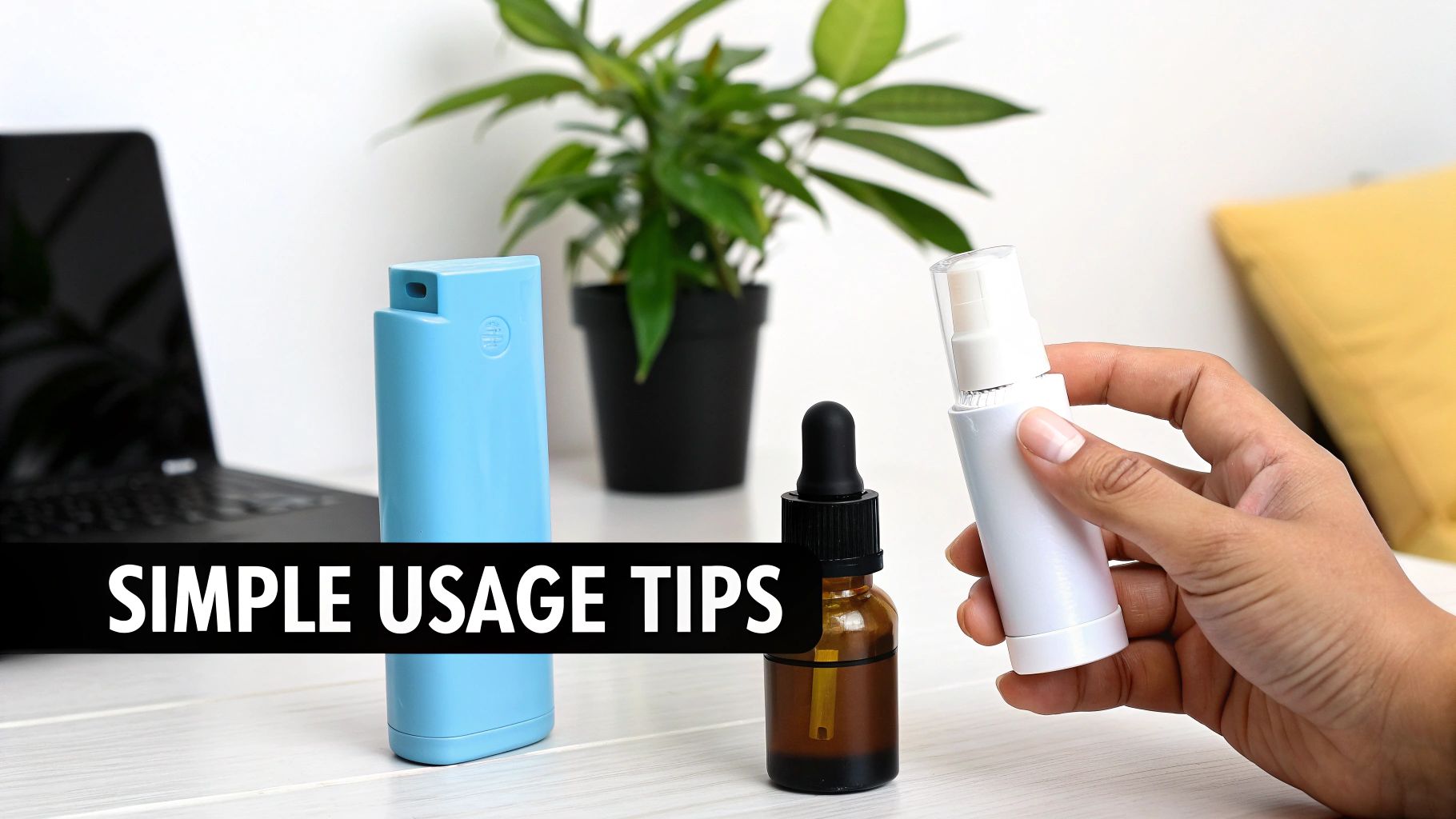
Anxiety has a knack for showing up unannounced—perhaps a racing heart on the train or a jittery pause before a presentation. That’s when a few drops of essential oil can act like a gentle hand on your shoulder, reminding you to breathe.
Think of diffusion as painting your room with calm. The mist carries fragrant molecules into the air, wrapping you in a soothing atmosphere without you having to think about it.
Diffusion In Home And Office
Setting up a diffuser at home or on your desk is like placing a mini sanctuary within arm’s reach. A quick cycle can turn frazzled moments into mindful pauses.
- Home Setup: Fill a cold-mist diffuser with water and 5 drops of lavender. Run it for 15 minutes during your breaks to reset your mind.
- Office Ritual: Plug in a USB diffuser, add 3 drops of chamomile, and let it run in 10-minute bursts. Inhale between emails for an instant calm.
- Timing Tip: Short cycles prevent scent fatigue and keep each whiff as potent as the first.
Once you’ve mastered the basics of at-home diffusion, you can carry that tranquillity with you—no device needed.
Simple Inhalation Techniques
Inhale your way to serenity in under a minute. All you need is a small bottle or an inhaler.
For a step-by-step on crafting a perfect pocket inhaler, see our guide on essential oil inhalers.
- Uncap your essential oil vial or inhaler.
- Hold it about 1–2 cm from your nostrils—no touching, please.
- Take three slow, deliberate breaths, letting the scent reach your limbic system.
“A single deep breath of bergamot can lower tension by 20% within seconds.”
Pair this quick ritual with a topical blend when you need longer-lasting calm.
Massage And Topical Blends
Rubbing essential oils into the skin lets you target tense muscles and anchor your mind.
- Carrier Ratio: Combine 4 drops of essential oil with 5 ml of a carrier like jojoba or sweet almond oil.
-
Blend Examples:
• Lavender + chamomile for evening wind-down
• Frankincense + bergamot for midday balance
For bedtime, turn your diffuser into a pillow spray: dilute 6 drops in 30 ml of water, then mist lightly over your bedding.
Usage Ideas For Routine
Building these rituals into your day makes calm a habit rather than a luxury.
- Pre-commute: Dab a drop of lavender on your wrist before you step out.
- Midday slump: Inhale bergamot from your inhaler five minutes before an afternoon meeting.
- Bedtime: Mist your pillow, then spend a few moments on mindful breathing.
Weave these simple practices into your mindful quitting ritual with AuraFlow, and each breath will become a steadfast anchor on your journey.
Safety Considerations And Best Practices
Essential oils can be powerful allies when soothing anxiety, but they deserve our full attention. Treat these concentrated extracts with care to avoid skin irritation or unexpected reactions.
Below, we’ll explore patch testing, dilution techniques, purity checks, and age- or medication-related precautions.
Patch Test Procedure
A patch test is your first line of defence against skin sensitivity. Apply 1 drop of your diluted blend to a small area on the forearm and leave it untouched.
- Wait 24 Hours without washing the spot.
- Check for any redness, itching or swelling.
- If irritation appears, discard the mixture and choose a gentler oil.
Always patch test each new essential oil before using it more broadly.
Dilution And Application Guidelines
Dilution reduces oil concentration, making topical use gentler on sensitive, adolescent and children’s skin. Standard practice aims for a 2% dilution in adult blends and 1% for teenagers or those with fragile skin.
Here are simple ratios to follow:
- Adults: 12 drops per 10 ml carrier oil (2% dilution)
- Teenagers: 6 drops per 10 ml carrier oil (1% dilution)
- Children Over Six: 3 drops per 10 ml carrier oil (0.5% dilution)
Choose stable carriers like jojoba or sweet almond and decant your mixtures into dark glass bottles. Proper storage shields the oils from light and air, preserving their efficacy.
Purity Checks And Storage
Even the best routines can go awry if your oils aren’t pure. Before every purchase:
- Look for GC-MS Testing results to confirm the chemical profile.
- Verify organic certification from UK bodies such as the Soil Association or COSMOS.
- Steer clear of vague terms like “fragrance oil” or “natural blend.”
Reputable brands list batch numbers and sourcing details. Counterfeit oils often hide synthetic additives that trigger headaches or allergic flares.
Certain medications can interact with essential oils and alter their effects. Always consult your GP if you’re on blood thinners, antihypertensives or have epilepsy.
Expectant or nursing mothers should avoid rosemary, clary sage and basil oils. Little ones under six need extra care—stick strictly to mild, low-strength blends.
“A little knowledge goes a long way in preventing essential oil mishaps.”
Do’s And Don’ts
- Do store oils in dark, labelled glass bottles.
- Don’t apply undiluted oils directly to skin.
- Do verify certifications and batch numbers before use.
For lasting calm and safety, always follow patch testing, precise dilutions and purity guidelines.
Frequently Asked Questions
Below you’ll find straightforward, expert answers to the questions we hear most often about using essential oils to ease anxiety.
What Dilution Ratios Ensure Safety On Sensitive Skin?
Essential oils are highly concentrated—think of them as nature’s perfume. A lighter touch helps prevent irritation, especially on delicate skin.
- Adults: 12 drops per 10 ml carrier (2% dilution)
- Teens: 6 drops per 10 ml carrier (1% dilution)
- Children Over Six: 3 drops per 10 ml carrier (0.5% dilution)
Which Oil Blends Work Best For Morning Stress Bursts?
When your brain feels like a busy traffic jam first thing, a bright citrus-mint mix can clear the mental lanes. Try this combo in a personal inhaler or diffuser:
- 3 drops orange
- 2 drops peppermint
- 1 drop rosemary
Follow this short ritual for an uplifting start:
- Take three deep inhales for instant focus.
- Diffuse for five minutes before breakfast.
- Carry a roller-ball blend on your commute for a mid-morning boost.
Can Essential Oils Replace Conventional Anxiety Treatments?
Essential oils are a supportive companion, not a stand-alone cure. They work best alongside therapies like counselling or prescribed medications. Always check in with your GP before adjusting any treatment plan.
Essential oils shine when they’re part of a balanced anxiety strategy.
How Quickly Will I Notice Mood Improvements?
Scent molecules travel fast—most people feel a shift in mood within 5–10 minutes of inhalation. Applied to the skin, your chosen blend can deliver a gentle uplift over several days of steady use.
- Inhalation: calming effect in 5–10 minutes
- Topical: noticeable lift after 3–5 days of daily application
- Ritual: pair each use with breathing exercises to enhance results
Find your calm with AuraFlow and breathe a little freer today.