
If you're trying to quit smoking, you already know the biggest fight isn't just with nicotine. It’s the habit itself. The ritual. The simple, almost unconscious hand-to-mouth action that’s become a part of your daily routine. Fake cigarettes to quit are designed to tackle exactly that problem, giving you a way to manage the behavioural side of addiction without the tobacco.
Understanding Fake Cigarettes and Their Role in Quitting
Staring down the challenge of quitting smoking can feel like you're trying to climb a mountain. For so many people, the steepest part isn't just the nicotine withdrawal; it’s breaking the deeply ingrained physical habit of holding and using a cigarette.
It’s the ritual tied to your morning coffee, that five-minute break at work, or the way you handle a stressful moment. This is precisely where the idea of 'fake cigarettes' comes into play, offering a bridge to a smoke-free life.
What Are Fake Cigarettes?
The term doesn't refer to one single product. Instead, it’s a whole category of tools designed to replicate the physical sensation of smoking, giving your hands and mouth something to do.
Think of them as stabilisers on a bike. They help you keep your balance and manage the familiar motions of smoking while you work on kicking the chemical addiction for good.
They come in a few different forms, each with its own approach:
- Herbal Cigarettes: These look and feel just like traditional cigarettes, but they’re filled with a blend of non-addictive herbs instead of tobacco.
- Nicotine-Free Vapes: These devices produce a harmless, flavoured vapour that mimics the feeling of inhaling smoke, satisfying that "drag" sensation.
- Inhalers: Often found in pharmacies, these simple plastic devices let you draw in air, sometimes with a mild flavour, to satisfy the craving for inhalation.
The core idea is to decouple the physical ritual from the harmful substance. By providing a psychological crutch during the toughest moments, these tools can make your journey to becoming smoke-free far more manageable.
How They Help You Quit
The psychological dependence on the act of smoking is a massive barrier for most people trying to quit. Fake cigarettes work by giving you a direct substitute for this ritual, which can massively reduce the anxiety and stress that comes with giving up.
When a powerful craving hits, reaching for one of these alternatives can satisfy that deep-seated urge without derailing all your hard work. This gives you the breathing room you need to build new, healthier habits.
Essentially, you get to tackle the behavioural addiction head-on, making it much easier to manage the nicotine withdrawal, whether you’re using other aids or not.
Exploring Your Options: From Herbal Sticks to Modern Inhalers
When it comes to fake cigarettes, it's not a one-size-fits-all situation. Understanding the different tools available is the first step in figuring out what might actually work for you on your quitting journey.
Think of it like learning to ride a bike. Some people need stabilisers that feel almost identical to the real thing, while others do better with a completely different kind of support. Your choice of quitting aid works in much the same way.
The options really boil down to three main categories, each taking a unique angle on tackling the physical habit of smoking.
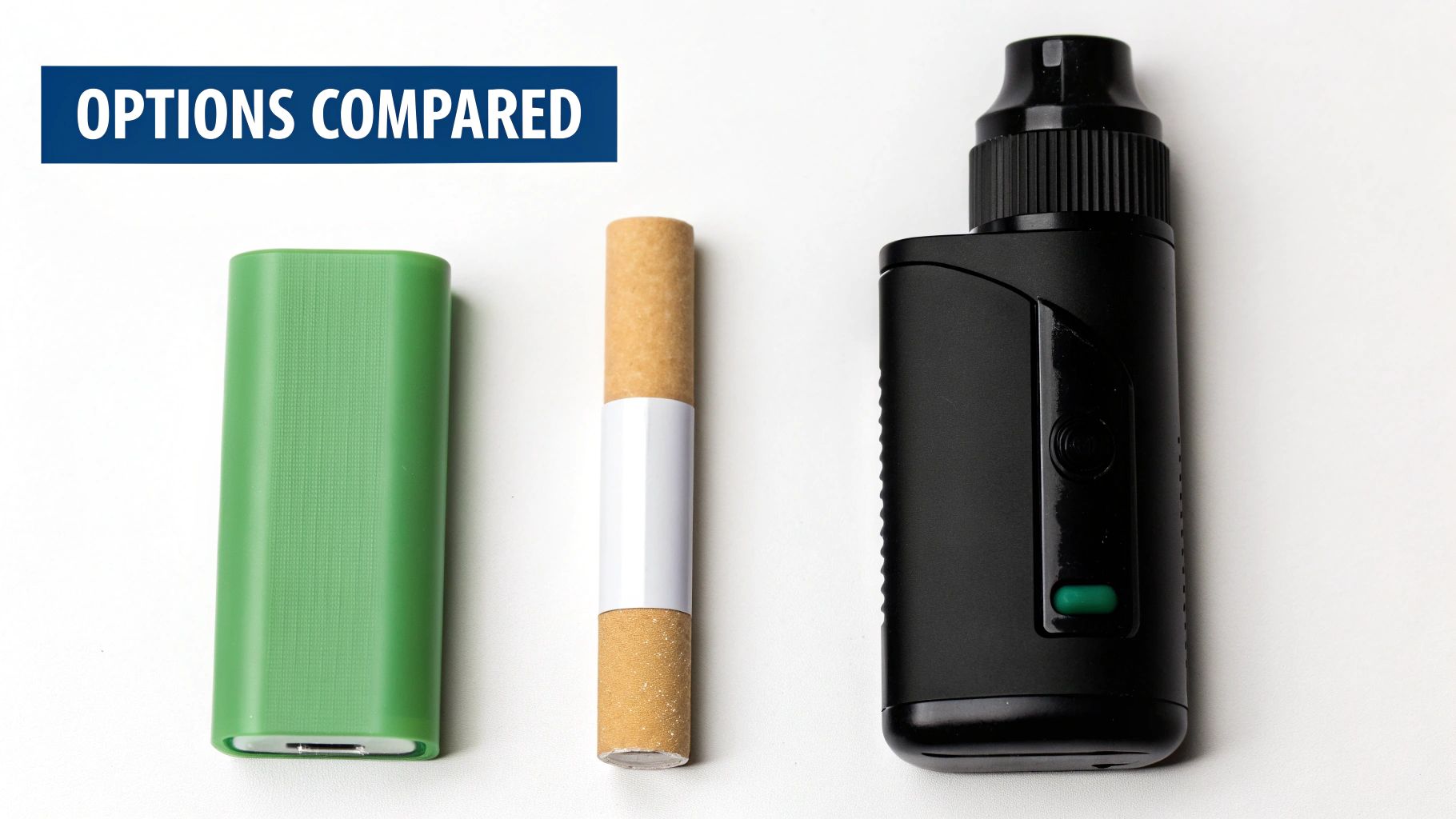
Herbal Cigarettes: The Traditional Lookalike
Herbal cigarettes are the most direct visual substitute for the real thing. They're crafted from blends of smokeable herbs like marshmallow leaf, rose petals, or ginseng, and contain absolutely no tobacco or nicotine.
Their biggest draw is how closely they replicate the entire ritual: lighting up, holding it between your fingers, and watching the smoke curl into the air. For anyone deeply attached to that specific act, they can feel like a seamless replacement.
But here's something you absolutely must understand: ‘natural’ doesn't mean safe. Because they rely on combustion—the act of burning—they still produce harmful tar and carbon monoxide, two of the biggest dangers in traditional cigarettes. So, while you're dodging the nicotine, you're not getting away from the risks of inhaling smoke.
Nicotine-Free Vapes and Inhalers: The Modern Approach
This category offers a smoke-free way to satisfy that deep-seated hand-to-mouth habit. Instead of burning anything, these devices create a vapour that mimics the warmth and sensation of smoke, but without the nasty by-products of combustion.
They're incredibly versatile and have become one of the most popular alternatives to smoking cigarettes in the UK for a good reason.
- Nicotine-Free E-Liquids: These are used in standard vaping devices and let you gradually taper your nicotine down to zero while still getting the physical sensation of vaping.
- Aromatherapy Inhalers: Devices like AuraFlow take a different route, using natural flavours from essential oils. They offer a gentle, calming ritual without any electronics, charging, or addictive chemicals.
- Disposable Nicotine-Free Vapes: These are simple, ready-to-use devices that provide a certain number of puffs before being discarded. They’re a convenient entry point for people new to the idea.
The real win here is harm reduction. By completely removing the burning process, these tools give you the physical satisfaction you’re craving in a significantly safer way—a stance strongly backed by UK public health bodies.
Pharmacy-Sold Nicotine Inhalators: The Clinical Option
Finally, you have nicotine inhalators, which you can pick up from a pharmacy. These are straightforward plastic devices that hold a nicotine cartridge. When you draw on the mouthpiece, you inhale a small amount of nicotine vapour into your mouth and throat.
They don't create a big, visible cloud like an e-cigarette and are designed to mimic the hand-to-mouth action in a very discreet, controlled manner. They deliver a measured dose of nicotine to help ease cravings while keeping your hands occupied.
This makes them a solid, medically-recognised tool for anyone who wants a no-fuss, clinical approach recommended by healthcare professionals. Each of these options targets the habit differently, giving you the power to choose a path that truly fits your personal triggers and lifestyle.
Do These Quitting Aids Actually Work?
When you finally decide to quit, you need to know that the tool you choose is actually going to help. So, what’s the real story? Do these quitting aids make a difference? The answer is a big yes, but with a catch: the most effective ones are those that tackle smoking’s two-headed monster—the physical habit and the chemical craving.
Think of it like fighting a battle on two fronts. On one side, you have the deeply ingrained hand-to-mouth ritual, the thing you do without even thinking during a coffee break or after a meal. On the other, you have the relentless pull of nicotine.
An aid that only focuses on one of these can leave a massive gap in your defences. A nicotine patch, for example, is brilliant for keeping those background cravings at bay. But it does absolutely nothing for that restless urge to hold something and go through the motions. This is exactly where the more modern approaches have found so much success.
The Dual-Action Power of Vaping
Here in the UK, vaping has become a frontline tool for quitting smoking for one simple reason: it hits both targets at once. When someone switches from cigarettes to a vape, the nicotine in the e-liquid satisfies the chemical dependency, heading off the worst of the withdrawal symptoms before they even start.
At the same time, the physical act of vaping—lifting the device, inhaling, and exhaling vapour—is a direct replacement for the ritual of smoking. This dual-action approach makes for a much smoother, more manageable transition away from tobacco. It’s a powerful harm reduction tool that provides the psychological comfort you need to get through those trigger moments.
This isn't just a theory; the real-world data is undeniable. Vaping has become an invaluable public health asset, helping millions of people in Britain finally leave smoking behind.
The numbers speak for themselves. The health charity Action on Smoking and Health (ASH) reports that nearly 3 million people in Britain have successfully used vapes to quit smoking over the last five years. In fact, of all the adults who stopped smoking in that period, just over half—a massive 2.7 million—relied on vaping to do it.
Effectiveness Varies by Type
It’s crucial to remember that not all aids are created equal. Your chances of success can change dramatically depending on the product you choose and what your personal triggers are.
- Vaping: This consistently comes out on top in both clinical trials and real-world studies, often proving more effective than traditional Nicotine Replacement Therapy (NRT). Its ability to mimic the smoking experience is its greatest strength.
- Nicotine Inhalators: These are also a solid choice because they combine a low dose of nicotine with that familiar hand-to-mouth action, though they haven’t become as popular as vapes.
- Herbal Cigarettes: Their effectiveness is highly questionable. While they might copy the ritual, they do nothing to address the nicotine addiction and, because you’re still burning and inhaling something, they come with their own health risks. Most health bodies strongly advise against using them.
Ultimately, the best tool is the one that fits you—the one that satisfies your specific cravings and provides a convincing substitute for the act of smoking. For a huge number of people, the evidence points squarely to vaping as the most complete and successful way to start a smoke-free life.
Weighing the Health Pros and Cons
Let's have an honest conversation about the health side of quitting aids. When you're trying to walk away from smoking for good, you need to know the real risks and benefits of using fake cigarettes to quit. This isn't about finding a magic, perfect solution; it’s about harm reduction and making a smart, informed choice that feels right for you.
The message from UK public health experts is crystal clear: vaping is significantly less harmful than smoking traditional, combustible tobacco. This isn't just an opinion; it's a core principle of modern strategies to help people quit. The real danger in cigarettes comes from the thousands of chemicals created when tobacco burns—not the nicotine itself.
By getting rid of the fire, quitting aids like vapes and inhalers cut out the source of tar and carbon monoxide, which are without a doubt the two most destructive parts of cigarette smoke.
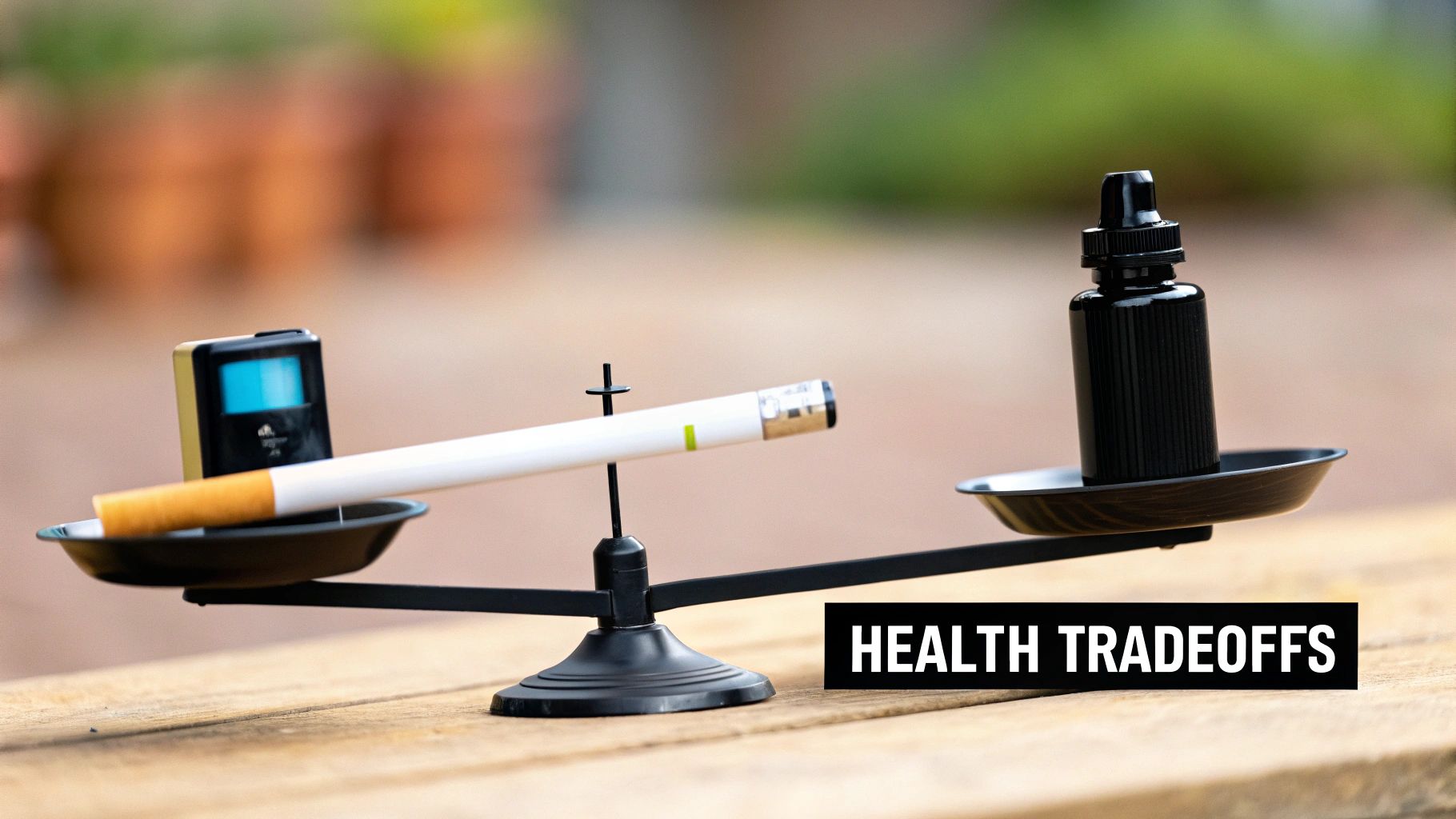
Differentiating the Risks
It's so important to separate the dangers of smoking from the much lower risks of its alternatives. As you look at different ways to quit, it's worth understanding the full picture. For example, learning about the potential side effects of nicotine patches on heart health can help you weigh up all the available options.
Even so, making the switch from smoking to vaping is a massive leap forward in terms of harm reduction. The data completely backs this up, showing that vapes are not just a popular choice, but a genuinely effective one.
A huge survey of over 25,000 smokers between 2023-2024 found that vapes were used in an incredible 40.2% of all quit attempts—way more than any other method. Better yet, they also had the highest success rates, with nearly 24% of users successfully quitting.
This success comes down to their unique ability to tackle both the chemical addiction and the behavioural habits of smoking, but in a much, much safer way than cigarettes.
The Problem with Herbal Cigarettes
This is where the term 'natural' can be a bit of a trap. Herbal cigarettes might be tobacco-free, but they still rely on burning plant material. That process—combustion—always creates nasty toxins, including tar.
The simple truth is this: inhaling any kind of smoke is bad for your lungs. Period. That’s why most health experts will steer you away from them as a quitting tool. If you want to dive deeper into this, we've put together a detailed guide on whether herbal cigarettes are safe.
Ultimately, the goal is twofold. First, to get completely free from smoking. Second, to eventually stop using the replacement aid, too. To keep yourself safe, always buy your quitting products from reputable UK sellers who stick to strict safety standards. It’s the only way to guarantee you’re using something that has been properly tested and regulated.
Building Your Personal Quit Smoking Plan
Having the right tool is only half the battle. Knowing how to build it into a solid strategy is what really counts. Using fake cigarettes to quit is far more effective when it’s part of a structured, personal plan that feels right for you. This simple framework can turn the huge, scary goal of quitting into a series of small, manageable steps.
It all starts with making a real commitment. The very first step is to set a firm quit date. This isn't just a vague idea; it's a specific day you circle on your calendar, the day your new smoke-free life begins. Tell your friends and family about it. Getting them on your side builds a network of accountability and support right from the start.
Once your date is set, the next move is to formalise your support system. Whatever you do, don't try to go it alone.
Creating Your Support Structure
Combining your chosen quitting aid with professional guidance can dramatically boost your chances of success. In the UK, services like the NHS Stop Smoking Service offer free, expert advice and encouragement that’s tailored to your own smoking patterns. They can help you understand why you smoke and build stronger coping skills for when those tough cravings hit.
Think of it as having a personal trainer for your quit journey. They bring the expertise and motivation, while your chosen aid—whether it’s a nicotine-free vape or another tool—acts as your specialised equipment. Check out our detailed guide on finding the right stop smoking aid to round out your plan.
The heart of a successful plan is all about decoupling habits. First, you break the link between the physical hand-to-mouth ritual and tobacco. Later, once you’re comfortably smoke-free, you can start to gently wean yourself off the replacement habit itself.
Identifying Triggers and Managing Cravings
Understanding what makes you reach for a cigarette is absolutely crucial. Your personal triggers are those specific situations, feelings, or routines that instantly spark a craving.
- Morning Coffee: For so many people, that first cigarette of the day is the hardest one to let go of.
- Stressful Moments: Using smoking as a crutch to deal with pressure is an incredibly common habit.
- Social Settings: Just being around other smokers can create a powerful urge to light up and join in.
- After Meals: Finishing a meal is a classic trigger that sends your hand reaching for a pack.
Once you identify these moments, you can prepare for them. Have your quitting aid ready to go. Plan a different activity, like taking a short walk or sipping a glass of water, to break that automatic response. This proactive approach puts you back in the driver's seat.
This is a big reason why vaping became such a popular quitting tool in the UK—it’s brilliant at handling these trigger moments. For instance, in 2020, nicotine vaping products were the top choice, used in 27.2% of quit attempts in England. In fact, data suggests they helped an extra 50,000 smokers quit back in 2017 alone. You can read more about these findings on JAMA Network Open.
Comparing All Available Quitting Aids In The UK
Relying on a fake cigarette to quit is a brilliant move, but it’s just one tool in a much bigger toolkit. To give yourself the best shot at success, it helps to understand the full landscape of quitting aids available here in the UK. This way, you can build a robust, personalised plan that truly works for you.
Think of it like putting together a team where every player has a special skill. Some are designed to tackle the background chemical cravings that hum away all day. Others are there to get you through those sudden, intense urges tied to your daily rituals, like that morning coffee or after-dinner cigarette.
This simple flowchart shows how to structure your quit plan in three stages: committing to a date, choosing your aids, and finding your support network.
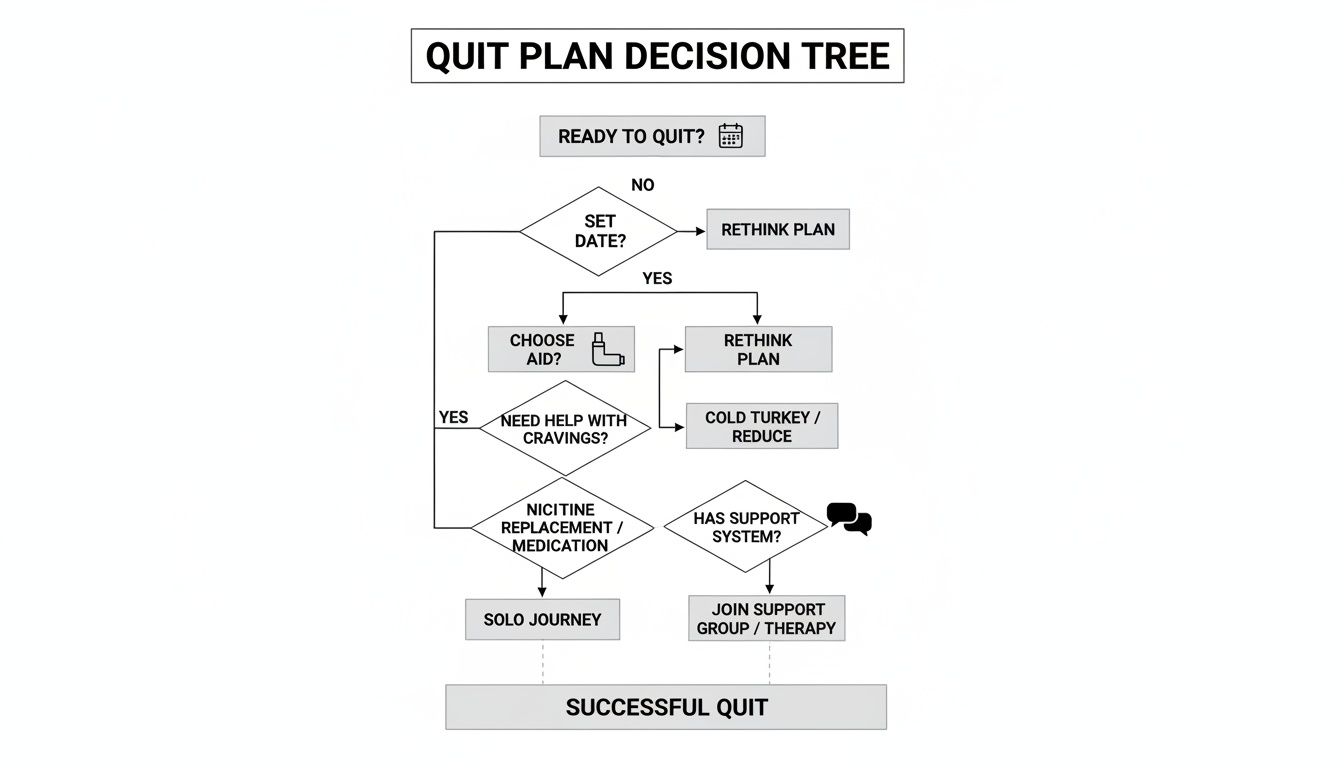
The key takeaway here is that success isn't down to one single thing. It’s about how you combine a solid quit date, the right tools for the job, and a support system you can lean on when things get tough.
Let's break down the most common options to see how they fit into a modern quit plan.
Comparing Smoking Cessation Aids In The UK
From behavioural aids like fake cigarettes to traditional NRTs and even prescription options, there's a wide array of support out there. This table gives a quick overview of how each one works and what its main benefit is.
| Quitting Aid | How It Works | Primary Benefit |
|---|---|---|
| Fake Cigarettes (Herbal/Inhalers) | Mimics the hand-to-mouth action and ritual of smoking without nicotine. | Addresses the behavioural and psychological habit (the "oral fixation"). |
| Nicotine Replacement Therapy (NRT) | Delivers a controlled dose of nicotine to ease withdrawal symptoms. | Manages the chemical addiction and reduces physical cravings. |
| Vapes (E-Cigarettes) | Provides nicotine via an inhaled vapour, also mimicking the smoking action. | Tackles both the chemical craving and the physical habit simultaneously. |
| Prescription Medications | Alters brain chemistry to reduce the pleasure from nicotine and ease withdrawal. | Works on a neurochemical level to disrupt the addiction cycle. |
| Behavioural Support (e.g., NHS) | Offers counselling, group support, and strategies to change habits. | Provides accountability, emotional support, and expert guidance. |
Each of these aids targets a different piece of the puzzle. The most effective plans often combine two or more to cover all bases – the physical, the psychological, and the emotional.
Traditional Nicotine Replacement Therapy
Traditional Nicotine Replacement Therapies (NRT) are the old guard of quitting aids. These are medically recognised products designed to give you a controlled dose of nicotine, helping to ease withdrawal symptoms without all the harmful tar and carbon monoxide you get from cigarettes.
They come in a few different forms:
- Patches: These give you a slow, steady release of nicotine all day long, making them great for keeping those general background cravings under control.
- Gum and Lozenges: Perfect for a quick nicotine hit to deal with sudden, intense urges that pop up out of nowhere.
- Inhalators: These are plastic devices that let you mimic the hand-to-mouth action while inhaling a nicotine vapour, offering a bit of behavioural support too.
NRT is fantastic at managing the purely chemical side of the addiction. However, it's worth noting that a major Cochrane systematic review in 2024 found that nicotine e-cigarettes actually outperform traditional NRTs, helping more people stay smoke-free for at least six months. This really drives home how important it is to tackle the behavioural habit right alongside the chemical one.
Vapes and Prescription Medications
Vapes, as we've covered, are in a unique position because they directly tackle both the chemical craving (with nicotine e-liquids) and the physical, hand-to-mouth habit. This dual-action approach is a huge reason why they have such high success rates.
Prescription medications like Varenicline (Champix) work in a completely different way. They target receptors in your brain to make smoking less pleasurable and ease withdrawal symptoms, but they do nothing to address the ritualistic, hand-to-mouth habit.
This is why combining methods is often the smartest route. For instance, you could use a nicotine patch for all-day craving support while keeping a nicotine-free inhaler like AuraFlow handy for those trigger moments. This gives you a comprehensive defence against both sides of the addiction. By understanding all your options, you can mix and match to build the strongest quitting strategy possible.
Got Questions About Using Fake Cigarettes to Quit?
Stepping into the world of quitting aids can feel a bit confusing, and it's natural to have questions. When you're thinking about using something like a fake cigarette to help you stop, you need clear, straightforward answers to feel good about your plan. Let's walk through some of the most common queries that pop up on the journey to becoming smoke-free.
Think of this as a quick-fire round to clear up any lingering concerns about safety, how well they work, and the best way to use these tools.
Are Herbal Cigarettes a Safe Way to Quit Smoking?
This is a big one. While herbal cigarettes are completely free from tobacco and nicotine, that doesn't make them safe. In fact, they are not a safe alternative to smoking.
The problem isn't the plant, it's the fire. The moment you burn any plant-based material, it creates harmful tar and carbon monoxide—the very same toxins in regular cigarettes that damage your lungs. UK public health advice is crystal clear on this: avoid any product that involves burning and inhaling. Nicotine-free vapes or pharmacy-sold inhalers are considered far safer because you get the hand-to-mouth feeling without the toxic smoke.
Can I Use a Nicotine Patch and a Fake Cigarette Together?
Absolutely. In fact, this is often a powerful strategy for quitting. Think of it as fighting the addiction on two different fronts: the chemical craving and the physical habit.
A nicotine patch works quietly in the background, giving you a steady, slow release of nicotine all day. This keeps those general withdrawal symptoms and nagging cravings at bay. At the same time, a nicotine-free vape or inhaler is your tool for the here and now—it helps you manage those sudden, intense urges that hit when you face a trigger, satisfying that deep-seated hand-to-mouth habit.
It’s always a good idea to chat with your GP or a local stop smoking service first. They can help you build a plan that combines different aids in a way that’s both safe and tailored to you.
How Long Should I Use a Quitting Aid For?
Honestly, there’s no magic number. The single most important goal is to use the aid to help you stop smoking tobacco for good. There's no prize for rushing this.
Once you feel solid in your smoke-free life and confident you won't go back, you can start thinking about gently reducing your use of the replacement aid. For some, this might take a few months. For others, it could be a year or more. The key is to listen to your body, go at your own pace, and never put yourself in a position where you might risk a relapse.
Ready to replace the habit with a calming, nicotine-free ritual? The AuraFlow Starter Kit offers a gentle, flavourful way to manage cravings and support your smoke-free journey. Find your moment of clarity and start your new chapter today at https://aura-flow.co.uk.