
So, what exactly is a quit smoking inhaler?
Think of it as a clever tool designed to help you sidestep two of the biggest hurdles in quitting: the chemical craving for nicotine and the deep-seated physical habit of smoking. It delivers a controlled dose of nicotine vapour, but here's the crucial part – you do it without any harmful smoke or lung inhalation.
It cleverly mimics the hand-to-mouth action we all know so well, giving your hands something to do and satisfying that familiar ritual. It’s a practical bridge, helping you move away from cigarettes towards a smoke-free life.
Why Inhalers Are a Modern Quitting Tool
Let's be honest, quitting is a personal battle, and it's rarely simple. It's a fight on two fronts: breaking the powerful grip of nicotine and letting go of the comfort found in the physical ritual of smoking. For a long time, most quitting aids only really focused on the chemical side of things.
But we've come to realise that true success often comes from tackling the behavioural habits, too. And that’s exactly where the quit smoking inhaler shines.
It directly addresses that hand-to-mouth motion that's become a part of your daily rhythm. The cigarette with your morning coffee, the quick puff on a work break, the one you have after a meal – these are all ingrained rituals. By giving you a physical replacement to hold and use, an inhaler helps ease that psychological pang of having empty hands.
A Smarter Way to Quit
The rise of inhaled aids shows a bigger shift in how we approach quitting here in the UK. The strategy now is to back tools that offer a more complete solution. It's not just about getting nicotine into your system safely; it's about providing a practical, manageable way to step away from the act of smoking itself. This dual-action support is a huge reason why they work so well.
These kinds of aids have played a massive part in helping the nation bring down its smoking rates.
The numbers speak for themselves. Public health data reveals a major drop in adult smoking in England, falling from 19.8% in 2011 to 10.4% in 2024. A large part of this success is thanks to effective quitting aids, with inhaled options like e-cigarettes being used in a staggering 40.2% of quit attempts in the last year.
This trend really drives home the importance of giving people alternatives that meet both their chemical and behavioural needs. You can learn more about the UK's smoking statistics and cessation trends on gov.uk.
At the end of the day, a quit smoking inhaler offers a realistic path to a healthier you. It puts you back in control, letting you manage cravings on your own terms while you unlearn the behavioural patterns that keep you tied to cigarettes. Understanding the secret challenge of quitting beyond nicotine is the first step toward finding a tool that genuinely clicks for you.
How a Quit Smoking Inhaler Actually Works
So, how does one of these things actually help you quit? Think of a quit-smoking inhaler as a clever two-part solution, built to tackle both the physical craving for nicotine and the deep-seated, psychological habit of smoking.
It’s a simple but effective bridge, helping you walk away from cigarettes without that feeling of losing a familiar comfort.
The whole system is refreshingly straightforward. It’s just two parts: a plastic mouthpiece and a nicotine cartridge. When you draw on the mouthpiece, air flows through the cartridge, releasing a fine nicotine vapour. That's it. The process is purely mechanical, which means no batteries, no charging, and no complicated buttons to worry about.
This simplicity is one of its biggest strengths. It’s always ready to go the moment a craving strikes, giving you immediate support without any fuss.
The Science of Absorption
Here’s where the quit smoking inhaler is completely different from both smoking and vaping. When you puff on the inhaler, the nicotine vapour isn’t meant to be drawn deep into your lungs. Instead, it’s designed to be absorbed through the lining of your mouth and the back of your throat.
This method is known as buccal absorption. It’s a much slower, more controlled way to get nicotine compared to the rapid, intense hit that comes from inhaling smoke. This clever design avoids the harsh impact on your respiratory system while still delivering enough nicotine to calm those nagging withdrawal symptoms.
Because of this, you use it differently. You take short, gentle puffs—almost like sipping through a straw—rather than taking deep drags. This makes sure the nicotine is absorbed where it’s supposed to be: in your mouth and throat.
Replicating the Ritual
Beyond the chemistry, the inhaler’s real genius is how it handles the behavioural side of addiction. Quitting smoking means your hands suddenly have nothing to do during all those moments you'd normally reach for a cigarette.
This physical emptiness can be surprisingly tough to deal with. The inhaler solves this problem directly by mimicking that familiar hand-to-mouth action we all know so well.
- Tactile Sensation: It gives you something physical to hold and fiddle with, satisfying the need to keep your hands busy.
- Oral Fixation: The simple act of puffing provides a perfect substitute for the feeling of having a cigarette in your mouth.
- Routine Replacement: It slots seamlessly into your old routines—that morning coffee, your work break—replacing the harmful habit with a supportive one.
The goal is to separate the comforting ritual from the dangerous delivery method. By allowing you to keep the physical habit while removing the smoke, tar, and carbon monoxide, the inhaler makes the transition feel far less abrupt and much more manageable.
This dual-action approach is what makes it such a powerful tool. It gives you a measured dose of nicotine to ease withdrawal, while the physical device helps you gradually unlearn the deeply ingrained behaviours of smoking. You're not just fighting cravings; you're actively retraining your brain and body, one puff at a time.
Choosing the Right Quitting Aid for You
Finding the right tool for your quitting journey can feel like a maze, but it really boils down to one simple thing: what works for you. Everyone's triggers and routines are different, so understanding how each method tackles cravings is the key to finding your perfect match. The best choice hangs on how you want to manage those sudden urges and, crucially, whether you need to address the physical habit of smoking itself.
A quit smoking inhaler really stands out because it fights the battle on two fronts: the chemical craving and the physical ritual. It delivers nicotine on-demand to shut down those sudden urges while also mimicking the familiar hand-to-mouth action that’s so ingrained in a smoker’s muscle memory. This dual-action approach makes it a fantastic option for anyone who knows they’ll miss the physical act of smoking just as much as the nicotine.
But it's just one of several great tools out there. Let's see how it stacks up against the other popular options.
Comparing Your Options
To help you make a clear-headed choice, it’s useful to see how each quitting aid performs in a few key areas. Things like how quickly they work, whether they replace the physical habit, how discreet they are, and how much control you have over the dose are all important factors to consider.
Here’s a quick comparison to make things a little clearer.
Comparison of Popular Smoking Cessation Aids
| Quitting Aid | Addresses Behavioural Habit | Nicotine Delivery Speed | Dosage Control | Best For |
|---|---|---|---|---|
| Quit Smoking Inhaler | Yes | Fast (on-demand) | High | Those who miss the hand-to-mouth action and need to manage sudden, intense cravings. |
| Nicotine Patches | No | Slow & steady | Low (fixed dose) | People with consistent cravings who prefer a "set it and forget it" method and don't need to replace the physical habit. |
| Nicotine Gum/Lozenges | No | Fast (on-demand) | High | Managing sudden cravings discreetly, especially when you’re on the go. Doesn't address the hand-to-mouth ritual. |
| Vaping | Yes | Fast (on-demand) | High | People who want to replace both the nicotine and the physical habit, but are comfortable using a consumer product instead of a licensed medical one. |
This table shows there’s no single "best" method—just the one that’s best suited to your specific needs and lifestyle.
Let's look a bit closer at the other aids.
-
Nicotine Patches: These are the ultimate "set it and forget it" option. They provide a slow, steady stream of nicotine all day long. While they’re incredibly discreet, they offer no hand-to-mouth action and come in fixed doses. They’re perfect for people with predictable, background cravings who don't feel a strong pull from the physical habit.
-
Nicotine Gum & Lozenges: Just like the inhaler, these are fast-acting and put you in control of your nicotine intake. They're pretty discreet and are a solid choice for tackling sudden cravings when you’re out and about, but they don’t do anything to address the hand-to-mouth ritual.
-
Vaping (E-Cigarettes): Vaping is unique because it ticks both boxes, satisfying the nicotine craving and the physical habit. However, it’s important to remember it’s a consumer product, not a licensed medical one, and it comes with its own set of rituals. It has become an incredibly popular way to quit in the UK, and for good reason. Research shows nearly three million people in Britain have successfully quit smoking using a vape in the last five years, with many going on to quit vaping too.
This simple decision tree shows just how straightforward using an inhaler can be when a craving strikes.
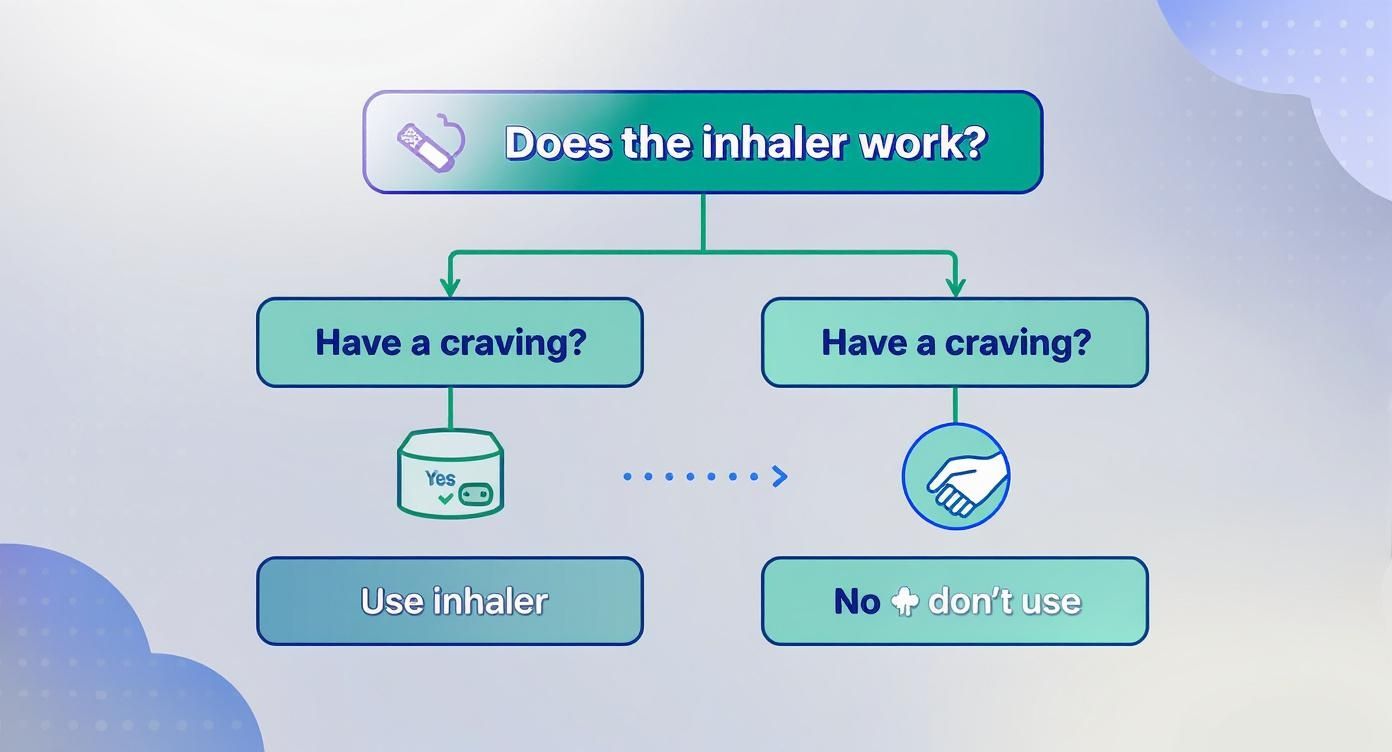
As the flowchart shows, the inhaler is designed to be your go-to tool right when you need it most, putting you firmly back in control.
Making the Right Choice
At the end of the day, the best stop smoking aid is the one you’ll actually stick with. If the physical act of holding and puffing is your biggest hurdle, a quit smoking inhaler or a vape will likely be your most powerful ally. If you'd rather not think about it at all, a patch could be your perfect fit.
Take a moment to think about your daily routines and triggers. Do cravings ambush you with sudden intensity, or are they more of a constant, low-level hum? Answering that question will point you straight to the product that fits your quitting style.
By understanding how each aid works, you can pick the one that slots into your life and gives you the very best shot at success on your journey to becoming smoke-free for good.
A Practical Guide to Using Your Inhaler
Knowing how your quit smoking inhaler works is one thing, but using it properly when a craving hits is another challenge entirely. Getting the technique right is the key to making your quitting journey as smooth as possible, and it’s a world away from how you’d smoke a cigarette.
The biggest mistake people make is inhaling too deeply, as if they were taking a drag. This often leads to coughing or a scratchy throat because the nicotine isn’t meant for your lungs—it’s absorbed through the lining of your mouth and throat.
Master the Puff and Swirl Technique
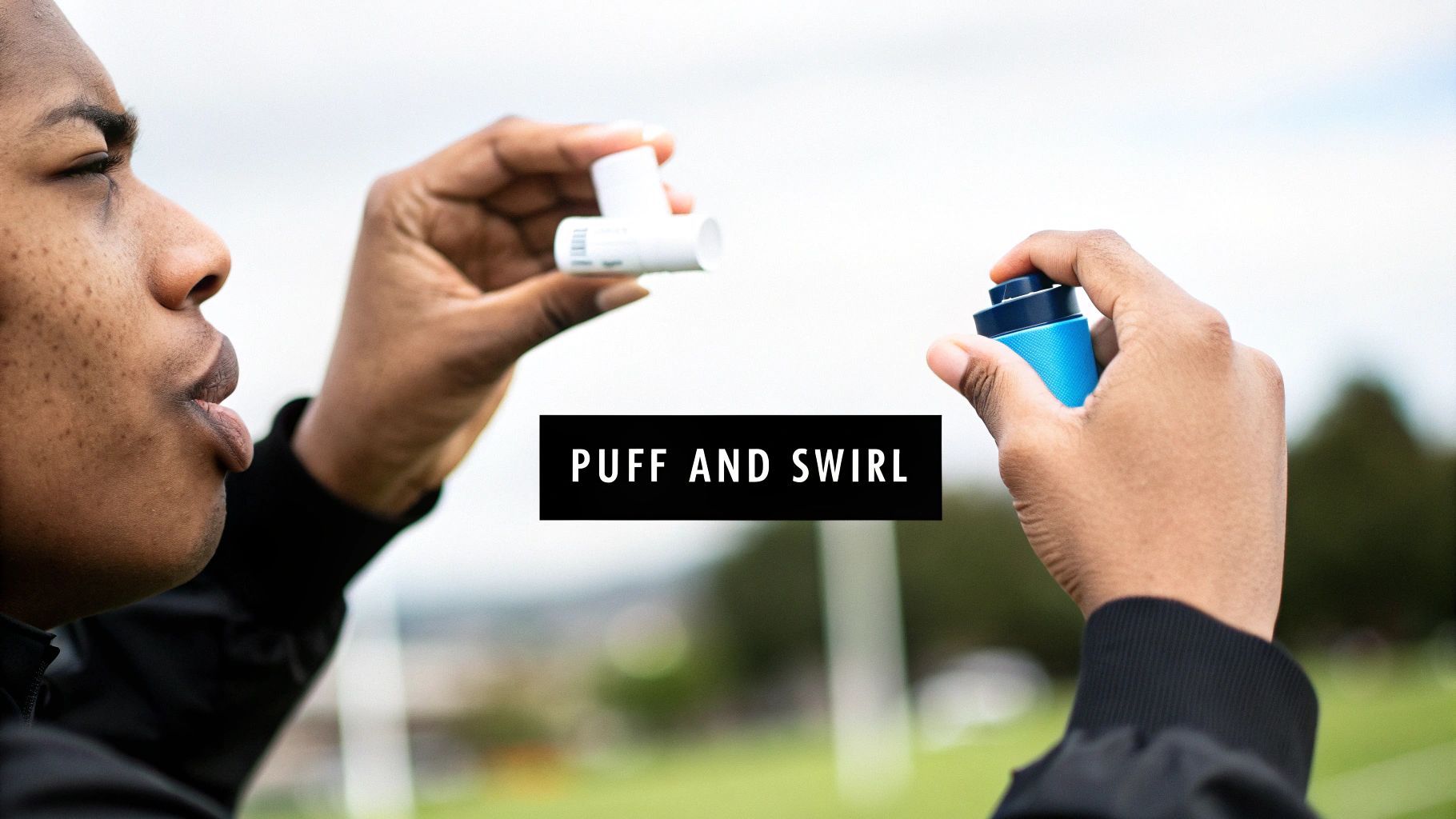
To get the most out of every puff, you need to learn the "puff and swirl" method. It’s a simple trick that ensures you get the nicotine you need without the harshness, making the whole experience far more effective and comfortable.
Here’s how to get it right:
- Take Short, Shallow Puffs: Instead of a deep inhale, take small, gentle puffs into your mouth. Think of it like sipping a drink through a straw.
- Swirl the Vapour: Keep the vapour in your mouth for a moment and gently swirl it around before you exhale. This gives the nicotine time to be properly absorbed.
- Use It Like a Smoker Would: One cartridge is designed to last about 20 minutes of frequent puffing. Use it little and often during that time to keep your cravings under control.
Adopting this technique is a game-changer. Research has shown that when used correctly, NRTs like the quit smoking inhaler can almost double your chances of quitting for good compared to willpower alone. The right method really does make all the difference.
Finding Your Rhythm and Tapering Off
In the early days, your only goal is to keep those withdrawal symptoms in check. Most people find they need between 6 and 12 nicotine cartridges per day for the first few weeks. Listen to your body—the moment you feel a craving starting, use your inhaler to stop it from getting stronger. Consistency is your best friend here.
After about eight weeks of steady use, you can start thinking about gradually reducing your intake. This tapering-off phase is the final step toward becoming completely nicotine-free.
Here’s a simple way to approach it:
- Weeks 9-10: Cut your daily cartridge use by about a third. So, if you were on nine a day, you’ll aim for six.
- Weeks 11-12: It’s time to reduce again by another third. The goal is to get down to just one or two cartridges each day.
- Beyond Week 12: Once you’re comfortable on that low dose, you can stop using the inhaler completely.
Just remember, this is your journey, so don't rush it. If you need a bit more time, take it. For a personalised plan and an even bigger boost to your chances of success, consider combining your inhaler with support from a service like the NHS Stop Smoking Service.
Navigating Potential Side Effects with Confidence
Starting a new quitting method always comes with a few questions, and a quit smoking inhaler is no different. But here’s the good news: most of the sensations you might feel are mild, temporary, and actually a sign that your body is adjusting. Knowing what to expect makes it so much easier to handle these little bumps and keep your eyes on the prize.
One of the most common things people notice is a peppery feeling or a bit of irritation in their mouth or throat when they first start. This is perfectly normal and usually fades within the first week as your body gets used to the nicotine vapour. In the same way, some people might get a mild cough or a headache.
Think of these as small hurdles on your path, not roadblocks. Your body is making a huge, positive change by moving away from tobacco, and a little adjustment period is all part of that process.
Managing Common Experiences
The best part is, you're in complete control. There are simple, practical things you can do to make your experience as smooth as possible. If you notice any of that initial irritation, a few small tweaks to how you use the inhaler can make a world of difference.
Here are a few tips to help you feel more comfortable:
- Sip Water: A simple sip of water before and after you use the inhaler can really help to soothe your throat.
- Adjust Your Puffing Style: Remember the "puff and swirl" technique. If you find yourself coughing, you're probably inhaling too deeply. Just focus on short, shallow puffs instead.
- Take It Slow: In the beginning, you might not even need to puff for the full 20 minutes a cartridge can last. Just use it enough to keep those cravings quiet, and you can gradually build up from there.
Understanding your body's reaction is a key part of the whole quitting journey. To get a better idea of what to expect week by week, check out our detailed guide on the smoking cessation withdrawal timeline.
When to Seek Advice
While most side effects are nothing to worry about, it’s always smart to listen to your body. Quitting smoking can sometimes throw your sleep patterns out of whack, leaving you feeling restless. For anyone finding it hard to get a good night's sleep, exploring some practical strategies for better sleep can be a massive help.
Your local pharmacist or GP is your best friend on this journey. If any side effects seem to stick around or you're concerned about anything at all, don't hesitate to have a quick chat with them. They can offer reassurance and make sure your quit plan is working perfectly for you.
By being prepared and knowing how to respond, you can sail through any temporary discomfort with total confidence. This proactive approach keeps you feeling supported and in control, letting you focus on all the incredible benefits of your smoke-free future.
Where Do We Go from Here? The Future of Smoking Cessation
The world of quitting smoking is always moving forward, driven by a deeper understanding of what makes it so damn hard. The future isn't just about finding clever new ways to deliver nicotine; it’s about creating smarter, more supportive tools that understand the entire ritual of smoking – from the physical habit to that feeling of satisfaction.
The classic quit smoking inhaler is a perfect example of this idea in practice, but the next wave of innovation is set to take things even further.
Imagine the next generation of devices. Researchers and developers are working on ways to better mimic the warmth and the 'throat-hit' of a real cigarette, but without any of the harm. This focus on sensory feedback could be a game-changer for people who find that current aids just don't quite scratch that itch.
A Deeper Commitment to Public Health
These advancements aren't just fancy new gadgets; they represent a major shift in public health strategy right here in the UK. The goal is simple: make quitting more achievable for everyone by offering a wider range of effective and appealing options. This commitment is clear when you look at the clinical developments happening right now with inhaler technology.
New-generation nicotine inhalers are currently in trials, being tested to see how efficiently they deliver nicotine and how well people tolerate them. These efforts are part of a much bigger plan to support the millions of smokers in the UK, aiming to bring down the staggering number of approximately 80,000 deaths caused by smoking each year.
This is a multi-front approach, combining tools like inhalers and e-cigarettes, and it highlights a national dedication to harm reduction. You can find out more about these clinical trials for new nicotine inhalers on respiratory-therapy.com.
The ultimate vision is a smoke-free future where quitting feels less like a brutal battle of willpower and more like a supported, manageable transition. By refining the tools we have, we empower more people to take back control of their health.
This forward-thinking approach means that as our understanding of addiction deepens, so will the sophistication and effectiveness of the aids designed to fight it. The future is about smarter technology, better support, and ultimately, more lives saved.
Your Questions Answered
Deciding to try a new quitting method always comes with a few questions. That's completely normal. Getting clear, practical answers is the best way to build your confidence and make sure you're starting this journey on the right foot. Let’s dive into some of the most common queries we hear about quit smoking inhalers.
How Long Should I Use It For?
Most people find that a 12-week plan works well. A typical approach is to use the inhaler consistently for the first eight weeks to really get those cravings under control. Then, you can spend the next four weeks gradually tapering down your use.
Of course, everyone's path to quitting is different. This timeline is more of a guide than a strict rule, so feel free to adjust it to what feels right for you. It's always a good idea to check the product's instructions or have a chat with your GP to map out a tapering plan that's tailored to your needs.
Can I Use an Inhaler with Other Products?
Yes, you absolutely can, and this "combination therapy" can be an incredibly effective strategy. Many people find success by pairing a fast-acting product, like a quit smoking inhaler for sudden, intense urges, with a slow-release product like a patch for all-day background support.
Think of it as tackling withdrawal symptoms from two different angles. Before you start mixing products, though, it’s really important to consult a healthcare professional. They can make sure it's a safe and effective game plan for you.
As you step into a smoke-free life, one of the first things you'll notice is the lingering smell of smoke on everything. For some brilliant advice on tackling persistent odors like smoke from your home and clothes, this guide has some genuinely helpful tips.
Is an Inhaler the Same as a Vape?
That’s a great question, and the answer is no—they are fundamentally different things. A quit smoking inhaler is a licensed medical device, specifically designed to deliver a fine nicotine vapour that gets absorbed through the lining of your mouth and throat, not your lungs.
A vape or e-cigarette, on the other hand, is a consumer product that heats a liquid to create an aerosol, which is then inhaled deep into the lungs. The key takeaway is that the inhaler is a regulated, therapeutic aid designed purely to help you stop smoking.
Ready to embrace a smoke-free life with a natural, nicotine-free alternative? Discover how AuraFlow can help you replace the habit with a calming ritual. Find your perfect flavour and begin your journey today. Explore the AuraFlow Starter Kit