
When a craving hits, it can feel all-consuming. That intense, desperate urge feels like it will last forever, but here's the secret weapon you need to remember: it won't.
Most of those powerful cravings are surprisingly brief. They typically build, hit a peak, and then start to fade all within just 3-5 minutes.
Think of it like a wave. It swells up, crests, and then naturally breaks and recedes. If you can just stay afloat for those few minutes without giving in, the worst of it will pass on its own. Understanding this is your first step to taking back control.
Understanding Your Craving Timeline
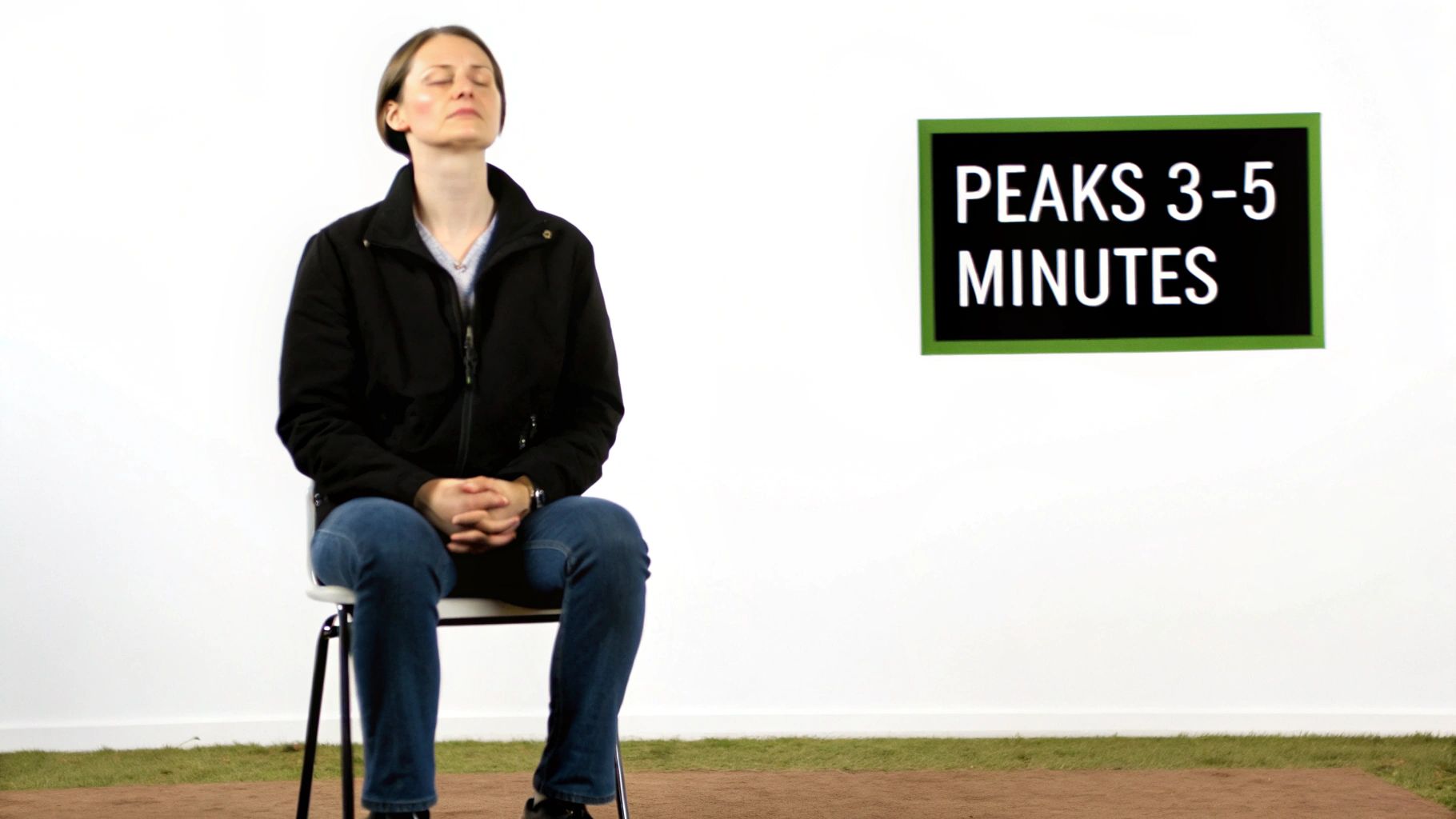
While that intense peak is short-lived, the total lifespan and frequency of cravings can vary. Knowing what to expect—whether it’s a sudden urge for a biscuit or the lingering pull of nicotine—helps you build a solid mental game plan.
Feeling a craving isn't a sign of weakness. It's a completely normal biological and psychological response. Your brain has simply learned to connect certain triggers—a time of day, a specific feeling, or a place—with the rewarding hit of a substance or behaviour. When you encounter that trigger, your brain sends out a powerful signal demanding a repeat performance.
To get a clearer picture, let's look at how long different types of cravings generally last.
Typical Craving Duration At A Glance
| Type Of Craving | Typical Peak Intensity | Average Duration |
|---|---|---|
| Nicotine | Intense, sharp | 3-5 minutes |
| Sugar/Junk Food | Strong, insistent | 5-10 minutes |
| Caffeine | Moderate, nagging | 10-20 minutes |
| Alcohol | Varies, can be prolonged | 15-30 minutes or longer |
| Cue-Triggered | Sharp, sudden | 3-5 minutes |
This table is a great reminder that even the most stubborn cravings are temporary. The goal isn't to never feel them, but to learn how to ride them out until they pass.
What Influences Craving Duration
Several things can change how long and how intensely you feel a craving. The substance itself is a big one; the physical withdrawal from nicotine creates a very different pattern of urges compared to caffeine, for instance.
But some cravings have their own unique personalities.
A fascinating UK-based study found that cravings for chocolate were not only stronger but also took much longer to disappear than urges for other sweet or savoury foods. In some cases, they lingered for hours. This suggests that specific food cravings can be driven by complex psychological factors that go far beyond simple hunger.
Preparing for the Journey
Knowing the timeline is everything because it lets you arm yourself with the right tools. For those short, sharp bursts, an immediate distraction or simply changing rooms can work wonders.
You can also explore different mindful breathing techniques to ground yourself and calm your nervous system the moment an urge strikes.
The key takeaway is this: Cravings are temporary. By understanding their patterns and having a plan, you can successfully navigate them without giving in, building your resilience with every wave you overcome. The goal isn't to eliminate cravings overnight—it's to master your response to them.
The Science Behind Why Cravings Happen
Ever wondered why a craving feels like it takes over your entire mind, making it almost impossible to resist? It’s not a lack of willpower, I promise you. It’s all down to some pretty powerful brain chemistry. Getting to grips with the science behind these urges is the first real step towards taking their power away.
At the very core of every single craving is a simple, potent brain chemical called dopamine. You’ve probably heard it called the “feel-good” molecule. Your brain releases it whenever you do something pleasurable, like eating your favourite dessert, winning a game, or using nicotine. This dopamine hit creates a feeling of reward, hardwiring that behaviour into your brain.
The Dopamine Reward Pathway
Picture your brain as a sprawling landscape with countless possible paths. When you do something that triggers a dopamine release, you’re essentially forging a new trail in that landscape. Every time you repeat the action, you walk that same path again, making it wider, clearer, and much, much easier to follow the next time around.
This process is known as the reward pathway. Over time, this well-trodden route becomes the default, creating an almost instantaneous link between a specific trigger and the rewarding behaviour. It’s why just seeing a coffee shop can instantly spark a craving for a cigarette if you always paired the two.
Your brain isn’t trying to sabotage you; it’s simply following a highly efficient script it has learned. It remembers the pleasure from past experiences and sends a strong signal—a craving—to get you to repeat it.
Understanding this mechanism is a game-changer. In fact, learning about the science of habit formation can give you incredible insight into why these neurological loops feel so unbreakable, and how you can start carving out new, healthier ones. Suddenly, cravings stop being some mysterious, unbeatable force and become a predictable biological response you can work with.
Psychological and Environmental Triggers
While dopamine lays the neurological groundwork, it’s the psychological and environmental triggers in your everyday life that actually flip the switch on a craving. These are the cues your brain has learned to associate with that feel-good reward.
Common triggers often fall into a few key camps:
- Emotional states: Feeling stressed, anxious, bored, or even really happy can send your brain searching for that familiar comfort.
- Environmental cues: This could be specific places (like your favourite pub), people (friends you used to smoke with), or certain times of day (straight after a meal).
- Sensory experiences: The smell of fresh coffee, the sight of someone else vaping, or even the sound of a fizzy drink can be enough to activate that reward pathway.
For many, these patterns can become all-consuming. Here in the UK, for instance, food cravings are closely tied to binging, with one in two people seeking weight control help reporting this behaviour. It just goes to show how cravings can fuel repeated episodes that demand to be satisfied rather than fading away naturally. This is made even worse by rising stress from food insecurity, which has unfortunately impacted a growing number of households.
Mapping The Full Timeline Of A Craving
Cravings aren't a single, stubborn beast; they're more like a shape-shifter, changing their form and intensity over time. Getting to grips with this journey—from the first minutes to the lingering echoes months later—is the key to staying one step ahead. Think of it less like a single battle and more like a series of different stages, each with its own terrain and tactics.
In the beginning, the fight is intensely physical. When you first quit a substance like nicotine, your body is essentially recalibrating. The first few days and weeks are often marked by sharp, demanding, and frequent physical urges as your brain chemistry screams for something it has grown dependent on.
We map this out in more detail in our guide to the smoking cessation withdrawal timeline, which lays out what you can expect both physically and mentally.
This whole process usually follows a predictable pattern: a trigger sparks the urge, which pushes you towards an action and, eventually, a feeling of reward. This simple but powerful loop is what keeps us coming back.

Once you can see the cycle laid out like this, you start to realise how interrupting any part of it—especially the action—can break the chain and weaken its hold on you.
The Shift From Physical To Psychological Cravings
As your body starts to find its new normal over the first few weeks, the raw, physical demands begin to quieten down. That constant, nagging feeling of withdrawal starts to fade, and the cravings visit less often. But this is when a new challenger enters the ring: the psychological craving.
This is the sneaky kind, the one triggered by old habits and external cues. It’s so powerful because it’s tangled up in our memories, emotions, and daily routines.
- Environmental Triggers: Like walking past your old smoking spot on your lunch break.
- Emotional Triggers: That immediate urge for a cigarette after a stressful work call.
- Social Triggers: Seeing friends light up at the pub and feeling that familiar pull to join in.
These moments can spark a surprisingly intense craving, even months or years after the physical dependency has waved goodbye. It’s no longer your body demanding a fix; it’s your brain running an old programme it learned a long, long time ago.
Long Term Cravings And Habit Loops
In the long run, cravings mostly stick around as learned responses. Think of someone who quit smoking years ago but still gets a sudden pang when they smell cigarette smoke on a cold evening. That isn't physical withdrawal rearing its head—it’s a powerful memory association firing off in the brain.
These habit loops can be incredibly stubborn. The key is to recognise them for what they are: echoes of an old habit. By identifying your personal triggers and consciously choosing a new response, you can gradually rewrite those old scripts and build new, healthier pathways in your brain.
Factors That Make Your Cravings Stronger
Ever noticed how not all cravings are created equal? Some are just a quiet whisper in the back of your mind, but others show up like a full-blown tantrum, demanding your immediate attention. It turns out, several key factors dictate just how long a craving lasts and how intensely it hits.
Understanding what dials the volume up on these urges is the first step to turning it back down.
The Substance, The Habit, The Environment
Let’s be honest, the thing you’re quitting plays a huge role. The physiological grip of nicotine, for instance, often creates sharp, intensely physical urges, especially in those first few days. A sugar craving, while definitely powerful, tends to work on a different reward pathway in the brain, feeling more like a nagging background noise than an urgent alarm.
But it’s rarely just about the substance. Your daily life and surroundings are packed with triggers. If you always had a biscuit with your afternoon cuppa, that 3 PM urge isn't a random whim—it's a deeply ingrained habit loop. Your brain has built a powerful, automatic connection between the time, the activity, and the sweet reward.
These environmental cues are incredibly potent because they run on autopilot. They can be anything:
- Specific Places: The corner of the garden where you used to smoke.
- Social Moments: Seeing friends vape or drink at the pub.
- Times of Day: That craving that hits right after you finish dinner.
Your brain gets so good at spotting these cues that the craving can feel instantaneous, making it seem much stronger than it really is.
How You're Feeling Matters Most
Beyond the substance and your routine, your own internal state—both physical and emotional—is a massive piece of the puzzle. When you're tired, hungry, or dehydrated, your willpower is naturally at a low ebb, making you far more likely to give in. Your body is already stressed, so resisting a familiar comfort can feel like climbing a mountain.
Stress is the ultimate craving amplifier. When you're feeling anxious or overwhelmed, your brain desperately seeks the quickest, most familiar dopamine hit it knows. This is why a brutal day at work can unleash the most vicious urges, even years after the physical withdrawal has faded.
Recognising this link is a game-changer. It means that managing your stress, getting enough sleep, and staying nourished aren't just "nice-to-haves"—they are fundamental strategies for weakening your cravings.
A well-rested, calm mind has a much greater capacity to just pause, ride out the wave, and choose a different path. By looking after yourself, you begin to dismantle the very foundation that gives your cravings their power, making them shorter, weaker, and—best of all—far less frequent.
Practical Strategies To Manage Cravings
Knowing the science behind why cravings happen is one thing. Having a solid game plan for when one actually hits? That’s what gives you real control. The secret isn't to wrestle the craving into submission with willpower alone, but to be cleverer than it is.
Think of these strategies as your personal playbook, designed to interrupt that nagging craving cycle, loosen its grip, and carve out new, healthier pathways in your brain.
Cognitive and Mindfulness Techniques
So much of this battle is won or lost in your own mind. Instead of letting a craving hijack your thoughts and run the show, you can use a few smart techniques to observe it without getting swept away. One of the most powerful is called urge surfing.
Picture the craving as a wave in the ocean. You can’t stop it from coming, but you can learn to ride it out. Just acknowledge the feeling is there, notice how it builds, hits its peak, and then—like every wave—naturally starts to recede on its own.
Another fantastic mental tool is simple distraction. Cravings demand your full attention to survive. Starve them of that focus, and they often fizzle out surprisingly fast.
- Jolt Your Senses: Blast an upbeat song, sniff some strong essential oils like peppermint, or just splash some cold water on your face.
- Challenge Your Brain: Grab your phone and do a quick puzzle, count backwards from 100 by sevens, or try to name all the countries you can think of in a minute.
- Change Your Scenery: Sometimes, all it takes is getting up and walking into another room to break the mental loop.
Behavioural Shifts and Habit Replacement
Your daily routines and actions have a huge say in how often cravings pop up and how intense they feel. By making a few small, deliberate tweaks to your environment and habits, you can cleverly sidestep triggers and build a lifestyle that genuinely supports you.
A crucial piece of this puzzle is replacing the old habit with a new, better one. Rather than just fighting an urge, you’re giving your brain a different, more positive job to do. Learning how to swap bad and good habits is a core skill for making changes that actually stick.
The most effective approach isn't just about resistance; it's about replacement. You're not just creating a void where the old habit used to be—you're actively filling that space with something better.
For instance, if you always link your morning coffee with a cigarette, try switching to tea for a while or simply enjoy your coffee in a different part of the house. For those who really miss the physical hand-to-mouth ritual, using a mindful inhalation alternative like a nicotine-free device can satisfy that deep-seated action without the nasty chemicals, offering a brief, calming pause instead.
Effective Craving Management Techniques
Choosing the right tool for the job makes all the difference. Here’s a quick breakdown of different strategies and when they shine.
| Technique | Primary Focus | Best For |
|---|---|---|
| Urge Surfing | Mindfulness & Observation | Intense emotional cravings; learning to tolerate discomfort without acting on it. |
| Distraction | Cognitive Refocusing | Sudden, unexpected cravings when you need a quick pattern interrupt. |
| Habit Replacement | Behavioural Change | Predictable, routine-based cravings (e.g., after meals, with coffee). |
| Physical Activity | Endorphin Release & Stress Reduction | Cravings driven by stress, boredom, or low energy. |
| Social Support | Connection & Accountability | Feeling isolated or overwhelmed; needing encouragement from others who get it. |
Ultimately, having a mix of these techniques ready means you're prepared for whatever a craving throws at you.
Physical and Environmental Support
Don't underestimate your body and your surroundings—they are your greatest allies. When your body feels good, your mind is far better equipped to handle the mental test of a craving.
- Stay Hydrated: It’s surprisingly common to mistake thirst for a craving. Keep a water bottle nearby and take a few big sips when an urge appears.
- Nourish Your Body: When your blood sugar is stable, you avoid those energy dips that make you reach for a quick fix like nicotine or sugar.
- Get Moving: You don't need a full workout. Even a brisk 5-minute walk or a few simple stretches can release mood-boosting endorphins and serve as a powerful distraction.
For anyone whose cravings are linked to substance use, looking into structured support like group therapy for substance use disorders can be a game-changer. Having a community and expert-led strategies in your corner is one of the most powerful things you can do for long-term success.
When You Should Seek Professional Help
While the strategies we’ve covered are a fantastic toolkit for most people, it's so important to recognise when cravings might be a sign of something more serious. If your urges feel completely overwhelming, or if they’re tangled up in a larger struggle, reaching out for professional support is a sign of incredible strength, not weakness.
Knowing when to make that call is the first, most crucial step.
Red Flags To Watch For
It’s probably time to consider professional help if your cravings are consistently leading to behaviours that:
- Disrupt your daily life: Are they getting in the way of your work, your relationships, or your ability to simply get through the day?
- Cause severe distress: Do you feel a wave of extreme anxiety, depression, or hopelessness when an urge strikes?
- Feel impossible to control: Despite everything you try, do you feel utterly powerless against them?
- Lead to risky behaviour: Are you putting your health, safety, or finances on the line to satisfy a craving?
These aren't just minor setbacks; they could point to a deeper issue like an addiction or an eating disorder. These conditions often require more specialised care than self-help techniques alone can provide.
Acknowledging that you need support is the most powerful move you can make. It opens the door to proven medical and therapeutic strategies that can make all the difference in your long-term success and well-being.
Who To Talk To
Here in the UK, your first port of call is usually your GP. They can have a chat, assess your situation, and point you towards the right services.
Other brilliant professionals who can help include therapists, counsellors, and specialised addiction services. Excellent resources like the NHS website and the mental health charity Mind also offer confidential advice and clear, simple pathways to finding the support you need. You're not alone in this.
Your Cravings Questions, Answered
We’ve walked through the timeline and the science, but it's natural to still have a few questions buzzing around. Let's tackle some of the most common ones that come up on this journey.
Will Cravings Ever Go Away Completely?
This is the big one, isn't it? The short answer is yes... and no. The raw, intense physical cravings you feel during the first few weeks? Those will absolutely fade and disappear.
But the psychological side is a bit different. Think of those as echoes of an old habit. Long after the physical need is gone, a specific place, feeling, or time of day might whisper a reminder of the old routine. The goal isn’t to erase every single echo. It’s to get to a place where they're quiet, rare, and have absolutely no power over you. Over time, you’ll barely even notice them.
Why Do I Crave Junk Food Even When I’m Full?
It’s a classic case of your brain’s reward system pulling the strings. This kind of craving has almost nothing to do with actual hunger. It's usually sparked by an emotional trigger – maybe you’re stressed, bored, or just a bit down.
Your brain simply remembers that a sugary or fatty treat delivers a quick, easy hit of dopamine, that feel-good chemical. So, even with a full stomach, your brain sends out a signal for that comforting reward. It’s a habit, not hunger.
Do Cravings Get Worse Before They Get Better?
For most people, yes, and it’s a totally normal part of the process, especially when quitting something like nicotine. That initial withdrawal period can feel like a real battle. As your body adjusts and recalibrates, the physical cravings can feel incredibly strong and frequent.
But here’s the crucial thing to remember: this peak is temporary. After those first few tough days or weeks, the physical intensity drops off dramatically. From there, the journey is much more about learning to navigate your psychological triggers.
Is It Better To Give In Or Just Ride It Out?
Riding it out is almost always the best move for your long-term freedom. Every single time you sit with a craving and let it pass without giving in, you're doing something incredible – you're actively weakening the connection in your brain that created it.
Giving in does the opposite. It’s like pouring fuel on the fire. It reinforces that craving loop, making it stronger and even more likely to pop up next time. Each urge you overcome is a win that makes the next one easier to face.
Ready to replace that craving with a moment of calm? The AuraFlow starter kit is a nicotine-free, mindful alternative designed to help you break free from old habits with natural, soothing flavours. Discover a gentler way to quit at aura-flow.co.uk.