
Quitting smoking naturally isn't just about fighting off cravings. It’s about building a whole new set of healthier habits for both your mind and body.
This means getting your head in the right space, finding genuinely satisfying replacements for the smoking ritual, and using natural techniques to handle withdrawal symptoms without relying solely on medication. Modern, nicotine-free tools can also be a massive help here, tackling the physical habit without hooking you on something new.
Embracing a Natural Path to a Smoke-Free Life
Choosing to stop smoking the natural way is a powerful decision to take back control of your well-being. It’s an approach that centres on understanding your own triggers and behaviours, rather than just trying to suppress them. This method empowers you to work with your body as it heals, focusing on your overall wellness instead of just battling symptoms.
This shift in mindset has really been gaining ground. In the UK, the move towards non-medical ways to quit has grown right alongside a historic drop in smoking rates. Think about it: while around 45% of British adults smoked back in 1974, that number fell to just 11.9% by 2023. With most current smokers wanting to quit, the demand for natural, wellness-focused methods has never been clearer.
Why Choose a Natural Approach?
A natural quit plan is about so much more than just ditching nicotine. It's about fundamentally changing your relationship with stress, your daily habits, and the way you look after yourself. It’s a journey that builds a kind of resilience and self-awareness that will stick with you long after the last craving has faded.
The key pieces of a successful natural plan usually involve:
- Mindset Preparation: Getting clear on your personal "why"—the real reason you're doing this—to keep you motivated.
- Behavioural Replacement: Consciously swapping the smoking ritual for a healthier one.
- Stress Management: Learning new, better ways to cope with life's daily pressures.
- Support Systems: Creating an encouraging environment with friends, family, and the right tools.
The core idea is simple: replace a destructive habit with a constructive one. So instead of reaching for a cigarette when you're stressed, you might reach for a calming breathing exercise or take a mindful moment with a nicotine-free alternative.
Building Your Personalised Toolkit
Your journey is unique to you, so your toolkit should be too. It’s not about finding one magic bullet, but about combining several strategies that feel right for you. For so many people, it’s the physical hand-to-mouth action that’s the hardest habit to break. This is where modern tools can fit perfectly into a natural plan.
A device like AuraFlow, which is completely free of nicotine and vapour, can satisfy that ritualistic need, letting you focus on the psychological side of quitting. A huge part of this is learning how to reduce stress naturally, since stress is one of the biggest triggers for smokers. By combining mindful replacements with solid stress management techniques, you create a really robust support system. You can explore our guide on embracing a smoke-free lifestyle to learn more about starting your journey.
Right, before you even think about putting out that last cigarette, there’s some groundwork to do. Kicking the habit for good isn't about gritting your teeth and hoping for the best; it’s about being smart and setting yourself up for success from day one. This whole prep phase is about creating a new reality where smoking just doesn't fit.
First things first, you need to set a firm quit date. This isn't just circling a day on the calendar; it's a promise to yourself. I always suggest picking a date in the next two to four weeks—that's the sweet spot. It gives you enough time to get ready without letting the motivation fade. A Monday can be a great choice, giving you that 'fresh start' feeling for the week ahead.
Once that date is locked in, it’s time to tell your people. Let your family, your closest mates, and any colleagues you trust know what you're doing. And be specific. If you need them to be patient with you, or to suggest a walk instead of a pub garden, tell them. It makes it so much easier for them to give you the support you actually need.
Create a Smoke-Free Sanctuary
Your surroundings have a massive impact on your ability to quit. You've got to perform a full-scale 'smoking detox' of your home, car, and any other personal spaces. This isn't just a tidy-up; it's a powerful, symbolic act that marks your new beginning.
Go on a mission and get rid of every single piece of smoking gear. I mean everything:
- Ashtrays: Check the car, the back garden, that one you forgot about in the shed. All of them.
- Lighters: Empty your pockets, that messy drawer in the kitchen, and the glove compartment.
- Cigarette packets: Any half-smoked, full, or even empty packs need to go. No souvenirs.
Once the clutter is gone, it's time for a proper deep clean. That stale smoke smell clings to everything, and it's a huge trigger. Wash all your clothes, curtains, and bedding. Get the carpets and furniture shampooed, and give the inside of your car a thorough wipe-down. Using a cleaner with a fresh, sharp scent like lemon or eucalyptus really helps to cut through the old smell and reinforces that clean slate feeling.
Define Your Personal 'Why'
Your motivation is the fuel that will get you through the tough moments. And trust me, generic reasons like "it's bad for me" just don't cut it when a powerful craving hits. You need to get personal and connect with the real, deep-down reasons you want this.
Grab a notebook and spend some real time writing down your 'why'. Don't just make a list; really explore each point. Instead of just "save money," work out exactly how much you're spending. Then, write down what you'll do with that extra £1,500 a year. A holiday? A new bike? Make it real.
Your 'why' is your anchor. When your resolve starts to wobble, reading that list is what pulls you back. It reminds you what you're fighting for, something far more important than the temporary relief of a cigarette.
Identify Your Triggers and Plan Replacements
So much of smoking is just pure, unthinking habit. It’s tied to specific routines and feelings we call triggers. Spotting them is half the battle. In the days leading up to your quit date, become a detective. Pay close attention to when and why you're reaching for a cigarette.
You'll probably notice a few common culprits:
- Morning Coffee: That classic pairing that just feels 'right'.
- Driving: The go-to boredom buster on a commute.
- After a Meal: The signal to your brain that it's time to 'relax' with a smoke.
- Feeling Stressed or Anxious: Using nicotine as a crutch to cope.
Once you’ve got your list, it's time to make a plan. For every single trigger, decide on a specific, healthy replacement action. If coffee is a trigger, maybe switch to tea for the first week or simply have your coffee in a different room to break the association. If stress is your cue, commit to a five-minute breathing exercise instead. A bit of mindful practice like this can be a game-changer; you can find out more in our guide on how to practice mindful meditation.
Planning ahead like this means that when a craving ambushes you, you're not caught off guard. You have a clear, immediate action to take, giving you back control.
Replacing the Smoking Ritual Mindfully
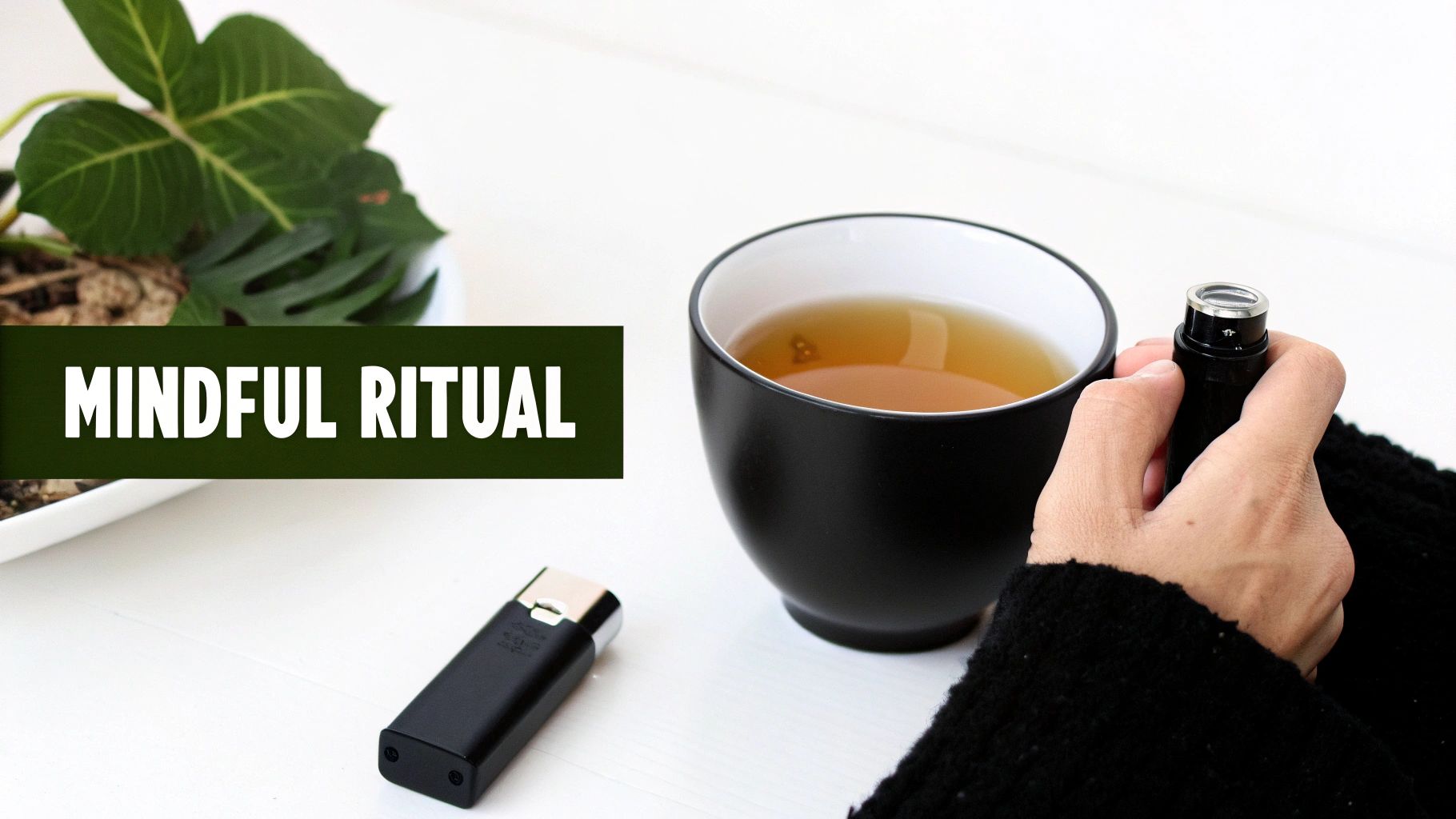
Successfully quitting smoking goes far beyond just getting through the nicotine withdrawal. It's about consciously unravelling a deeply ingrained physical habit—the ritual itself.
That hand-to-mouth motion, the pause in your day, the deep inhale; these actions have become second nature after years of repetition. A huge part of any natural quit plan is replacing this ritual with something that feels just as satisfying, but is far, far healthier.
This is about mindful replacement, not just distraction. It’s about finding new sensory experiences that can fill the space smoking used to occupy. Instead of fighting the urge for that physical action, you give your hands and mouth a new, constructive job to do.
Finding Your Sensory Swaps
Your brain is wired to respond to sensory input, and smoking provides a powerful mix of touch, taste, and action. To break that deep-seated association, you need to introduce new sensory alternatives that can redirect those familiar urges. The goal is to build a toolkit of options you can turn to whenever a trigger strikes.
Think about the different moments you used to smoke. What could fit there instead?
- For the hand-to-mouth action: Try chewing on a cinnamon stick or a crunchy carrot. Some people find that using a toothpick or even a piece of liquorice root gives their hands something to do. You might be interested in exploring the history and benefits of using chewable liquorice wood sticks as a smoking alternative.
- For the oral sensation: Sip on flavourful herbal teas like peppermint or chamomile. The warmth and taste can be incredibly soothing. Keeping a water bottle with a straw handy also provides a constant, healthy oral fixation.
- For the deep breath: Practice simple, calming breathing exercises. A slow, four-second inhale through the nose, followed by a six-second exhale through the mouth, mimics the rhythm of smoking but actively calms your nervous system instead of stimulating it.
The following table offers some practical ideas to help you start building new, healthier routines around your common smoking triggers.
Natural Ritual Replacements for Common Smoking Triggers
| Common Smoking Trigger | Healthy Natural Replacement | Mindful Alternative (e.g., using AuraFlow) |
|---|---|---|
| Morning Coffee | Sip your coffee slowly and mindfully, focusing on the aroma. Follow it with a large glass of cold water or a peppermint tea. | Take five slow, deliberate breaths with your AuraFlow while your coffee cools. Feel the air, notice the calm. |
| Work Break | Go for a brisk 5-minute walk outside. Chew on a crunchy apple or a handful of sunflower seeds. | Step outside with your AuraFlow, focusing on the fresh air and the satisfying hand-to-mouth action. |
| After a Meal | Immediately get up and brush your teeth with a strong minty toothpaste. The fresh flavour helps reset your palate. | Take a moment to sit with your AuraFlow, using the gentle breathing to aid digestion and create a new post-meal ritual. |
| Feeling Stressed | Squeeze a stress ball, do a few quick stretches at your desk, or chew on a piece of ginger root. | Use your AuraFlow to practice box breathing: inhale for 4, hold for 4, exhale for 4, hold for 4. Repeat until you feel centred. |
| Driving | Keep a bag of carrot sticks or a water bottle with a sports cap in your car. Put on a podcast or your favourite music. | Hold your AuraFlow and take slow, calming breaths at red lights, replacing the urge to smoke with a moment of mindfulness. |
These are just starting points. The key is to find what genuinely works for you and feels like a reward, not a punishment.
Bridging the Gap with a Nicotine-Free Inhaler
For many of us, the biggest hurdle is replacing that specific, familiar action of raising something to our lips and inhaling. This is where a nicotine-free tool like AuraFlow becomes an invaluable part of your journey. It directly addresses the physical habit without introducing any harmful substances.
An inhaler like this provides the familiar hand-to-mouth motion and a pleasant, flavoured puff, but contains zero nicotine, vapour, or harmful chemicals. It’s a clean, simple substitute that satisfies the physical muscle memory of smoking. This lets you break your nicotine dependency while still having a reliable tool to manage those ritualistic cravings.
Think about the work break. Instead of joining colleagues for a cigarette, you can step outside with your AuraFlow. You still get the break, the fresh air, and the physical action, but you're reinforcing your commitment to a smoke-free life. It fits right into your routine, making the whole transition feel less jarring and much more manageable.
Bring in Some Natural Allies
Leaning on natural aids can make a world of difference when you quit, offering gentle support that works with your body as it heals. Think of these as your personal toolkit—ways to soothe your nervous system, take the edge off cravings, and help flush out all the junk left behind by smoking.
This isn't about finding a magic bullet. It’s about creating a more comfortable, balanced state while you navigate withdrawal. A huge part of quitting naturally is learning how to handle the anxiety and irritability that can spike in those first few weeks. Thankfully, nature has some brilliant tools for exactly that.
Herbal Helpers for a Calmer Mind
For centuries, certain herbs have been used to promote relaxation and ease stress, which makes them perfect companions for anyone ditching cigarettes. They can help soften the sharp edges of withdrawal symptoms like restlessness and anxiety, all without creating new dependencies.
Why not try weaving these into your new routine?
- Chamomile Tea: It’s a classic for a reason. A warm, comforting mug of chamomile can have a genuinely calming effect on your mind and body. It’s the perfect swap for that after-dinner cigarette.
- Valerian Root: Known for its sedative qualities, valerian can be a real lifesaver if you're wrestling with poor sleep or just feeling particularly on edge. You can usually find it as a tea or a supplement.
- Passionflower: Another gentle giant for easing anxiety. It works by boosting levels of a chemical in your brain that helps you feel more relaxed and centred.
Just be sure to have a quick chat with your GP or a pharmacist before starting any new herbal supplement, especially if you have other health conditions or are taking medication.
The Power of Moving and Hydrating
One of the most effective natural aids you have is right at your feet: simple, straightforward physical activity. You don’t need to sign up for a marathon. A brisk 15-minute walk can be enough to release mood-lifting endorphins and absolutely crush a craving.
When you feel that familiar urge creep in, get up and move. This does two brilliant things at once: it provides an immediate, healthy distraction, and it literally changes your body's chemistry, actively lowering stress levels. Over time, your brain will even start to connect the urge to smoke with the rewarding feeling of movement, helping you to rewrite those old, stubborn habits.
Just as important is staying hydrated. Guzzling plenty of water is essential for helping your body flush out nicotine and other toxins more efficiently. It also brilliantly tackles the 'oral fixation' part of the habit. Keeping a water bottle on hand gives you something to reach for and sip on, satisfying that hand-to-mouth reflex.
Think of it this way: every glass of water is an act of cleansing. You're not just hydrating; you're actively helping your body heal and reset, washing away the physical remnants of the smoking habit.
Make Smart Food Swaps
Believe it or not, what you eat can have a surprising impact on your desire to smoke. Some foods can actually make cigarettes taste less appealing, giving you an extra line of defence when a craving hits. Research has shown that certain foods can make cigarettes taste pretty foul.
- Load Up on Fruit and Veg: Many people who've quit find that after eating fresh produce, the taste of a cigarette becomes bitter and unpleasant.
- Watch Out for Triggers: Pay attention to the foods and drinks you strongly link with smoking—for many, that’s coffee, alcohol, or red meat. You don't have to give them up forever, but dialling them back in the early days can help break some of those powerful, ingrained associations.
Explore Other Calming Practices
Beyond herbs and diet, other natural practices can give your quit journey a major boost. These methods are all about strengthening the mind-body connection, which is invaluable for building the calm and self-awareness you need right now.
Acupuncture, for example, is a traditional practice that some people find incredibly helpful for dialling down cravings and easing withdrawal symptoms. By stimulating specific points on the body, it can help to regulate your nervous system.
Similarly, practices like mindfulness and meditation teach you a powerful skill: how to observe your cravings without needing to act on them. This gives you a profound sense of control, making the path to quitting naturally feel so much more achievable.
Managing Cravings and Preventing Relapse
Let’s be honest: even with the best plan in the world, cravings are going to happen. They’re an unavoidable part of the quitting journey. They can feel intense, overwhelming, and like they’ll never end, but the most important thing to remember is that they are temporary.
Having a solid, pre-planned strategy is your best defence. It lets you move through these tough moments with confidence instead of feeling like the craving is in control.
Most cravings actually peak within three to five minutes. That’s it. So, having an immediate action plan makes all the difference. It helps you ride out that wave until it passes—and it always does.
Master the 4 Ds Technique
This is where a simple but incredibly powerful technique called the '4 Ds' comes into play. Think of it as your in-the-moment toolkit, your immediate response drill for when a craving hits. You don't need to panic or overthink; you just need to act.
By focusing on one of these simple steps, you instantly shift your attention away from the urge and give your brain something else to do.
Let's break down each 'D' with some real-world examples:
-
Delay: This is all about telling the craving, "Not right now." Instead of giving in, just promise yourself you'll wait 10 minutes. Set a timer on your phone and get busy with one of the other Ds. You’d be amazed how often the worst of the urge has completely fizzled out by the time that alarm goes off.
-
Distract: Your brain can only focus on so much at once, so use that to your advantage. Actively switch your focus to something totally different. Call a friend who makes you laugh, put on your favourite upbeat song and dance around the kitchen, or lose yourself in a quick puzzle on your phone. The goal is to get so absorbed in the new activity that you genuinely forget about the craving.
-
Deep Breathe: This one is a game-changer because it directly counters the stress and anxiety that so often trigger a craving in the first place. Stop what you’re doing and take five slow, deep breaths. Inhale through your nose for a count of four, hold it for four, and then exhale slowly through your mouth for a count of six. It mimics the calming rhythm of smoking but actually soothes your nervous system.
-
Drink Water: Such a simple act, but surprisingly effective. Slowly sipping a glass of cold water satisfies that hand-to-mouth action and the need for some kind of oral sensation. It also helps flush out residual toxins and keeps you hydrated, which is a key part of feeling good as you quit.
The 4 Ds aren’t just about waiting out a craving; they're about actively rewriting your brain's response to it. Each time you use one of these techniques instead of reaching for a cigarette, you weaken that old, automatic neural pathway and build a new, healthier one.
Handling a Slip-Up with Self-Compassion
It’s so important to accept that a slip-up might happen. Having a cigarette doesn’t mean you’ve failed or that you have to throw away all your progress. Relapse isn't a sign of weakness; it’s a sign that your plan needs a little tweak. The only thing that truly matters is how you respond to it.
Instead of beating yourself up, try to reframe it as a learning opportunity. Get curious about what happened, without any judgement.
Ask yourself:
- What was the specific trigger? (Was it stress from work, a social gathering, or just boredom?)
- What time of day was it?
- Who was I with?
- Looking back, what could I have done differently?
Analysing the situation like this helps you identify a weak spot in your strategy so you can strengthen it for next time. Maybe you need to add a new distraction to your toolkit or be more direct with friends about not smoking around you. Every slip-up contains a valuable lesson that ultimately makes your quit plan stronger.
This process of managing urges is universal. As you continue on your wellness journey, you might also find it useful to learn how to stop sugar cravings naturally, as the underlying principles are often very similar.
Your Health Benefits Timeline After Quitting
Deciding to quit smoking naturally is a massive step, but the real motivation often kicks in when you see just how quickly your body starts to heal. The health rewards don’t wait for months or years; they start the very moment you put out your last cigarette.
This timeline isn't just about reducing long-term risks—it’s a map of immediate, tangible victories that reinforce your decision every single day. Understanding this rapid recovery process gives you a powerful dose of encouragement. Each milestone, from your blood pressure normalising to your senses sharpening, is proof that your body wants to repair itself. Let's look at what you can expect as you move forward into a healthier, smoke-free life.
The First Few Days
The changes begin almost instantly, offering immediate positive feedback for your efforts. Your body is incredibly resilient and wastes no time getting to work.
- 20 Minutes: Your heart rate and blood pressure start to drop back towards normal levels.
- 12 Hours: The carbon monoxide in your blood falls dramatically, allowing your blood to carry oxygen more efficiently. You're already breathing better.
- 48 Hours: Your nerve endings start to regrow, sharpening your senses of smell and taste. Food will begin to taste more vibrant and flavourful.
One Year and Beyond
As you stay smoke-free, the long-term benefits become truly profound. You're not just feeling better day-to-day; you're significantly slashing your risk of serious diseases and adding years back to your life. The cumulative effect of quitting is one of the most powerful things you can do for your health.
A landmark UK analysis powerfully illustrates this. Researchers found that widespread quitting had almost halved the number of expected lung cancers by 1990. The study showed that for men who quit at age 30, their cumulative risk of lung cancer by age 75 dropped to just 2%. This is a huge drop compared to the 10% risk for those who quit at 60, highlighting that stopping at any age provides massive benefits. You can explore the full findings on why quitting reduces cancer risk.
Every cigarette you don't smoke is an investment in your future. The benefits compound over time, leading to a longer, healthier, and more vibrant life.
As you navigate these early days, managing cravings will be your main challenge. The "4 D's" method below is a simple, actionable technique to get you through those temporary urges.
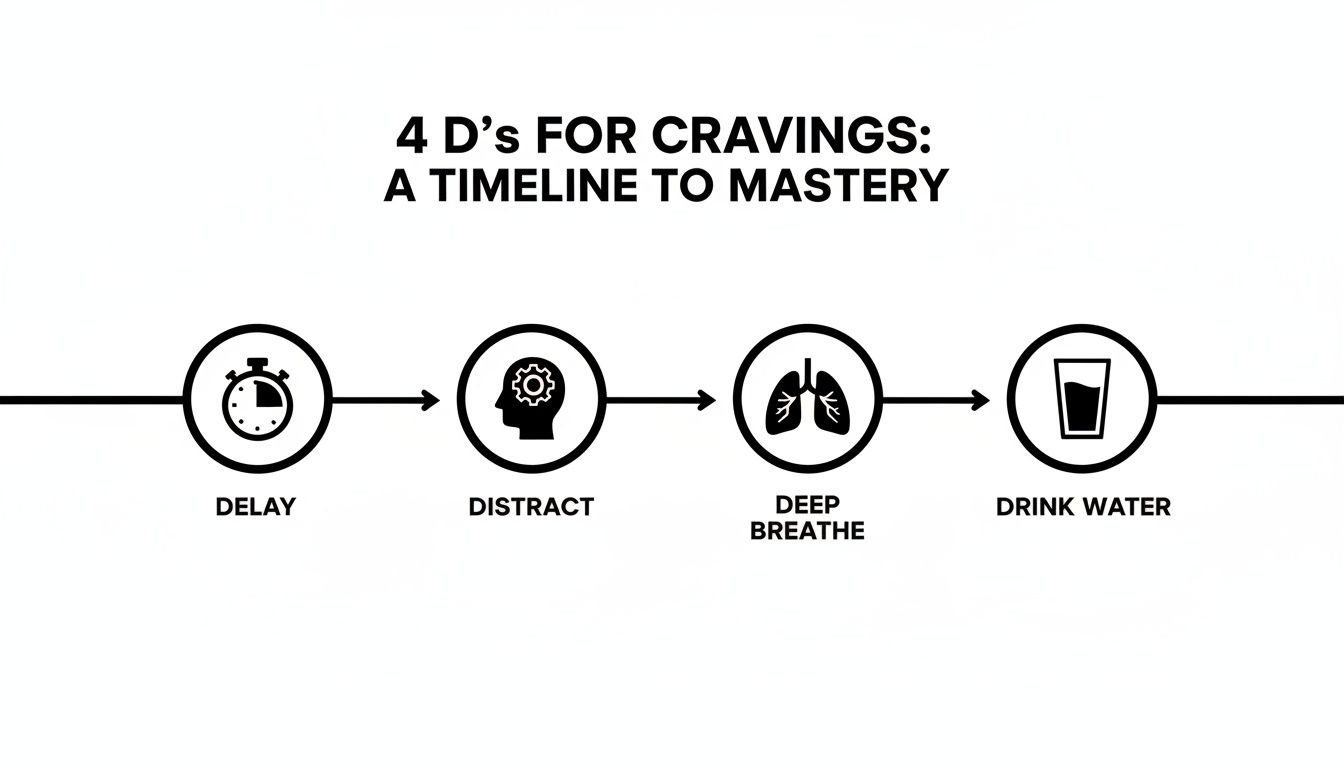
This visual guide shows that you have immediate, practical tools to stay in control. It's all about reinforcing your commitment, one craving at a time.
Your Questions Answered: Quitting Naturally
It’s completely normal to have questions when you’re about to make a big change like this. Having clear, honest answers can make the whole process feel less intimidating and give you the confidence to see it through. Let's tackle some of the most common things people ask when they decide to quit smoking for good, the natural way.
Knowing what’s coming is half the battle. Understanding the timeline for withdrawal or wondering if your smoking history makes a difference can help you feel prepared and in control.
How Long Does Nicotine Withdrawal Really Last?
Let's be honest, the first few days can be tough. The physical side of nicotine withdrawal usually hits its peak within the first 72 hours after your last cigarette. You might feel irritable, restless, or on edge. For most people, these intense physical cravings start to fade significantly over the next two to four weeks as your body gets back in balance.
But the real challenge, the one that can stick around much longer, is the psychological habit. It’s the muscle memory, the after-dinner ritual, the “what do I do with my hands?” feeling. This is exactly why a natural approach, focusing on new behaviours like deep breathing or using a nicotine-free tool like AuraFlow, is so crucial for lasting success. You're not just getting over a chemical; you're re-wiring a habit.
Should I Quit Cold Turkey or Taper Off?
There’s no magic formula here—the best way is the one that feels right for you.
Some people thrive on a clean break. They're the "all or nothing" type who find it easier to draw a line in the sand and commit 100% from day one. Others find the idea of going from a pack a day to zero completely overwhelming. For them, gradually cutting back feels more manageable, easing them into a smoke-free life without such a shock to the system.
At the end of the day, the most effective method is the one you can actually stick to. The key is having a solid plan in place for how you'll handle those cravings, regardless of which path you choose.
Can Natural Methods Actually Work for a Heavy Smoker?
Absolutely. In fact, they might be even more important. If you've been a heavy smoker for a long time, the physical withdrawal might feel more intense, but natural methods are designed to tackle the very thing that keeps heavy smokers hooked: deep-seated, ingrained habits.
Success comes from a well-rounded strategy. It’s about more than just willpower. You need to prepare your environment, find a powerful replacement for the hand-to-mouth ritual (this is where something like AuraFlow can be a game-changer), learn to manage stress with exercise or mindfulness, and lean hard on your support network. It’s a full lifestyle shift, and it works.
Ready to replace the smoking ritual with a calming, natural alternative? Discover how the AuraFlow starter kit can support your journey with satisfying, nicotine-free flavours. Explore your options at https://aura-flow.co.uk.