
Think of the difference between cooking wine and a fine vintage. Both come from grapes, but their purpose, purity, and the care taken in their creation are worlds apart. Peppermint oil food grade is much the same—it’s a guarantee of purity, processed to be completely safe for you to ingest.
This isn’t just a fancy label; it’s your assurance that the oil is free from contaminants and meets strict standards for quality and safety.
What Purity Really Means for Flavour and Safety
When you see "food grade" on a peppermint oil label, it tells you that the oil has been distilled and handled in a way that’s clean enough for human consumption. It’s your green light, confirming what you're adding to your food, drink, or even inhaling is pure and unadulterated.
This level of quality is what allows peppermint oil to shine in everything from rich, dark chocolates to refreshing herbal teas. And people are noticing. The demand for food-grade peppermint oil is soaring, with the market expected to hit USD 17.22 million by 2033, largely because it's a trusted, natural flavouring.
The Science Behind Safe Sipping (and Inhaling)
So, what makes an oil safe to consume? It all comes down to the process. True food-grade oil is made by carefully steam-distilling the Mentha piperita plant. Critically, this method avoids harsh chemical solvents that could leave behind nasty residues.
This gentle process is key. It preserves the potent menthol compounds responsible for that signature cooling kick—something we explore in our guide to menthol essential oils—while making sure any potential impurities are left behind.
Food grade isn’t just about being edible. It’s a promise of a clean, unadulterated sensory experience, ensuring you get that vibrant, crisp flavour you love without any hidden risks.
From the Kitchen to Mindful Moments
This guarantee of safety is precisely why peppermint oil food grade is so versatile. The same purity that makes it perfect for a batch of mint brownies also makes it ideal for a clean, refreshing inhalation experience.
For AuraFlow’s flavour cores, this quality is non-negotiable. It helps turn the simple act of breathing into a mindful ritual, giving you a pure sensory moment without compromise. Whether for culinary creativity or personal wellness, choosing the right grade makes all the difference.
Understanding the Different Grades of Peppermint Oil
Stepping into the world of essential oils can feel a bit confusing, especially when you see terms like 'food grade,' 'therapeutic,' and 'aromatic' on peppermint oil bottles. It’s easy to think they’re all just slightly different versions of the same thing.
But they're not. These grades represent fundamentally different products, each created for a very specific purpose and with its own safety profile.
Think of it like choosing olive oil. You have extra virgin for drizzling on salads, a standard olive oil for everyday cooking, and pomace oil for high-heat frying. You wouldn't dream of using them interchangeably, right? The exact same logic applies here. Putting an oil meant for a candle into your brownie recipe could be a disaster, while using a premium food-grade oil in a diffuser might just be a waste.
Getting to grips with these distinctions is the key to using peppermint oil safely and getting the results you want, whether you’re adding a drop to your hot chocolate or seeking a pure, sensory experience.
Food Grade Peppermint Oil
This is the gold standard for anything you plan to ingest. Food-grade peppermint oil is produced in facilities that adhere to incredibly strict hygiene and safety regulations. This process guarantees it's completely free from nasty stuff like pesticides, heavy metals, or other contaminants. Its entire purpose is to be safely consumed as a flavouring.
You'll find this grade is a cornerstone of the food and beverage industry. Its huge market share in the peppermint oil category comes from its widespread use in everything from mint chocolates to herbal teas. With regulations from bodies like the Food Standards Agency pushing for more natural ingredients, its popularity as a natural flavour enhancer has only grown. You can dive deeper into the UK peppermint oil market trends to see just how big its impact is.
At its core, food-grade peppermint oil makes three simple promises: purity, safety, and flavour.
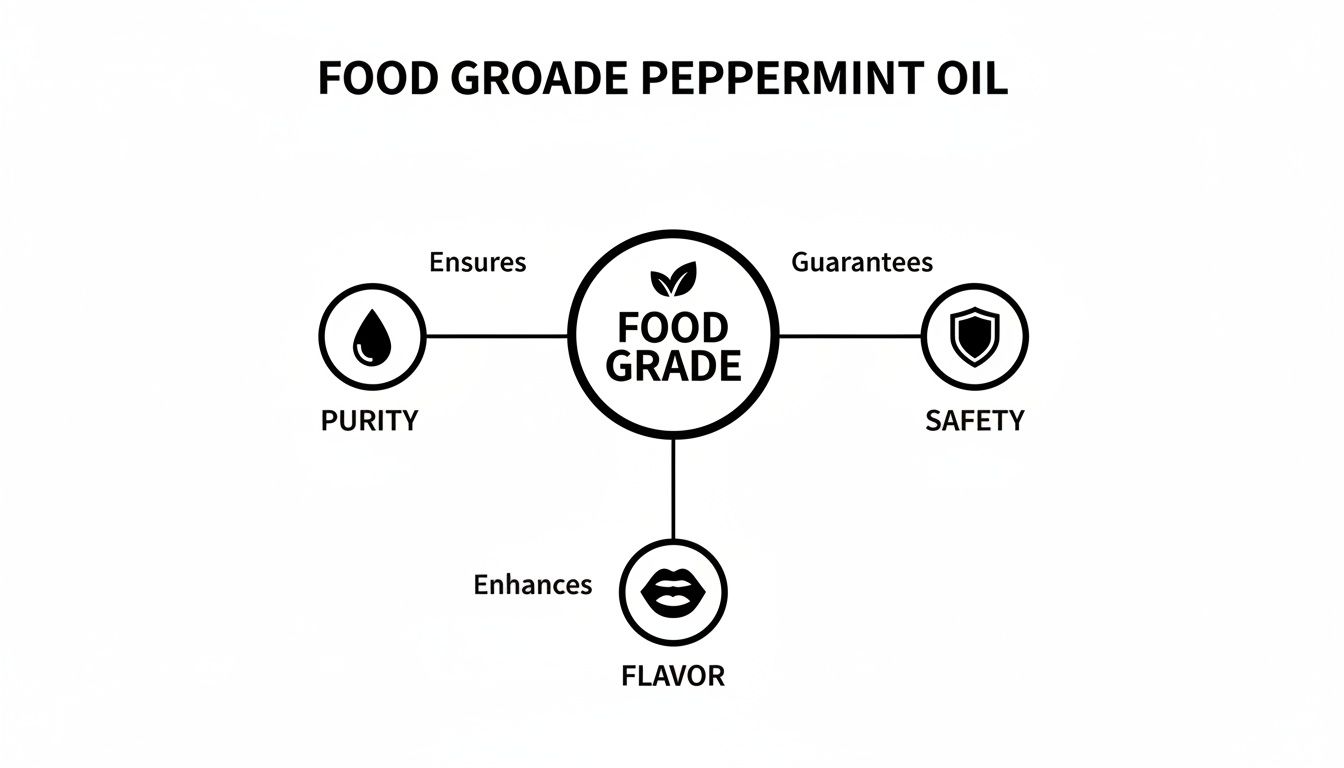
This just means the 'food grade' label is your assurance that the product is pure enough to eat, safe from harmful substances, and potent enough to deliver that authentic, crisp mint flavour.
Other Peppermint Oil Grades
Once you step outside the kitchen, other grades of peppermint oil serve very different needs. It's crucial not to mix them up, as their processing methods and purity levels are worlds apart.
- Therapeutic Grade: You’ll often see this term in aromatherapy circles. These oils are intended for topical application (on the skin) or for diffusion to create a certain mood or wellness benefit. While they're high-quality, the term 'therapeutic grade' isn't officially regulated in the same way 'food grade' is, and they are definitely not meant to be eaten.
- Aromatic or Fragrance Grade: These oils are purely for scent. Think candles, soaps, and perfumes. They might be blended with synthetic compounds or extracted using chemical solvents, which makes them completely unsuitable for consumption or even for putting on your skin.
To really see the difference, it helps to put them side-by-side.
Peppermint Oil Grades Compared
This table breaks down exactly what sets each grade apart, so you know what you’re looking at on the shelf.
| Characteristic | Food Grade Oil | Therapeutic Grade Oil | Aromatic Grade Oil |
|---|---|---|---|
| Primary Use | Ingestion (culinary, beverages) | Topical application, diffusion | Scenting products (candles, soaps) |
| Purity Standard | Highest; regulated for safety | High, but not for consumption | Variable; can contain synthetics |
| Extraction | Typically steam distillation | Often steam distillation | Can involve chemical solvents |
| Safety Check | Verified safe for eating | Intended for external use only | Not safe for skin or ingestion |
As you can see, the lines are pretty clear.
Ultimately, choosing the right oil always comes back to what you plan to do with it. For any recipe, or for a pure and mindful inhalation experience like the one AuraFlow offers, only food-grade peppermint oil gives you the peace of mind and quality you need.
How to Use Peppermint Oil in Food and Wellness
The real magic of food-grade peppermint oil is its versatility. It effortlessly bridges the gap between delicious culinary creations and mindful wellness practices, and because it’s certified as pure, you can confidently explore its potential in both the kitchen and your daily rituals.
When you're cooking with it, the golden rule is always less is more. Pure peppermint oil is incredibly concentrated, far more potent than the standard extracts you might be used to. A single drop is often all it takes to transform an entire batch of brownies or a bowl of rich chocolate ganache with a vibrant, cooling kick.
Think of it like adding a pinch of a powerful spice; a tiny amount makes a huge impact. This potency is exactly why it's a firm favourite among professional chefs and home bakers. One of the best ways to use it is in confectionery, creating those classic peppermint-chocolate pairings.

Practical Tips for Culinary Creations
Getting started with peppermint oil in your recipes is easy once you get a feel for its strength. Here are a few ideas to get you going:
- Elevate Your Bakes: Add one drop to your favourite chocolate cake or cookie dough before baking for a refreshing aftertaste.
- Create Minty Drinks: Stir a single drop into a pitcher of homemade lemonade or a large mug of hot chocolate for an instant flavour boost.
- DIY Mint Syrups: Mix a drop into a simple sugar syrup. This can then be used to flavour coffees, cocktails, or drizzle over ice cream.
A quick tip: always add the oil to the wet ingredients in your recipe. This helps it disperse evenly throughout the mixture, so you don't get one surprisingly minty bite!
From Flavour to Mindful Wellness
The very same purity that makes food-grade peppermint oil safe for your food is what makes it perfect for a clean inhalation experience. This is where culinary safety and personal wellness cross over beautifully. When you inhale a pure, food-safe oil, you’re engaging your senses without introducing any unwanted chemicals or contaminants.
This concept is at the heart of the AuraFlow experience. We use high-quality, food-grade peppermint oil in our Mint Flavour Core to transform the simple act of breathing into a refreshing, mindful ritual.
This approach offers a sensory anchor, helping to manage cravings by replacing the habit of smoking with a positive, nicotine-free moment of calm. It isn’t just about the flavour; it's about using a pure, trusted ingredient to support your transition to a smoke-free lifestyle. By choosing food-grade, you ensure the experience is as clean and safe as it is satisfying.
How to Choose a High-Quality Peppermint Oil
Navigating the shelves for genuine food-grade peppermint oil can feel a bit overwhelming, but a few key details on the label will tell you everything you need to know. It all comes down to learning the language of quality, ensuring the bottle you bring home is pure, safe, and potent.
Think of it as being a detective for quality. Your first and most important clue is always the ingredient list. It should be short and simple.

Decoding the Label for Purity
When you pick up a bottle, your eyes should immediately scan for a few specific terms. These are the non-negotiables that separate the premium oils from the questionable ones.
Here’s your checklist for what to look for:
- Botanical Name: Make sure it says Mentha piperita. This confirms you’re getting true peppermint, not another variety like spearmint or cornmint, which have different properties.
- Purity Statement: The label must clearly state “100% Pure Essential Oil.” Vague terms like “fragrance oil” are a red flag that it might be diluted or contain synthetic additives.
- Food Grade Certification: This is the most critical part. The packaging has to explicitly state “Food Grade” or “Suitable for Culinary Use.” This is your guarantee of safety for ingestion.
It's also worth checking the extraction method. Steam distillation is the gold standard for producing pure, high-quality essential oils fit for consumption. It uses only steam to gently release the oil from the plant, avoiding the harsh chemical solvents often used for cheaper, aromatic-grade oils.
Why Packaging and Price Matter
Once you've verified what's inside, the container itself offers another vital clue. High-quality essential oils are sensitive to light, which can cause them to degrade and lose their potency over time.
Always choose peppermint oil packaged in a dark-coloured glass bottle, usually amber or cobalt blue. Plastic containers are a definite no, as the potent oil can actually break down the plastic, leaching harmful chemicals into the product.
Price can also be a tell-tale sign of quality. Producing pure, food-grade peppermint oil is an intensive process, and that's reflected in its cost. If a price seems too good to be true, it probably is. The market is always changing, with prices influenced by everything from crop yields to the demand for natural ingredients. To get a better sense of this, you can learn more about the factors affecting peppermint oil prices and understand the value behind the real deal.
Making these careful checks ensures the food-grade peppermint oil you choose is both effective and safe. This commitment to quality is fundamental, whether you're adding flavour to a recipe or seeking a pure sensory experience—which is exactly why we prioritise purity in our essential oils pack, too.
Safety Guidelines for Mindful Usage
The incredible potency of food-grade peppermint oil is its greatest strength, but it also demands respect. Because it’s so concentrated, a "less is more" philosophy isn't just a suggestion—it's essential for getting the best experience safely. Think of it less as an ingredient and more as a powerful essence.
A good analogy is a super-hot chilli pepper in your kitchen. A tiny sliver can elevate an entire dish, but too much will quickly overwhelm it and cause discomfort. The same principle applies here, whether you're adding it to a recipe or using it for a sensory wellness ritual.
Proper Dilution for Culinary Use
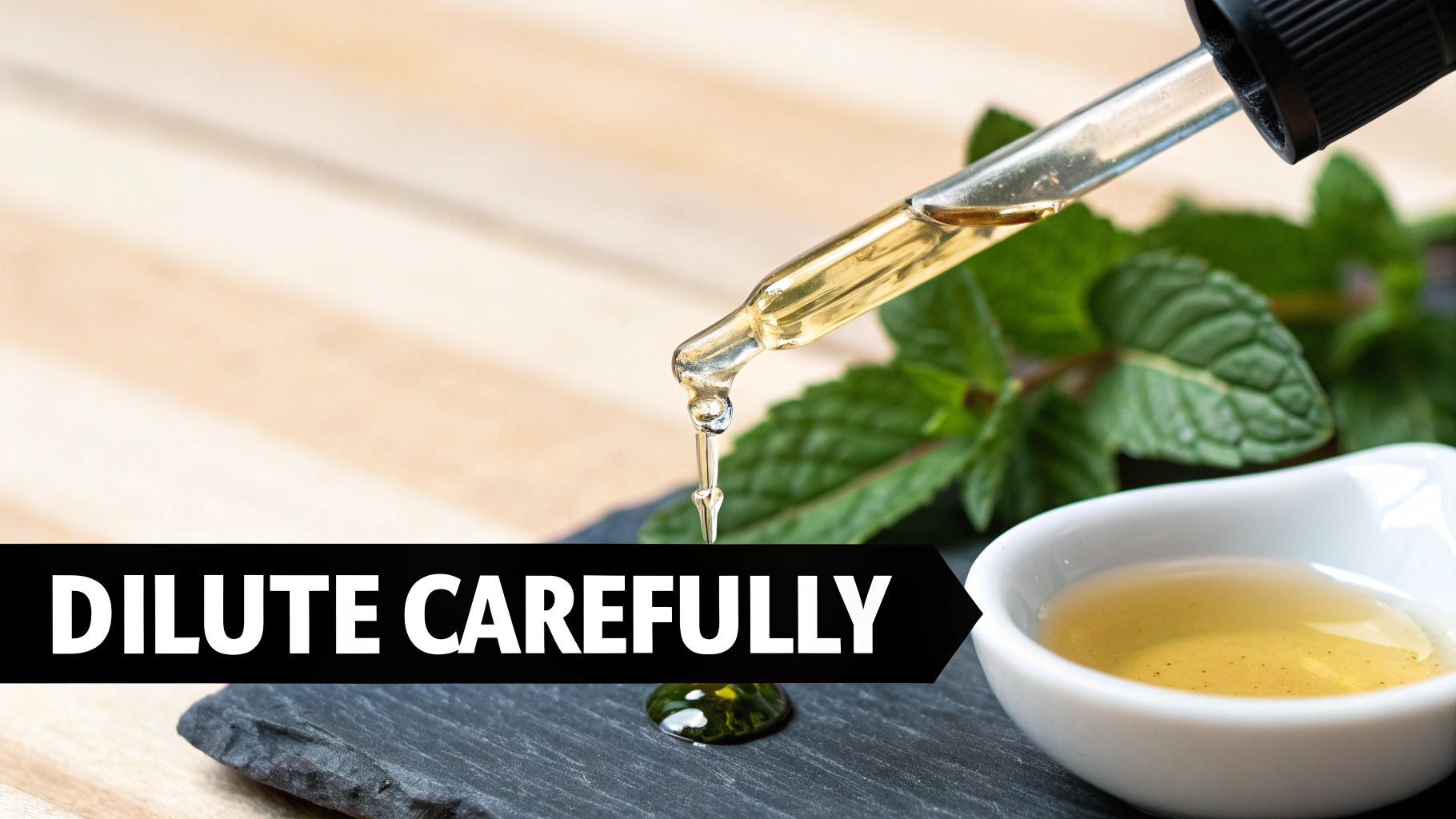
When you’re cooking with food-grade peppermint oil, one drop is often more than enough. Seriously. For a whole batch of brownies, a big pitcher of lemonade, or a bowl of chocolate icing, a single drop will impart a beautifully crisp, minty flavour without overpowering everything.
To get it mixed in properly, always add the oil to a liquid part of your recipe, like water, milk, or another oil. This helps it disperse evenly so you don't get one surprise mouthful that's far too intense. Of course, using pure ingredients is just one part of kitchen safety; it’s always wise to follow good food safety sanitation guidelines too.
Mindful Inhalation and Topical Application
This same respect for potency is crucial when you're using it for wellness. While food-grade peppermint oil is pure enough for inhalation, it should always be done mindfully. The clean, crisp aroma is the soul of the AuraFlow experience, designed to turn a simple breath into a moment of intentional calm. You can read more about how we select and use our essential oils for vaporisation in our detailed guide.
If you’re ever thinking about using peppermint oil on your skin, it must be diluted with a carrier oil first. No exceptions.
- What’s a carrier oil? It's a neutral, plant-based oil like coconut, jojoba, or sweet almond oil. It acts as a safe base to "carry" the potent essential oil onto your skin.
- Why is it necessary? Putting undiluted peppermint oil directly on your skin can cause irritation, redness, or a burning sensation. That’s the high concentration of menthol at work.
- A safe ratio: A great starting point is mixing just 1-2 drops of peppermint oil into one tablespoon of your chosen carrier oil.
Always do a patch test before using it more widely. Just apply a tiny amount of the diluted oil to a discreet spot, like the inside of your elbow, and wait 24 hours to see if any irritation develops.
Important Cautions and Considerations
While peppermint oil is generally safe for most adults when used correctly, its powerful nature means it isn’t suitable for everyone or every situation.
Children and Infants: Peppermint oil should never be used on or near the faces of babies or young children. Its high menthol content can cause serious breathing difficulties for them.
Pets: Many essential oils, peppermint included, can be toxic to cats and dogs. This applies whether it's ingested, inhaled, or put on their skin, so it’s best to avoid using it around your furry friends altogether.
Pregnancy and Health Conditions: If you are pregnant, breastfeeding, or have a pre-existing health condition like asthma or G6PD deficiency, please talk to a healthcare professional before using peppermint oil in any form. Their guidance will help you make a safe choice for your specific circumstances.
Your Peppermint Oil Questions, Answered
Diving into the world of food grade peppermint oil can bring up a few questions. To make sure you feel completely confident using it, we’ve put together clear, straightforward answers to some of the most common queries we hear.
Think of this as your go-to reference for those lingering "what ifs," helping you use every drop safely and effectively in your culinary creations and wellness rituals.
Can I Just Use Any Peppermint Oil for Cooking?
Absolutely not. This is probably the most important thing to remember. For anything you plan to ingest, it’s critical to only use oils explicitly labelled as ‘food grade’ or ‘food safe’.
Aromatherapy or cosmetic grade oils simply aren't made for internal use. They can contain impurities or be processed in ways that make them unsafe to eat. Always, always check the label for clear certifications before adding any essential oil to your food—it’s your most important safety step.
How Should I Store My Food Grade Peppermint Oil?
To keep its flavour, potency, and safety intact, you’ll want to store your peppermint oil in its original dark glass bottle. Find a cool, dark place for it, away from direct sunlight and heat sources like your oven or hob, which can degrade the oil over time.
Also, make sure the cap is screwed on tightly after each use. This prevents air from getting in and causing oxidation, which helps it last. Stored properly, a good quality oil can have a shelf life of several years.
Proper storage isn't just about freshness; it's about safety. Keeping your oil in a cool, dark place ensures its chemical composition remains stable and pure, preserving the quality you paid for.
Is It Safe to Inhale Food Grade Peppermint Oil?
Yes, inhaling a pure, high-quality food grade peppermint oil is generally considered safe for most adults when done correctly. This is the very principle behind sensory devices like AuraFlow, which use its clean, crisp aroma to create a mindful experience.
However, moderation is always the way to go. You should avoid taking long, direct sniffs straight from the bottle. And if you have a respiratory condition like asthma, are pregnant, or have other health concerns, it’s always best to have a chat with a healthcare professional before you start.
What’s the Difference Between Peppermint Oil and Peppermint Extract?
This is a fantastic question and one that often causes confusion in the kitchen. The main differences really come down to concentration and how they’re made.
- Peppermint Oil: This is the pure, potent stuff. It’s a highly concentrated essential oil that has been steam-distilled directly from the Mentha piperita plant. It’s incredibly powerful, packed with menthol, and just a single drop goes a very long way.
- Peppermint Extract: This is what you’ll typically find in the baking aisle. It’s a much more diluted solution, made by soaking peppermint leaves in a solvent, which is usually alcohol.
Because of this huge difference in strength, you’d need a lot more extract to get the same flavour intensity as one tiny drop of peppermint oil food grade. They are definitely not interchangeable in recipes without making some major adjustments.
Ready to replace smoke with a sensory ritual? AuraFlow offers a nicotine-free alternative that uses the power of pure, food-grade flavours to help you find your moment of calm. Discover a smoother way to quit and embrace a healthier lifestyle.
Explore the AuraFlow Starter Kit and begin your journey today.