
Remember those chalky, sugary sticks from the corner shop, the ones sold in little boxes that looked suspiciously like a pack of fags? Fake candy cigarettes. For many of us, they were just a bit of fun, a prop for playing grown-ups.
But these sweets were always more than just sugar. They were a direct, and pretty controversial, link between the innocence of childhood play and the very adult act of smoking, kicking off a public health debate that still echoes today.
The Enduring Controversy of Fake Candy Cigarettes

For decades, fake candy cigarettes were a fixture in British sweet shops, right there next to the gobstoppers and liquorice. Kids would hold the chalky stick just so, between two fingers, and puff out imaginary smoke, mimicking their parents or the stars they saw on telly.
It all seemed like a harmless game of make-believe. The problem is, this "innocent" play had a much darker side.
Normalising a Dangerous Habit
Here's the heart of the issue: that simple act of mimicry has a real psychological impact. When you introduce the rituals of smoking to a child at such a young, impressionable age, you start to strip away the danger. You desensitise them.
Suddenly, the act of "smoking" isn't a health risk—it's tied to fun, to being an adult, to getting a treat. This creates a powerful, positive connection in a child's mind long before they're old enough to grasp the stark reality of tobacco warnings.
This normalisation is exactly why public health advocates fought so fiercely to get them off the shelves. The logic was simple and deeply concerning: if a child practises the physical motions and social cues of smoking, the barrier to trying a real cigarette later on gets a whole lot lower. It turns a lethal adult habit into something familiar, even something to aspire to.
By blurring the lines between a children's sweet and a harmful adult product, candy cigarettes acted as a subtle but effective marketing tool for the tobacco industry, whether intentional or not.
A Gateway to Real Smoking
This connection isn’t just a theory, either. Over the years, countless studies and observations have pointed to a strong link between playing with fake candy cigarettes in childhood and being more likely to smoke as a teenager or adult. They became the textbook definition of a "gateway product."
To help clarify the situation, let's break down the main points of concern.
Key Issues With Fake Candy Cigarettes at a Glance
This table summarises the core arguments that have defined the debate around these controversial sweets for decades.
| Concern | Description | Public Health Outcome |
|---|---|---|
| Normalisation | Makes the act of smoking seem like a normal, acceptable, and even fun part of everyday life from a young age. | Reduces the perceived risks of tobacco and lowers psychological barriers to trying real cigarettes later on. |
| Mimicry of Adult Behaviour | Encourages children to copy the physical hand-to-mouth action and social rituals associated with smoking. | The repeated behaviour builds muscle memory and familiarity, making the transition to actual smoking feel more natural. |
| Brand Imitation | Packaging was often designed to closely resemble popular cigarette brands, creating early brand recognition and loyalty. | Acts as an unintentional (or intentional) form of advertising for the tobacco industry, targeting an underage audience. |
| Gateway Effect | The positive childhood association with "smoking" sweets can make teens more susceptible to peer pressure and experimentation. | Studies have shown a correlation between using candy cigarettes and a higher likelihood of becoming a smoker. |
Understanding this history is absolutely crucial, especially now.
The same arguments are being dusted off and reused in the modern debate over flavoured e-cigarettes and vapes, which critics say use the exact same playbook—sweet flavours, playful marketing—to hook a new generation. The story of candy cigarettes is a powerful lesson, showing how seemingly harmless products can shape lifelong habits and why we always need to be vigilant.
A Nostalgic Habit With a Hidden Cost
For anyone who grew up in the mid-20th century, the corner sweet shop was a treasure trove. Jars of colourful bonbons lined the shelves and, for just a few pence, you could walk out with a paper bag full of treats. Among the liquorice and gobstoppers, fake candy cigarettes held a special kind of magic. They weren't just sweets; they were props in a game of make-believe.
Holding that chalky stick between your fingers, mimicking the puffing motion you saw adults do—it was a childhood ritual. The packaging itself was a work of artful imitation, often designed to look remarkably like real cigarette brands. This harmless bit of play, however, was quietly building a bridge in young minds, connecting the innocent fun of a sweet treat with the very adult, and dangerous, habit of smoking.
From Plaything to Public Health Concern
This connection wasn't just a coincidence. These products perfectly normalised the physical actions of smoking. The hand-to-mouth gesture, the social performance of holding a "cigarette," and even the act of "lighting up" were all practised over and over again. This process of mimicry desensitised children to what tobacco use really meant long before they could grasp the risks.
What started as a fond, nostalgic memory began to look more sinister as the research rolled in. By the 1990s, the tide had well and truly turned. Health advocacy groups and researchers started to draw a clear, data-backed line between this childhood pastime and a greater likelihood of becoming an adult smoker. The sweet was no longer seen as innocent, but as a potential gateway.
The real issue was that candy cigarettes taught children how to smoke before they were old enough to understand why they shouldn't. It ingrained the habit's motions as a positive, playful memory.
This growing mountain of evidence became impossible for public health officials to ignore. The seemingly harmless sweet was now seen as a tool that could prime a new generation for nicotine addiction, undoing decades of anti-smoking campaigns.
The Evidence Mounts
Campaigners like ASH (Action on Smoking and Health) began shining a light on the alarming statistics. Back in the 20th century, these sweets were a common sight, but evidence from the 1990s started to show a clear link between using them as a child and smoking later in life. One major UK study found that children who used fake candy cigarettes were significantly more likely to try real ones.
Similar findings from other countries backed this up. A 2007 international survey, which included UK participants, showed that 88% of adult smokers remembered using these sweets, compared to just 78% of non-smokers. This data painted a stark picture, turning public opinion and fuelling the push for real legislative action.
Another interesting product with a similar history is sweet tobacco, which you can read about in our guide to Old Jamaica Sweet Tobacco.
How the UK Ban Became a Public Health Triumph
Getting fake candy cigarettes off UK shelves wasn’t some overnight decision. It was a slow, deliberate process, built on years of mounting evidence and tireless public health advocacy. People began to realise these sweets were more than just sugar and chalk; they were a training ground for tobacco.
The shift from flimsy voluntary agreements to a full-on ban is one of the great success stories in British public health.
At first, the industry tried to regulate itself. The big turning point came in 2002 when the Biscuit, Cake, Chocolate and Confectionery Alliance made a voluntary pact to stop making them. That one move wiped out an estimated 60% of these products almost instantly, a clear sign that both corporate attitudes and public opinion were changing.
But a voluntary agreement could only go so far. To really get the job done, proper legislation was needed.
From Voluntary Pacts to a Full Ban
The final nail in the coffin was the 2003 EU Tobacco Products Directive, which the UK fully adopted. This was a landmark piece of legislation that officially recognised how products mimicking tobacco helped normalise smoking for children.
By 2007, a zero-tolerance policy was firmly in place. It became illegal to sell any sweets that looked like cigarettes or were sold in lookalike tobacco packaging.
This timeline shows just how long it took for public health understanding to catch up and turn a popular treat into a prohibited product.
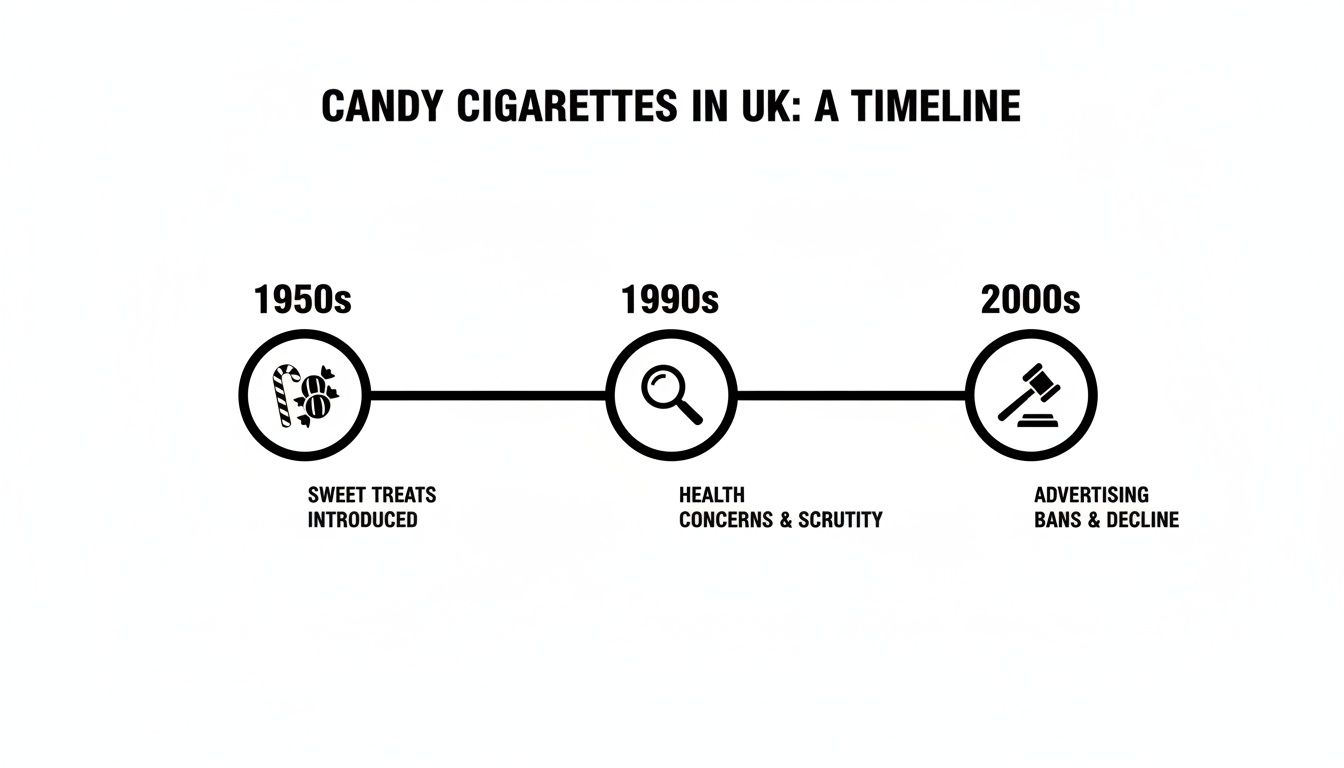
As you can see, it took decades of growing awareness before decisive action was finally taken in the 2000s. The goal was simple: protect future generations. And this proactive policy has paid off in ways we can now clearly measure.
The Measurable Impact of the Ban
The data that followed the ban is undeniable. With fake candy cigarettes gone from corner shops, a key gateway to smoking for young people was slammed shut. This single legislative action played a huge part in the dramatic drop in smoking rates right across the UK.
The removal of candy cigarettes was a preventative measure that has paid enormous dividends. It proved that small changes in what we deem acceptable for children can lead to massive long-term public health gains.
The numbers speak for themselves. Smoking among adults in the UK plummeted from 28% in 2000 to just 13.9% by 2021. The effect on young people was even more stunning, with rates falling from 13% to a mere 2.7% over a similar period.
This didn't just save lives; it delivered huge economic benefits. Public Health England estimated that by 2020, the NHS had saved a staggering £2.4 billion in smoking-related costs. You can find more on the psychological link between these sweets and real cigarettes over on Psychology Today.
This success story is a powerful reminder of why we need to stay vigilant, especially as new products and trends emerge. And for those looking for safer alternatives today, it's always worth asking the right questions, like are herbal cigarettes bad for you, to make truly informed choices.
The Psychology Behind the "Game"
So, why were fake candy cigarettes so dangerously effective? The answer isn't just about sugar; it’s rooted deep in some very powerful psychological principles: behavioural mimicry and habit formation.
Children are master imitators. It's how they learn to walk, talk, and navigate the world. When they saw adults—parents, film stars, people they looked up to—smoking, it was presented as a sophisticated, grown-up thing to do. Candy cigarettes gave them the perfect prop to act out this behaviour.
This wasn't just innocent make-believe. It was rehearsal.
Every time a child unwrapped a candy stick and brought it to their lips, they were practising the exact physical motions of smoking. The hand-to-mouth gesture, the pretend inhale, the casual way of holding it. Psychologists call this building a cognitive blueprint.
In simple terms, the "game" of smoking sweets created a powerful muscle memory. It wired the brain and body to see the real act of smoking as familiar and normal, dramatically lowering the mental barrier to trying it for real down the line.
Through this simple act of play, the idea of smoking was woven into a child's concept of adulthood. It became a rite of passage, not a health hazard.
How They Made Smoking Seem Normal
The way these sweets were sold was just as insidious. By placing fake candy cigarettes right next to the chocolate bars and lollipops, a deeply confusing message was sent to young minds. It framed tobacco as just another everyday product—something harmless, fun, and even desirable.
This wasn't a coincidence. Back in 1998, research digging into tobacco company documents exposed disturbingly close ties between Big Tobacco and UK confectioners. Candy companies would intentionally design their products to mimic popular cigarette brands, making them instantly recognisable and appealing to children.
The impact was devastating. A 2001 UK Youth Tobacco Survey revealed that of the 25% of 11-15-year-olds who had used candy cigarettes, those who "practised" were 2.5 times more likely to become actual smokers by age 16. You can read more about the tobacco industry’s influence and how these tactics were used.
It’s a historical issue with alarmingly modern parallels. The sweet, fruit-flavoured, colourfully packaged vapes we see today are running the exact same psychological playbook. They work to make a dangerous habit look fun and innocent, proving that this public health fight is far from over. The products have evolved, but the psychology of mimicry and habit formation remains a potent and dangerous tool.
Finding Healthier Rituals For Modern Adults
For so many adults, the real pull of smoking has little to do with nicotine. It’s all about the ritual. The familiar hand-to-mouth motion, that built-in pause during a hectic day, the simple act of a deep inhale and exhale—it all combines into a powerful, comforting routine.
It's the very same pattern that fake candy cigarettes taught us as kids, but for adults trying to quit, breaking that cycle takes more than sheer willpower. It demands a healthier, more positive ritual to take its place.
If you just stop, you're left with a void, and old habits are experts at creeping back in to fill it. The trick is to consciously swap that dependency-driven motion for a mindful practice that gives you the same sensory satisfaction without any of the harm. It’s about moving on from mimicry and stepping into intentional wellness.
Building New Habits With Mindfulness
Instead of just copying a destructive act, the goal is to build a new, calming routine from the ground up. This isn't about finding another "cigarette" to fool yourself with; it's about discovering a genuine tool for focus and stress relief. It’s a powerful shift from a subconscious habit to a conscious moment of calm.
For anyone looking to swap out old habits for better ones, exploring how to find healthy alternatives to candy is a great place to start a wider wellness journey. The same principle applies here. The new habit needs to be genuinely good for you, not just a placeholder for the old one.
A successful transition from smoking involves more than breaking a chemical dependency; it requires replacing a deeply ingrained physical ritual with a new one that is both satisfying and genuinely supportive of your well-being.
A Sophisticated Alternative For Adults
This is precisely where AuraFlow comes in. It was designed specifically to meet this need. It's not a sweet or a toy; it’s a carefully crafted tool for adults who want to replace the hand-to-mouth habit with a peaceful, nicotine-free experience.
There are no electronics, no chargers, and no messy e-liquids to deal with. It's just a simple, elegant tool that’s ready whenever you need it.
AuraFlow uses natural essential oil flavours to deliver sensory satisfaction without nasty chemicals. Each draw offers a gentle hint of Mint, Blueberry, or Strawberry, designed to soothe rather than stimulate. It helps turn that urge to smoke into an opportunity for a mindful pause, putting you back in control of your rituals.
- Simplicity and Ease: No buttons, batteries, or refills. Just a straightforward design that’s ready when you are.
- Natural Flavours: Made with essential oils for a pure, clean taste and aroma.
- Cost-Effective: With ongoing monthly costs potentially under £25, it offers huge savings compared to smoking or vaping.
By choosing a tool like AuraFlow, you aren't just quitting a habit; you're actively building a new, healthier one. It helps transform a moment of craving into a deliberate act of self-care, one gentle breath at a time. For more ideas on natural alternatives, you might be interested in our article on using licorice wood sticks.
Choosing Your Path to a Smoke-Free Life
The story of those chalky candy cigarettes holds a surprisingly powerful lesson. It shows us how mimicking a harmful habit, even playfully, can create a deep, lasting connection in our minds. For adults now trying to break free from smoking, recognising this link is the first real step toward finding a healthier way forward.
It’s time to move beyond simple imitation. This isn't about finding another placeholder for a destructive habit; it's about building new, positive rituals that genuinely support your well-being.
A New Chapter in Your Journey
For anyone ready to make a change, the real goal is to swap a dependency-driven action for a mindful practice. This is where AuraFlow comes in, offering a practical, adult-focused alternative. It was designed from the ground up to help you move away from the physical act of smoking, but without any nicotine, electronics, or harmful chemicals.
By focusing on the ritual itself, you can satisfy that hand-to-mouth urge while consciously building a new, healthier routine. This simple shift puts you back in control, turning a moment of craving into a moment of calm.
AuraFlow gives you a simple, effective tool for this transition. With its natural essential oil flavours and no-fuss design, it helps you create those small moments of pause and mindfulness throughout your day. The benefits are clear:
- Simplicity: There are no buttons, batteries, or messy liquids. It's ready whenever you need it.
- Natural Ingredients: You can enjoy gentle flavours without worrying about harsh additives.
- Affordability: It's a cost-effective way to support your smoke-free journey.
- Mindfulness: It encourages you to turn an old habit into a conscious act of self-care.
The lesson from fake candy cigarettes is clear—our habits shape us. But the good news is, as adults, we have the power to choose new ones. If you’re ready to start your journey, have a look at the AuraFlow Starter Kit. It’s a positive first step towards a smoke-free life, one gentle breath at a time.
Got Questions? We've Got Answers
Stepping away from nostalgic habits like candy cigarettes and into healthier, modern alternatives can bring up a few questions. Let's clear the air on some of the most common ones.
Why Were Candy Cigarettes Banned Anyway?
It really came down to one thing: they made smoking look normal and even fun for kids. Public health experts realised that mimicking the hand-to-mouth ritual and using cigarette-style packaging was desensitising children to the real dangers of tobacco.
The thinking was that these sweets acted as a "gateway," making kids far more likely to try real smoking as they got older. The ban, which came into effect in the early 2000s, was a simple, preventative step to break the link between childhood games and a seriously dangerous adult habit.
What’s the Lasting Impact of Using Them as a Kid?
For many, the biggest long-term effect was creating a cognitive blueprint for smoking. When you repeat an action over and over, even in play, you build a powerful muscle memory and a positive emotional link to that action.
This meant that for some, picking up a real cigarette later in life felt strangely familiar and natural. The motions were already there, tied to nostalgic, innocent memories from childhood.
So, How Is Something Like AuraFlow Any Different?
This is a key point. Modern tools like AuraFlow are worlds apart from candy cigarettes because their purpose and audience are completely different. They are absolutely not sweets or toys designed for children.
AuraFlow is a wellness tool created exclusively for adults who want to consciously break the hand-to-mouth habit linked to smoking. It contains no nicotine or harmful chemicals, using natural essential oil flavours to offer sensory satisfaction without the risk. The goal isn't to pretend to smoke for fun, but to help adults build a new, healthier ritual based on mindfulness and calm, genuinely supporting their move towards a smoke-free life.
Ready to create a new, healthier ritual? Explore the AuraFlow Starter Kit and take the first step towards a smoke-free life, one gentle breath at a time. Visit us at https://aura-flow.co.uk.