
Quitting smoking can feel like trying to move a mountain. But what if the secret isn't brute force or sheer willpower? A natural way to quit smoking is less about deprivation and more about a smarter, kinder approach that focuses on preparation, mindset, and small, sustainable lifestyle shifts.
This is about reframing the entire journey. You’re not giving something up—you’re taking back control and empowering yourself for a smoke-free life.
Starting Your Smoke-Free Journey Without Willpower Alone
Deciding you want to quit is a huge first step. But relying on willpower alone often feels like a constant, draining battle against yourself. There’s a more effective, gentler way. A holistic plan that gets to the root of the habit—both the physical addiction and the psychological triggers.
It’s a journey of understanding what makes you reach for a cigarette, creating new mindful rituals to replace the old ones, and building a supportive environment that genuinely sets you up for success. Thinking about a sustainable approach to breaking habits, like gradually weaning yourself off, can feel far less daunting than going cold turkey. The goal is to build a plan that feels right for you.
This isn't about one giant leap; it's a series of thoughtful, connected steps.
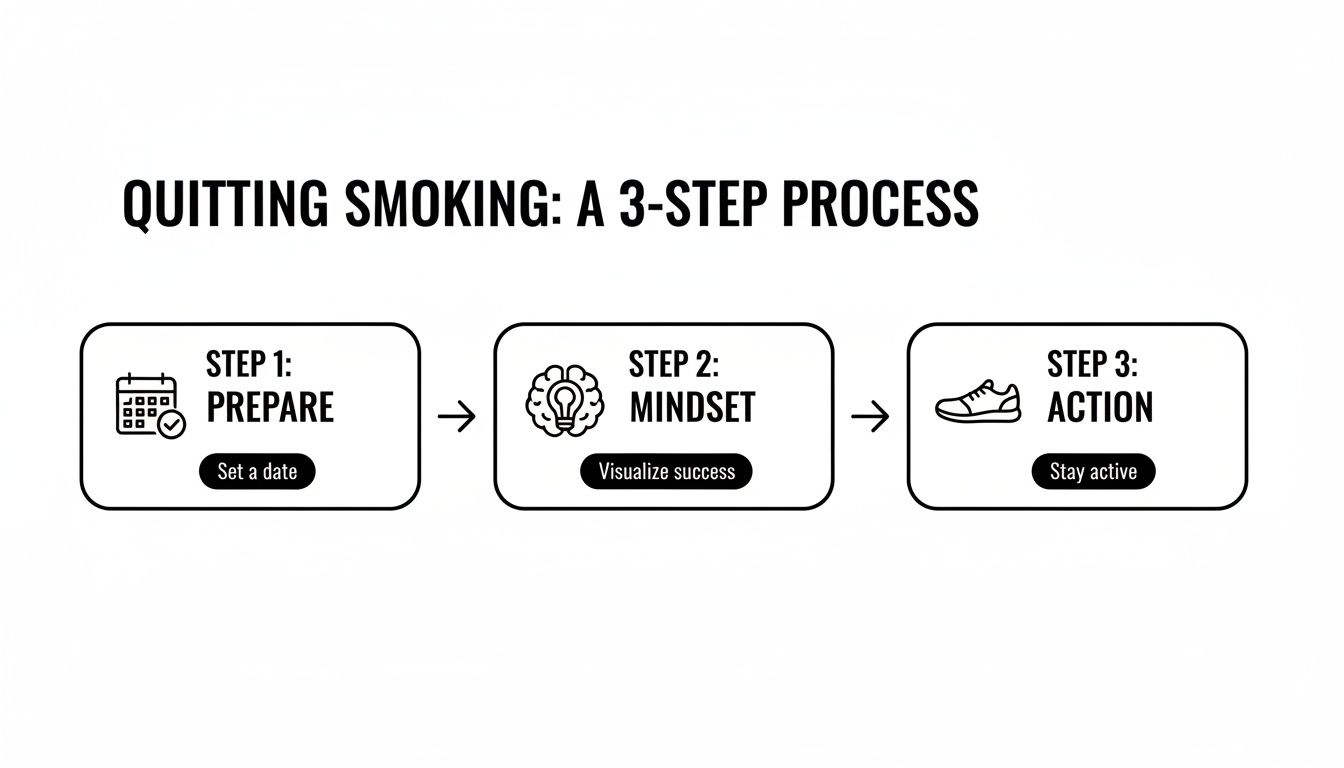
As you can see, success starts long before you put out your last cigarette. It begins with getting your head in the right space and preparing for what’s ahead.
Building a Plan That Works for You
Going in with a structured approach dramatically boosts your chances. The proof is in the numbers. Recent figures from England's local stop smoking services show that people who combine behavioural support with quitting aids are three times more likely to succeed.
That’s a massive difference. It underscores the power of having a real plan instead of just hoping for the best.
The most powerful tool you have is your mindset. Viewing this as a journey of healing rather than a battle against cravings can fundamentally change your experience and outcome.
Key Elements of a Natural Quitting Strategy
Your strategy needs to fit into your life, not the other way around. The core components of a successful natural plan usually include a few key things:
- Understanding Your Triggers: Get really honest about when you smoke. Is it that first coffee in the morning? A stressful email from your boss? After a meal? Pinpointing these moments is the first step to dismantling the habit.
- Creating Healthier Rituals: You need to replace the smoking ritual with something positive. This could be five deep breaths, a quick walk around the block, or using a natural inhalation aid like AuraFlow to satisfy that familiar hand-to-mouth motion.
- Managing Stress and Anxiety: For many of us, smoking is a coping mechanism. Finding new, healthier ways to handle stress is non-negotiable. If you're looking for natural ways to find calm, you might find our guide on using essential oils for anxiety helpful.
- Building a Support System: Let your friends and family in on your plan. You don't have to do this alone, and having someone to call during a tough moment can make all the difference.
Laying the Groundwork for Freedom
A successful quit journey doesn't just happen. It doesn’t start the moment you stub out your last cigarette. It begins way before that, with a bit of thoughtful preparation that sets you up for success. This is where you lay the groundwork, making the whole process feel less like a battle and more like a natural transition.
Become a Detective of Your Own Habits
The first real step is to get curious about your own patterns. For most of us, smoking isn't random; it's a deeply ingrained part of our daily rhythm. The key to breaking the cycle is to pinpoint those specific moments—the smoking triggers—and disarm them one by one.
Think about it. Is it that first sip of morning coffee? The ten-minute break after a stressful meeting? The moment you slide into the car after a long day? These are the moments you need to understand.
Try this for a few days before you plan to quit: keep a small journal or a note on your phone. Every time you light up, just jot down what's happening.
- What time of day is it?
- Where are you?
- Are you with anyone?
- How are you feeling? (Bored, stressed, happy, tired?)
This simple exercise is surprisingly powerful. It reveals patterns you probably never consciously realised you had. Understanding these cues is your first big win, because you can't fight an enemy you can't see.
Set a Meaningful Quit Date
Once you've got a handle on your triggers, it’s time to set a date. Don't just pull a random Tuesday out of a hat. Pick a day that feels significant or is strategically smart. Maybe it’s an anniversary, your birthday, or the first day of a new season—a date that symbolises a fresh start.
Aim for a day within the next two to four weeks. This gives you enough time to get your head in the game and prepare your environment, but it's close enough that you won't lose momentum. A date too far away invites procrastination, while one that's too soon can leave you feeling rushed and unprepared.
A well-chosen quit date is a line in the sand. It’s a firm commitment to yourself, turning a vague idea of "quitting someday" into a concrete, achievable goal.
Prepare Your Environment for Success
Your surroundings can be your biggest ally or your worst enemy. Creating a smoke-free space is a powerful, symbolic act that reinforces your decision to quit. And this goes way beyond just chucking your last pack of cigarettes in the bin.
It’s time for a proper deep clean. Cigarette smoke clings to everything—curtains, carpets, clothes, car upholstery. Wash all your fabrics, wipe down surfaces, and really air out your home and car. This helps get rid of that lingering smell, which can be a surprisingly potent trigger. You’re not just removing a scent; you're clearing out the old to make room for the new.
Next, get rid of all the paraphernalia. This means:
- Lighters and matches
- Ashtrays
- Any "emergency" cigarettes you’ve stashed away
It might sound simple, but out of sight really does help keep it out of mind. The goal here is to make it as inconvenient as possible to slip back into the old habit on a whim.
Before you finalise your plan, take a moment to fill out this checklist. It will help you connect your actions to your personal reasons for quitting, making your plan feel more grounded and meaningful.
Your Personalized Quit Preparation Plan
Use this checklist to identify your triggers and build a supportive environment before your quit date.
| Action Item | Personal Trigger or Reason | Target Completion Date |
|---|---|---|
| Identify my top 3 smoking triggers | Morning coffee, driving, feeling stressed | |
| Set a firm Quit Date | Symbolic fresh start / low-stress week | |
| Tell my partner/best friend about my plan | I need their support and patience | |
| Deep clean my car and home | The smell is a huge trigger | |
| Throw away all lighters and ashtrays | Remove temptation | |
| Stock up on healthy snacks/alternatives | For when the oral fixation hits | |
| Plan a non-smoking activity for my Quit Day | To keep my mind occupied and positive |
Taking the time to think through these steps turns quitting from a wish into a solid, actionable plan. It gives you a sense of control right from the start.
Build Your Personal Support System
Quitting is your journey, but you don't have to walk it alone. In fact, having a strong support system is one of the most effective tools you can have. Research has shown that 73% of young people who try addictive nicotine pouches are still using them later, which just goes to show how strong nicotine's grip is and why having people in your corner is so vital.
Start by telling a few trusted friends, family members, or colleagues about your plan. Be really specific about what you need from them. Maybe you need a friend you can text when a craving hits hard, or perhaps you just need your partner to be patient if you're a bit irritable during that first week.
Letting people in on your goal does two important things: it builds a network of cheerleaders and it creates a sense of accountability. Knowing that other people are rooting for you adds a powerful layer of motivation to stay on track. It turns a solo mission into a team effort, making the road ahead feel a lot less daunting.
Creating Mindful Rituals To Replace Smoking Habits
Smoking is often less about the nicotine and more about the ritual. Think about it: that structured break from work, the familiar hand-to-mouth motion, the deep, deliberate inhale. These actions are deeply ingrained habits that fulfil a real psychological need. So, finding a natural way to quit smoking means you don't just fight the craving—you replace the entire ritual with something healthier and more fulfilling.
This is all about creating new, mindful alternatives that give you that same sense of pause and relief. It's a conscious choice to swap an old behaviour for a new one that actually serves you. Instead of a cigarette break, you take a breathing break. Instead of inhaling smoke, you inhale calm.

Harnessing The Power Of Your Breath
One of the most powerful tools you have is literally right under your nose. Deep, controlled breathing exercises can powerfully mimic the physical sensation of smoking while calming your entire nervous system. The next time a craving strikes, instead of reaching for a cigarette, try this.
Find a quiet spot, even if it's just turning away from your desk for a moment. Inhale slowly through your nose for a count of four, feeling your belly expand. Hold that breath for another count of four. Then, exhale slowly through your mouth for a count of six, almost as if you were gently releasing smoke.
Repeat this cycle five or ten times. This "box breathing" technique does more than just distract you; it actively lowers stress hormones and boosts oxygen to your brain, delivering the very calm your body is screaming for. To go deeper, exploring resources on how to practice mindfulness for daily calm can be a game-changer for managing triggers.
Grounding Techniques For Intense Cravings
Sometimes a craving can feel completely overwhelming, pulling all of your attention away from everything else. This is where grounding techniques come in. These are simple, sensory-based exercises designed to pull you back into the present moment and out of your head.
A really effective method is the 5-4-3-2-1 technique. Wherever you are, just stop and silently name:
- 5 things you can see: The grain on your desk, a bird outside, a picture on the wall.
- 4 things you can feel: The texture of your jumper, the warmth of your mug, your feet on the floor.
- 3 things you can hear: The hum of the fridge, distant traffic, your own breathing.
- 2 things you can smell: The scent of coffee, fresh air from an open window.
- 1 thing you can taste: A mint, a sip of water, or the lingering flavour of your lunch.
This simple exercise forces your brain to focus on your immediate environment, breaking the obsessive loop of a craving. It shifts your attention from the internal storm to neutral, external sensations.
The goal isn't to erase the craving but to ride it out like a wave. By grounding yourself, you learn that you are bigger than the craving and that it will pass—without you having to act on it.
Satisfying The Physical Habit
A huge part of the smoking ritual is that physical, hand-to-mouth action. Your brain has wired a powerful connection between this motion and the feeling of relief. Finding a substitute for this specific action is a key piece of the puzzle.
This is where a botanical inhaler like AuraFlow can be incredibly helpful. It lets you keep the familiar ritual—the motion of bringing something to your lips and inhaling—but replaces harmful smoke with gentle, plant-based essences. You're not just stopping a bad habit; you're actively swapping it with a positive one.
Understanding the psychology behind this can really empower your journey. To learn more, check out our insights on https://aura-flow.co.uk/blogs/news/bad-and-good-habits and how to make new, better ones stick.
By creating these new, positive rituals, you're not leaving a void where smoking used to be. You are consciously filling that space with actions that calm your mind, support your body, and reinforce your commitment to a healthier, smoke-free you.
Using Nutrition and Lifestyle to Support Your Body
When you decide to stop smoking, your body begins a monumental task of healing and resetting itself. Supporting this journey with the right foods and habits isn't just a nice-to-have—it’s one of the cornerstones of quitting for good, naturally. These small changes can make a world of difference, easing withdrawal and building a stronger foundation for your smoke-free life.

You don't need to overhaul your entire life overnight. Think of these as simple, consistent acts of self-care. Together, they create a powerful system to fight cravings, keep your mood stable, and help your body repair from the inside out.
Eat to Beat the Urge
What you put on your plate has a direct link to your mood and your ability to fend off cravings. Nicotine withdrawal can play havoc with your blood sugar, leading to that familiar irritability and an almost overwhelming urge for a cigarette. The best way to fight back is with foods that give you steady, reliable energy.
Instead of grabbing sugary snacks that will only lead to a crash, get your kitchen stocked with smarter options. These foods don’t just satisfy you; they’re full of the nutrients your body is crying out for.
Your Craving-Crushing Toolkit:
- Crunchy Veggies: Carrots, celery, and bell peppers are fantastic for satisfying that need for a crunch while keeping your hands and mouth busy.
- Fresh Fruit: Berries and oranges are loaded with Vitamin C, which smoking is notorious for depleting. They also offer a natural sweetness to keep sugar cravings in check.
- Nuts and Seeds: A handful of almonds, walnuts, or sunflower seeds provides healthy fats and protein to help stabilise your blood sugar and keep you feeling full.
- Sugar-Free Gum or Mints: These can be an absolute lifesaver when the oral fixation part of the habit feels unbearable. They offer a quick, effective distraction.
And don't forget hydration. Drinking plenty of water is crucial for flushing out toxins and can genuinely lessen the intensity of those withdrawal headaches. Keep a water bottle close by at all times—it's a simple but powerful tool.
Move Your Body to Calm Your Mind
Getting active is probably one of the most effective natural tools you have for dealing with the mental and emotional rollercoaster of quitting. You don’t need to sign up for a marathon—just gentle, consistent movement can work wonders.
When you exercise, your brain releases endorphins. These are your body's natural mood-boosters, a perfect antidote to the stress, anxiety, and crabbiness that often come with nicotine withdrawal. Even a brisk 10-15 minute walk can be enough to completely change your state of mind and silence a craving.
Think of movement as your on-demand stress relief. A quick walk around the block isn't just a distraction; it’s a biological reset button that actively calms your nervous system and reinforces your sense of control.
Find something you actually enjoy doing. It could be a yoga class, a bike ride in the park, or even just putting on some music and dancing around the living room. The goal is to make movement a reward, turning it into a positive ritual you look forward to.
Smart Harm Reduction Strategies
For many, it's the ritual of smoking that’s the hardest habit to kick. This is where a harm reduction approach can be a really practical bridge to a smoke-free future. In England, e-cigarettes have become the most popular quitting aid, now used in 40.2% of quit attempts. This actually fits with natural quitting principles, as it allows someone to keep the hand-to-mouth action without inhaling thousands of toxins from a burning cigarette—a strategy even supported by UK 'swap to stop' schemes. You can read more about these quitting aid trends and their effectiveness.
This is where a nicotine-free alternative like AuraFlow fits in beautifully. It lets you keep that calming ritual of a deep, mindful inhale but replaces the harmful stuff with gentle, plant-based essences. It’s a way to meet your psychological needs while your body heals, making the whole journey feel that much more manageable.
How to Handle Cravings and Social Triggers
Even with the best plan in the world, quitting has its tricky moments. Intense cravings and familiar social situations can really test your resolve. Knowing how to navigate these moments is a crucial part of quitting naturally, turning potential slip-ups into chances to prove how strong you've become.

This isn't about having superhuman willpower. It's about being clever and having a few practical strategies ready to go when you need them most. The goal is to face these hurdles with confidence, not fear.
A Practical Framework for Cravings
When a really strong craving hits, it can feel like it takes over everything. But here’s the thing: these urges are temporary. They usually peak for just a few minutes before they start to fade. Having a simple, repeatable plan can make all the difference in that critical moment. The '4 Ds' method is an easy one to remember for riding out the wave.
- Delay: Before you even think about giving in, just tell yourself to wait ten minutes. This simple pause breaks that knee-jerk reaction and gives your rational mind a chance to catch up.
- Deep Breathe: Take five slow, deep breaths, just like you would with a mindful ritual. This calms your nervous system and gives your brain that hit of relief it mistakenly associates with smoking.
- Drink Water: Slowly sip a glass of cold water. It satisfies the hand-to-mouth action we all know so well and helps flush out toxins. It gives you something physical to focus on.
- Do Something Else: Change your environment and your activity, immediately. Get up and walk into another room, put on your favourite song, or call a friend. This kind of distraction is incredibly effective at derailing a craving's momentum.
By using these steps every time, you’re actively retraining your brain's response. Each urge you successfully get through weakens its power over you. You can learn more about the timeline in our guide that explains how long smoking cravings last and what you can expect.
Navigating Tricky Social Situations
Let's be honest, social events can be the toughest territory to navigate. Parties, after-work drinks, even a simple coffee break with colleagues—these are often the times when smoking felt automatic, like a social lubricant. Your best defence is to go in with a plan.
Before you even leave the house, rehearse a simple, polite refusal. You don’t owe anyone a massive explanation. A calm and confident, "No thanks, I've quit" is usually more than enough.
Example Scripts for Declining a Cigarette:
- Simple & Direct: "I'm good, thanks. I don't smoke anymore."
- Positive Frame: "Thanks for the offer, but I'm feeling so much better since I stopped."
- Shifting Focus: "No thanks. So, what did you think of that presentation earlier?"
The key is to state your decision clearly and then pivot the conversation. Most people will respect it. A great tip is to hold your drink in your usual smoking hand to keep it busy, or have a botanical inhaler like AuraFlow ready to satisfy that physical habit without caving.
Reframe these moments. Every single time you get through a party or work break without smoking, it isn't a moment of deprivation—it's a massive win. You're proving to yourself that you can enjoy your life, and your friendships, without cigarettes.
Turning a Slip-Up into a Stepping Stone
Self-compassion is probably the most important tool you have on this journey. A slip-up is not a failure; it’s just a bit of data. It doesn't cancel out all the progress you've made. The most important thing is how you react right after it happens.
If you do have a cigarette, don’t spiral into shame or guilt. That "all or nothing" thinking is a trap that leads so many people to give up entirely. Instead, get curious about it.
Ask yourself what really happened.
- Identify the Trigger: What was the situation? Who were you with? How were you feeling right before?
- Analyse Your Response: What was your gut reaction? Did you try any of your strategies, or did it just catch you completely off guard?
- Adjust Your Plan: What could you do differently next time you face that specific trigger? Do you need a stronger plan for that situation or maybe a new coping tool?
Getting right back on track is the only thing that matters. A single cigarette doesn't have to become a full-blown relapse. Treat it as a lesson, forgive yourself, and recommit to your goal straight away. This resilience is what separates a temporary lapse from giving up for good.
Common Questions About Quitting Smoking Naturally
Deciding to quit smoking naturally is a huge step, and it’s completely normal for it to bring up a lot of questions. Knowing what’s ahead can make the entire journey feel less like a guessing game and more like a path you’re choosing with confidence.
Let's clear the air and tackle some of the most common things people wonder about when they choose to go nicotine-free the natural way. This isn't about stumbling in the dark; it's about lighting the way forward.
How Long Do Nicotine Withdrawal Symptoms Last When Quitting Naturally?
This is the big one, isn't it? The question on everyone's mind. The most intense physical part of withdrawal—the headaches, the irritability, the powerful cravings—usually hits its peak within the first 72 hours. After that initial hurdle, things start to ease up considerably over the next three to four weeks as your body gets the last of the nicotine out of its system.
While the physical fight gets easier, the psychological side of things, like feeling a bit down or on edge, can stick around a little longer. This is exactly where natural strategies really come into their own. Things like going for a walk, drinking plenty of water, and practising simple breathing exercises are incredibly powerful for managing these feelings and can help you get through them faster.
Remember this: every single day you stay smoke-free, your body is healing. With each hour that passes, nicotine’s grip gets weaker, and you are taking back control. It’s a process of gradual freedom.
Can You Really Quit Smoking Without Medication or NRT?
Absolutely. While tools like Nicotine Replacement Therapy (NRT) are a brilliant choice for many, countless people have successfully quit for good using only natural methods. The secret is realising that smoking is so much more than a chemical addiction; it's a deeply ingrained habit, a routine, and for many of us, a psychological crutch.
A successful natural approach tackles the addiction from every angle.
- Change Your Routines: Actively break the links between smoking and your daily rituals, like that first-morning coffee or the drive home from work.
- Build Your Support System: Let friends and family in on your journey. Leaning on them for a bit of encouragement during a tough moment can make all the difference.
- Adopt Healthier Habits: Use good food and a bit of movement to keep your mood and energy levels stable. It’s amazing what a difference it makes.
- Use Mindful Rituals: Replace the physical act of smoking with a new, positive action that helps you manage stress and cravings.
When you focus on these areas, you start to retrain your brain for a life that is completely free from nicotine, without needing to use medication as a bridge.
What Are the Best Natural Remedies to Help Quit Smoking?
There's no single magic bullet, but there are several natural aids that can give you some welcome support along the way. Think of them less as a cure and more as helpful allies that work alongside your other lifestyle changes.
Some people find herbal teas, especially chamomile or passionflower, are fantastic for calming anxiety and helping them sleep better during that first tricky week. Others have found that supplements like ginseng can help reduce the feeling of pleasure from nicotine, which means if you do have a slip-up, it feels less satisfying—reinforcing your decision to stay on track.
On top of that, making sure you get enough B vitamins and Vitamin C can support your nervous system and help your body repair some of the cellular damage smoking has caused. Just remember to see these as part of your overall plan, and it's always a good idea to chat with a healthcare professional before starting any new supplements.
How Do I Handle Stress Without Reaching for a Cigarette?
This is probably the most important skill you'll develop for long-term success. For so many of us, a cigarette is the go-to tool for dealing with stress, so building a new toolkit is absolutely essential.
For instant relief when you feel a wave of stress, the "box breathing" technique is a game-changer. Just inhale for a count of four, hold for four, exhale for four, and hold again for four. A few rounds of this can calm your nervous system right down.
For a more sustainable, long-term approach, you can’t beat regular physical activity. Even a brisk 15-minute walk can flood your body with endorphins, lower stress hormones, and completely change your outlook. Other powerful strategies include jotting your thoughts down in a journal, trying a daily meditation app, or simply calling a good friend to talk things through instead of letting them bubble up inside.
Ready to replace the smoking ritual with a calming, natural alternative? The AuraFlow Starter Kit is designed to help you transition to a smoke-free life with gentle, plant-based essences that satisfy the physical habit without any nicotine. Discover a flavourful path to freedom at https://aura-flow.co.uk.